Can a Penis Really Break? Penile Fracture Symptoms, Treatment, and Prevention

A penis does not contain a bone, but an erect penis can still suffer a serious tear. A sudden pop, sharp pain, immediate loss of erection, swelling, bruising, or difficulty urinating after sex or trauma may suggest a penile fracture. This guide explains what it means, what to do first, and why urgent medical assessment matters.

Yes, a penis can “break” in the sense that the tunica albuginea, the strong tissue around the erectile chambers, can tear when the penis is erect and suddenly bent or hit. This is called a penile fracture. It is usually a urological emergency, not a problem to wait out at home.

Emergency safety point: if you hear a pop or crack during sex or trauma, lose the erection quickly, develop severe pain, swelling, bruising, blood at the urethral opening, or cannot urinate normally, seek urgent medical care. Do not massage the area, force another erection, or try to self-treat with medications.

What Is a Penile Fracture?

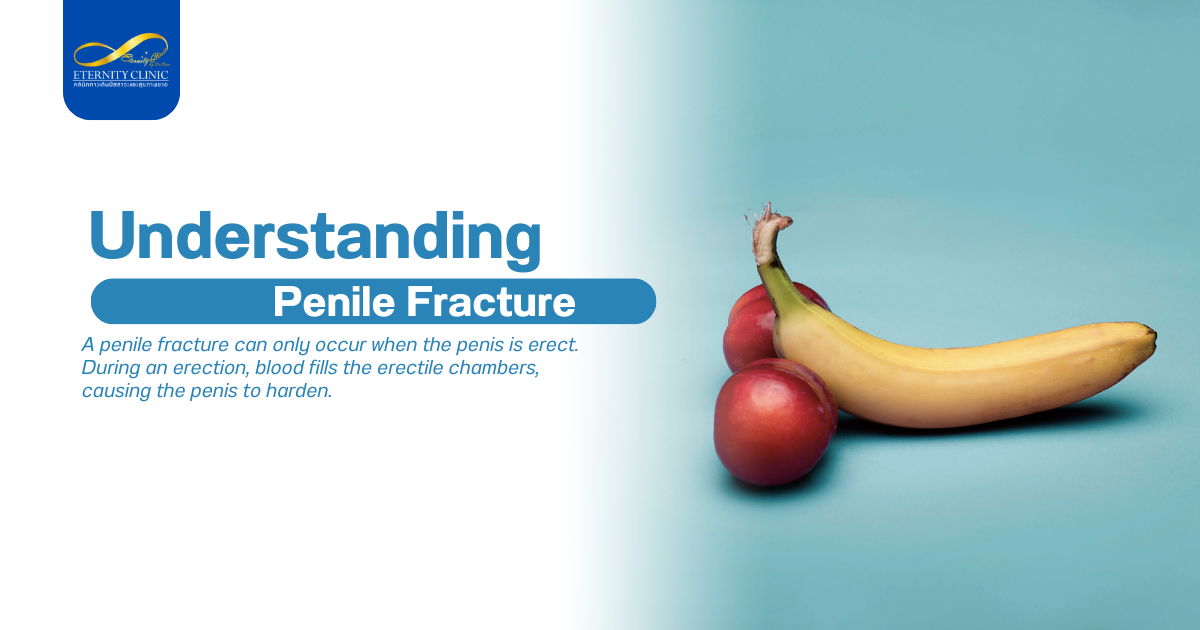
A penile fracture is not a broken bone. It is usually a tear in the tunica albuginea, the tough covering around the erectile chambers of the penis. This tissue becomes thin and stretched during an erection. If the erect penis is bent forcefully, pressure inside the erectile tissue can rise quickly and the tunica can rupture.

The injury is often described as a snapping, cracking, or popping event followed by pain, swelling, bruising, and rapid loss of erection. Some cases may also involve the urethra, especially when there is blood at the tip of the penis, urinary difficulty, or urinary retention.

Penile fracture explanation and urgent assessment
A penile fracture is a tear of erectile tissue support structures, not a broken bone.
Key distinction: penile fracture is different from erectile dysfunction, Peyronie’s disease, phimosis, frenulum tear, and simple bruising. Because these conditions can overlap after trauma, a doctor-led assessment is the safest next step.

Symptoms: How to Recognize a Possible Penile Fracture

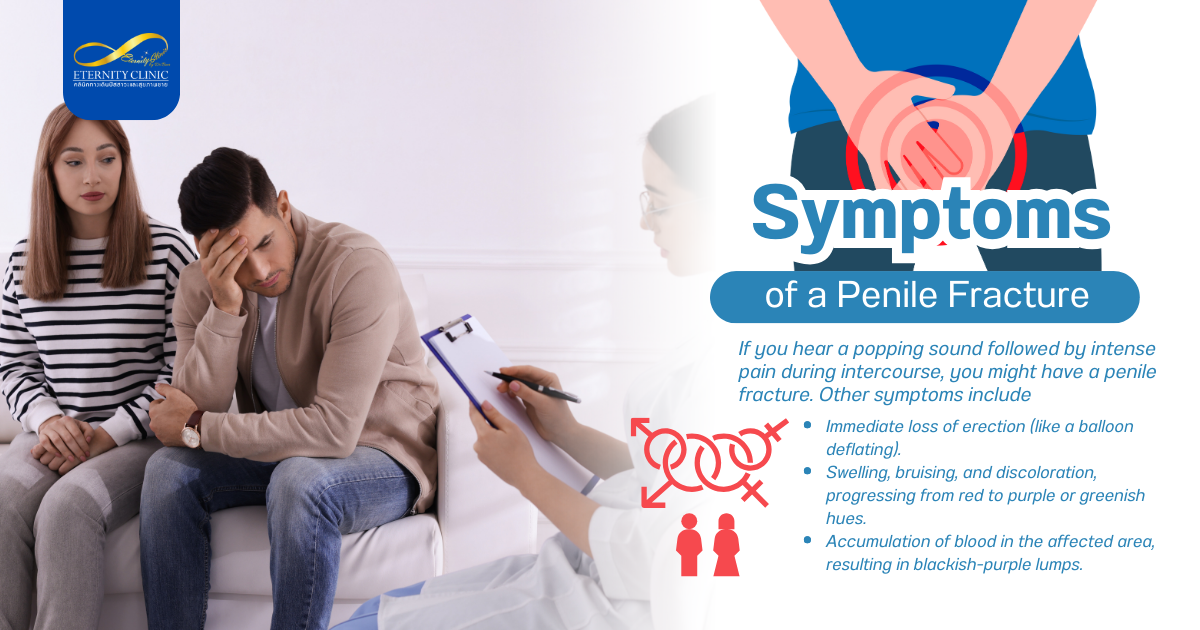
The classic story is a sudden injury to an erect penis during sex, followed by a pop, immediate pain, and fast loss of erection. Not every patient has every symptom, and embarrassment can cause delays, but urgent assessment is important when the pattern fits.

Symptoms of penile fracture including swelling and bruising
Sudden swelling, bruising, and rapid detumescence after trauma are warning signs.
Symptom Why it matters Recommended action
Pop, crack, or snap sound Can occur when the tunica albuginea tears. Stop sexual activity and seek urgent care.
Immediate pain and loss of erection Rapid detumescence is a common fracture clue. Do not attempt to continue sex or test function.
Swelling, bruising, or deformity Bleeding under the skin may create marked discoloration and swelling. Use gentle support and get assessed quickly.
Blood at the urethral opening May suggest urethral involvement. Urgent evaluation is needed.
Difficulty urinating Can indicate urethral injury or severe swelling. Seek emergency care.
Do not wait for severe bruising. If the injury pattern suggests penile fracture, early evaluation is safer than watching symptoms progress overnight.

Common Causes of a Broken Penis

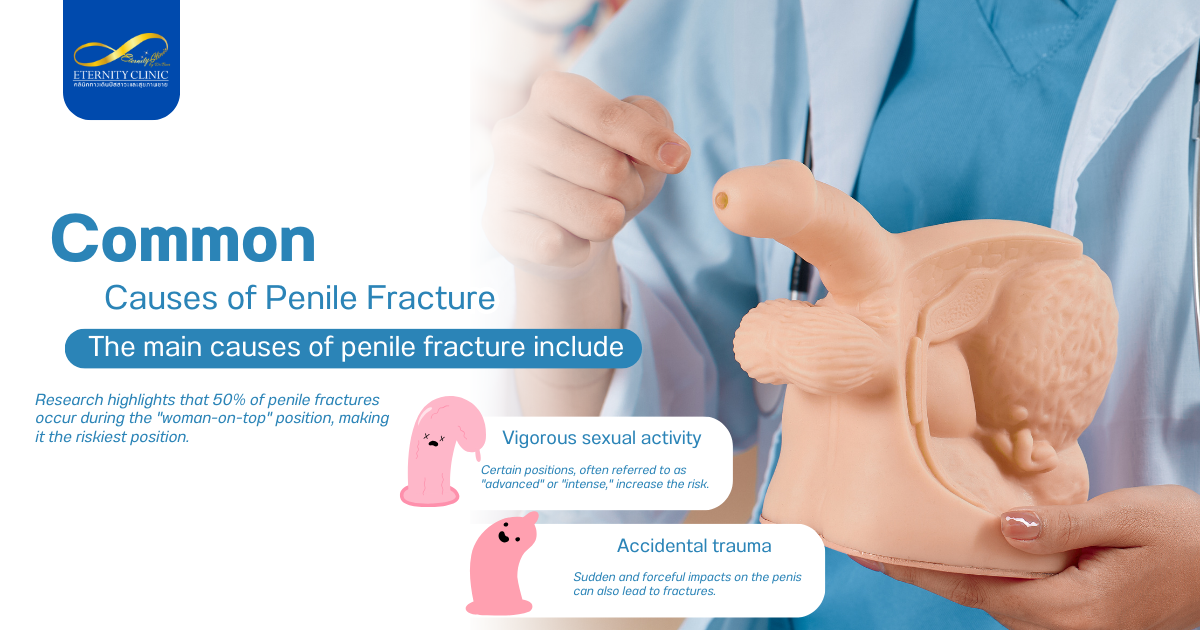
Penile fracture most often happens when an erect penis slips out during sex and strikes the partner’s body, bends sharply, or is forced against resistance. It can also occur with direct trauma, forceful masturbation, rolling onto an erection, or other blunt bending injuries.

Sexual activity

Sudden misalignment, forceful thrusting, or a change in angle can bend the erect penis sharply.

Direct trauma

Impact, fall, or accidental force to an erect penis may cause rupture in selected cases.

Manual bending

Intentional or accidental bending of an erect penis is unsafe and may cause serious injury.

Common causes of penile fracture during sexual activity
Most penile fractures involve forceful bending of an erect penis, commonly during sexual activity.
About sex-position statistics: studies and case series vary by country, reporting method, and sexual behavior. It is safer to focus on the mechanism: a rigid erection forced into an abnormal bend.

What to Do Immediately If You Suspect a Penile Fracture

The first goal is to avoid worsening the tear or delaying treatment. Penile fracture can feel embarrassing, but doctors who treat men’s health and urologic injuries are used to these cases. Accurate details help the team choose the right evaluation.

What to do if a penile fracture is suspected
Stop activity, protect the area, and seek urgent medical assessment rather than self-treating.
1

Stop sexual activity immediately

Do not try to continue, straighten the penis forcefully, or check whether another erection is possible.

2

Use gentle support

A wrapped cold pack may help swelling briefly, but it should not delay emergency evaluation. Do not place ice directly on skin.

3

Avoid medication experiments

Do not start blood thinners, sexual performance medicines, injections, massage, or home remedies unless instructed by a clinician.

4

Seek urgent medical care

Tell the doctor what happened, when it happened, whether you heard a pop, and whether you can urinate.

Urgent red flags: blood at the urethral opening, inability to urinate, rapidly expanding swelling, severe pain, dark discoloration, fever, or faintness require immediate care.

Diagnosis and Treatment Options

A doctor may diagnose penile fracture from the history and physical examination. In some cases, ultrasound, MRI, urinalysis, urethral evaluation, or other tests may be used, especially if the diagnosis is unclear or urethral injury is suspected.

Step What the clinician checks Why it matters
History Timing, pop sound, pain, erection loss, sex position or trauma mechanism. Helps identify whether the injury pattern fits penile fracture.
Physical exam Bruising, swelling, deformity, tenderness, skin injury, urethral opening. Helps estimate severity and plan urgent management.
Urinary assessment Blood at the meatus, urination difficulty, urinary retention. Suggests possible urethral injury and need for extra evaluation.
Imaging when needed Ultrasound or MRI in selected uncertain cases. Can help localize the tear or clarify diagnosis.
Surgical repair Repair of the torn tissue and assessment for associated injury. Often recommended to reduce long-term curvature, pain, and erectile problems.
Realistic expectation: prompt repair can improve the chance of preserving function, but outcomes vary by injury severity, timing, associated urethral injury, surgical findings, and aftercare adherence.

Risks of Delayed or Untreated Penile Fracture

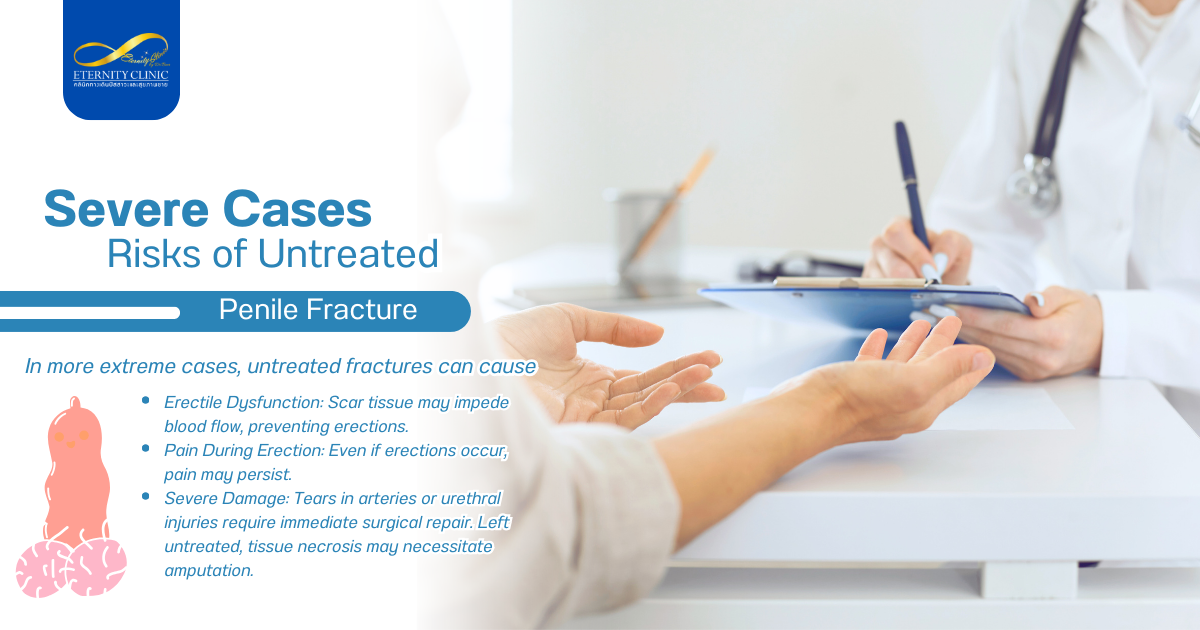
Delaying assessment can increase the risk of scar tissue, penile curvature, painful erections, erectile dysfunction, infection, ongoing deformity, or urinary complications when the urethra is involved. Some men avoid care because of embarrassment, but delayed treatment can make the problem harder to manage.

Risks of untreated penile fracture
Untreated or delayed penile fracture may increase the risk of curvature, pain, and erectile problems.

Curvature or deformity

Scar tissue may lead to a bend, indentation, or painful erection.

Erectile dysfunction

Damage and scarring can affect rigidity or confidence after injury.

Urethral problems

Blood at the tip or urinary difficulty should be assessed quickly.

Prevention: Reducing the Risk During Sex

Not every injury is preventable, but many penile fractures happen when speed, force, angle, or loss of alignment creates sudden bending. Prevention is about communication, control, and stopping when something feels wrong.

Safer sex habits

  • Slow down when changing position.
  • Use lubrication when friction or dryness is present.
  • Stop if the penis slips out repeatedly.
  • Avoid forceful thrusting at awkward angles.
  • Communicate with the partner about discomfort.

What to avoid

  • Forcefully bending an erect penis.
  • Continuing through sudden pain.
  • Testing function after a suspected injury.
  • Using constricting rings or devices after trauma.
  • Delaying care because of embarrassment.
Related concern: if there was no trauma but erections suddenly changed, the cause may include vascular, hormonal, psychological, medication-related, or scar-related factors. Read more in the men’s health guides or discuss evaluation with a doctor.

FAQ About Penile Fracture

Can a penis really break?

Yes, but not like a bone. A penile fracture usually means a tear in the tunica albuginea around the erectile chambers. It can happen when an erect penis is bent or hit with force.

What does a penile fracture feel like?

Many patients describe a pop or crack, sudden pain, immediate loss of erection, swelling, bruising, and deformity. Blood at the urethral opening or difficulty urinating suggests possible urethral involvement.

Is penile fracture an emergency?

It should be treated as urgent. Many authoritative urology sources describe prompt assessment and surgical repair as important for reducing long-term complications such as curvature, pain, or erectile dysfunction.

Can I treat a broken penis at home with ice?

A wrapped cold pack may help swelling briefly, but it is not definitive treatment and should not delay urgent medical assessment. Do not massage, force straightening, or test erections after suspected injury.

Can a penile fracture cause erectile dysfunction?

It can. Risk depends on the injury, timing of care, associated urethral injury, treatment approach, and healing. Early medical evaluation is recommended to reduce avoidable complications.

Medical References

This page is written for patient education and medical SEO clarity. It does not replace emergency assessment, diagnosis, imaging, surgery, or individualized medical care.

Dr Beer medical reviewer at Eternity Clinic

Doctor Review and Medical Safety

Penile fracture is not a cosmetic concern or a routine sexual performance issue. The priority is to identify possible tunica albuginea rupture, check for urethral injury, and decide whether urgent surgical repair is needed. Fast, honest reporting of the injury mechanism helps the clinician protect erection quality, urinary function, and long-term penile shape as much as possible.

Reviewed by: Dr. Beer, Eternity Clinic

View doctor profile

Last content update: 30 June 2026

Share
author avatar
MD. Suebphong Angchoun

Latest Articles

Leave a Reply

Your email address will not be published. Required fields are marked *