

Many people are considering circumcision, regardless of the problems they face. or to maintain cleanliness but still can’t decide between “Circumcision at the clinic and circumcision at the hospital.” so, is the circumcision technique different at hospitals and clinics? Advantages and disadvantages of circumcision This article can give you the answers to these questions.
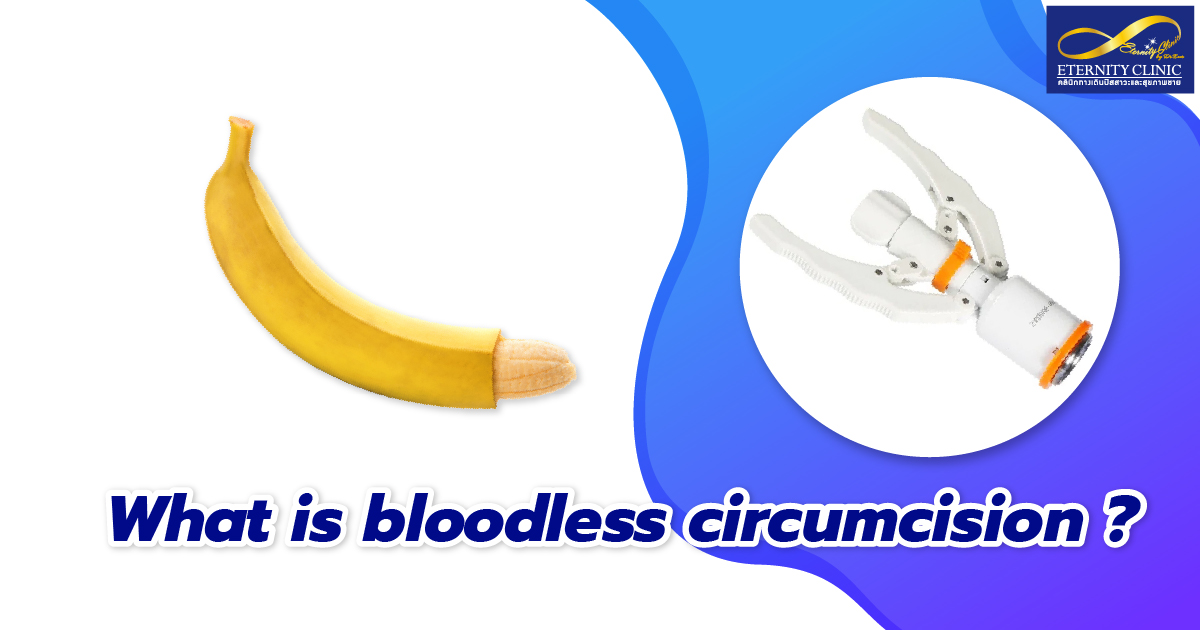
What is Bloodless Circumcision (Staple Circumcision)?
Staple Circumcision is a method of circumcision using automatic circumcision tools and staples, which is considered the best method currently used by medical professionals for circumcision. This method of circumcision is painless, blood-free, and has a faster recovery time than traditional circumcision but there is something better than bloodless circumcision.
Dr. Beer has also designed and developed a staple circumcision instrument in Dr. Beer’s style, namely the titanium Staple Circumcision device. (with silicone pad) (Disposable Staple Circumcision Suture Device (DSSD) for a circumcision that is sharper and stronger than the old type of circumcision. In addition, the silicone pad helps with pressure to stop bleeding and makes the sutures come off more easily.

Advantages of Bloodless Circumcision (Staple Circumcision)
As it is currently the best method, how is titanium staple circumcision better than traditional bloodless circumcision? We have divided it into topics as follows:
- The blade for circumcision becomes sharper, making the wound from circumcision beautiful. There are no centipede marks caused by sewing.
- There is a silicone pad that supports the titanium stapler to help stop bleeding better and help the stapler come off better.
- Titanium staples are strong despite their smaller size. It’s easier to fall off.
- Seamless wound and heals faster.
- You can choose the location of the foreskin that you want to circumcise according to your suitability and satisfaction.

Circumcision at the hospital
Circumcision is considered something that every doctor can do because there are criteria from the Medical Council that they must have performed or seen circumcision before graduating. Any doctor can perform circumcision, but they may have little experience in actually doing it. Doctors who frequently perform circumcisions are specialists in the urological surgery department but there will be limitations in treatment, such as foreskin stenosis. Frequently painful and inflamed.
This type of circumcision is a medical circumcision, not a cosmetic circumcision, causing the doctor to choose to treat cases that require treatment first. Circumcision can be performed in both public and private hospitals. It is well known that the cost of treatment at public hospitals is cheaper than private hospitals. Moreover, we cannot know that the doctor who performs the circumcision for us has experience.
How many circumcisions have you had? May it be 1 year, 2 years, or 10 years? And how skilled is the doctor in circumcision?
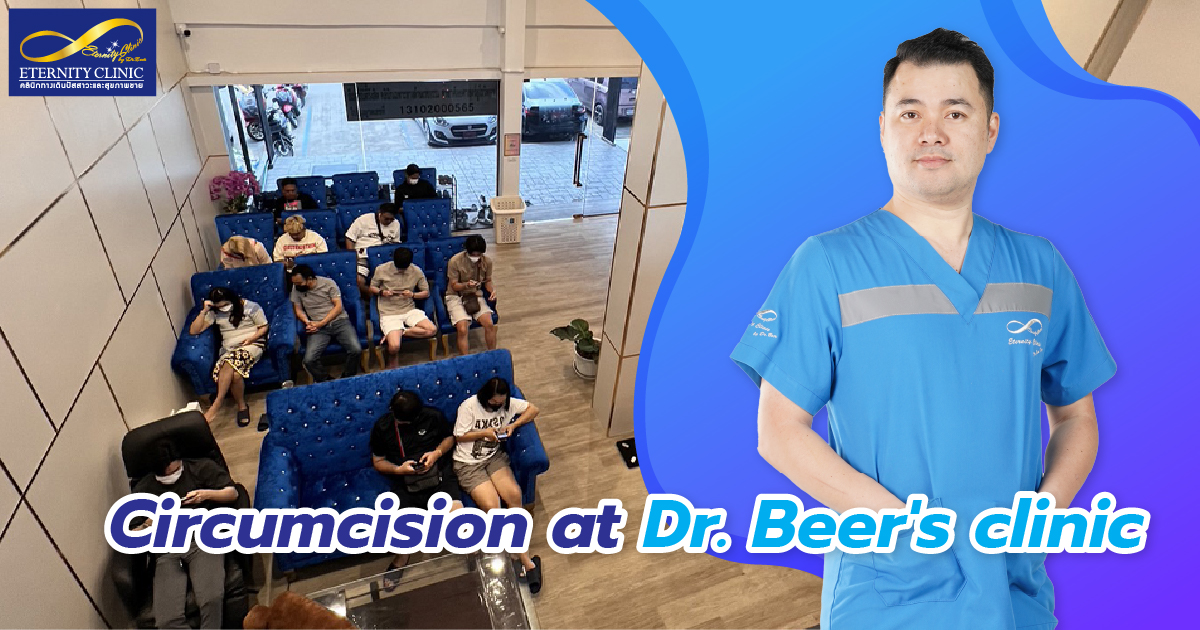
Circumcision at Dr. Beer’s clinic
Circumcision with a specialized clinic such as Dr. Beer’s clinic) who has more than 10 years of circumcision experience due to being stationed at both clinics and hospitals, resulting in more than 1000 cases of circumcision experience. Including the tool that Dr. Beer uses for circumcision, it is a tool that he designed himself, giving Dr. Beer a unique technique that can make the wound look more beautiful and has a price that is suitable for using good and quality tools.
Dr. Beer is a doctor who is truly an expert in male genitals from his work experience and various awards he has received. He is also a medical teacher who provides knowledge both in Thailand and abroad, so you don’t have to worry about his skills.
In addition, Dr. Beer helps design the circumcision procedure to determine the type of circumcision that each person’s penis has to look best. There are 4 levels of circumcision to choose from and you can be confident that when you treat Dr. Beer, everyone’s wounds come out beautiful.
Conclusion
Whether the circumcision is performed in a hospital or clinic, the surgical area is clean and sterilized and the same tools are used but Dr. Beer’s clinic has an additional option: a titanium model of staple circumcision equipment. If you want to have a circumcision at the hospital where Dr. Beer is based, namely Bangkok – Phuket Hospital, you can also inform that you want to use a titanium circumcision tool.
Finally, circumcision is considered a type of surgery. If you have to spend a little more money and get better results or what Dr. Beer calls “Perfect Circumcision,” which one would you choose? Where you circumcise is not as important as who you circumcise with. It is best to choose a doctor who has experience and whose work you are satisfied with.
Q&A: Hospital or Clinic? Deciding Factors for Circumcision Methods
Bloodless circumcision (also called staple circumcision) uses an automatic device that cuts and seals the foreskin in one step, so bleeding is minimal, procedure time is short, and wounds tend to look neater with faster recovery than hand-cut/hand-sutured methods. With Dr. Beer’s titanium Staple Circumcision device (DSSD) with a silicone pad, the blade is sharper, staples are smaller yet strong, pressure is evenly distributed to aid hemostasis, and staples shed more easily, leaving a clean, seamless scar line.
The core medical steps and sterile standards are the same. The difference is usually operator experience and device options. Hospitals may prioritize medical indications (e.g., infections, phimosis) and you might not know how many cases the assigned doctor performs yearly. A specialized clinic (e.g., Dr. Beer’s) focuses on male-genital procedures, offers device choices (including the titanium staple option), and optimizes aesthetic planning (scar placement, tight/loose finish). Choose the setting where you’re confident in the surgeon’s experience, case volume, before-and-after results, and tools available.
-
Sharper blade → cleaner cut, more aesthetic result (no “centipede” stitch marks).
-
Silicone pressure pad → better bleeding control and easier staple release.
-
Titanium micro-staples → strong yet small; fall off more readily.
-
Seamless wound → typically quicker healing and less scar prominence.
-
Custom foreskin level → you can discuss where you want the remaining skin to sit (higher, lower, tighter, looser) for function and look.
Most healthy males seeking circumcision for hygiene, recurrent inflammation, phimosis, or cosmetic reasons are good candidates for staple techniques in an experienced clinic. If you have complex phimosis, active infection, bleeding disorders, significant medical comorbidities, or need other urologic procedures at the same time, a hospital setting may be more appropriate. Either way, ask about surgeon experience, case numbers, complication rates, and device options before you decide.
Local anesthesia makes the procedure virtually painless; most cases take ~10–20 minutes. Expect mild swelling/tenderness for a few days. Typical guidance: keep the area dry for 48–72 hours, wear supportive underwear, avoid friction/exercise for 3–7 days, and follow your doctor’s cleaning instructions (saline/gauze as advised). Most wounds look presentably healed in ~1–2 weeks; sexual activity is usually postponed ~4 weeks (follow your surgeon’s timeline). Always return if you notice increasing pain, fever, abnormal bleeding, or discharge.

Get an initial consultation with Dr.Beer FREE!!!
Ask for information about treatment and additional services make an appointment at
LINE:@ETERNITYCLINIC2
M.D. SUEBPONG ANGCHOUN
Urologist & General Surgeon of advance Endo-Uro and Laparoscopic Surgery
Latest Articles
Can You Really Make Your Penis Bigger?
Does Penis Size Matter? The answer varies from person to person. However, many men have
Can You Enlarge Your Penis Naturally Fact or Fiction?
Enlarge penis — Let’s be honest, penis size is one of those topics that men
Risky or Worth It? Popular Penis Enlargement Techniques
In today’s world, where confidence matters more than ever, many men are turning their attention
Want to Go Bigger? Safe and Proven Penis Enlargement Options
In today’s world, self-confidence plays a vital role in how we live and interact. For
Just by Changing a Few Habits Can Improve Penis Length?
Improve Penis Length | When it comes to penis size, many men can’t help but
Breakthrough Techniques! Can You Really Increase Penis Length?
Penis length has long been a hot topic, especially among men who often associate it
How to Increase Penis Length Without Ruining Your Health
Penis length is a topic that many men worry about, often quietly. This leads to
The Hidden Truth: Why Your Penis Isn’t as Big as You Expect
For many men, penis size can be a source of insecurity. Some wonder why their