
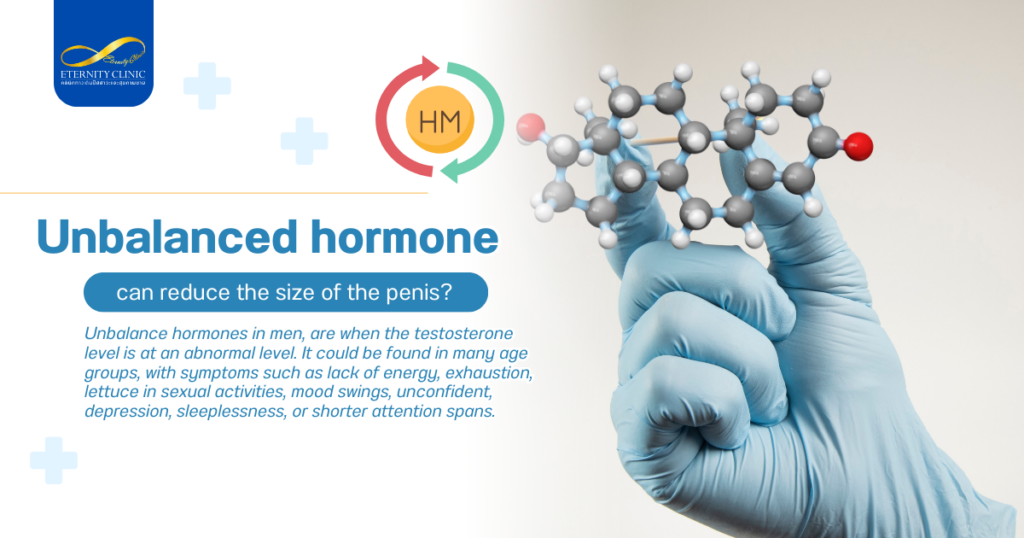
Unbalance hormones in men, are when the testosterone level is at an abnormal level. It could be found in many age groups, with symptoms such as lack of energy, exhaustion, lettuce in sexual activities, mood swings, unconfident, depression, sleeplessness, or shorter attention spans.
If you have these symptoms, we recommend a health checkup or a health checkup with hormone level measurement, finding the root cause, and receiving treatment before its too late.
Change of habits or hormone replacement could give off symptoms in the long run, some may find it later in a lifetime, thinking that such problems aren’t severe, refusing to see doctors, and waiting until it is way too late.

How could you know if you have Hypogonadism?
Hypogonadism or Unblanace testosterone hormones in men. Normally testosterone hormones start to reduce around the age of 50, but some men who have not taken care of themselves, have an unbalanced lifestyle, and lack of sleep, may experience this condition as soon as 40 to 40 years old. We can see the effects of unbalanced hormones such as:
- Mental health issues: anxiety, mood swings, depression, paranoia, shorter attention span, or even dementia.
- Physical health issues: Joint ache, muscle ache, reduction in muscle strength, exhaustion, sleeplessness.
- Sexual health issues: reduced hair growth, reduced sexual activities and desire, erectile dysfunction.
- If you think you may have these symptoms or experience these systems, please contact a specialist for a check-up and treatment.

Hypogonadism treatment.
Most specialists will diagnose the symptoms and aim to treat the main reason for such problems, such as a change of behavior, or treat another illness that may cause this effect. This treatment aims to combat the effects of unbalanced hormones and bring physical health and mental health back to normal.

Who is in the risk group?
Males who have stress, are unattentive to their bodies, overweight, lack sexual intercourse, chronically ill; such as, diabetes, high blood pressure, and high cholesterol in blood. Experiencing sleeplessness, exhaustion, lack of confidence, mood swings, depression, lack of sexual desire, or erectile dysfunction.
You can start by taking a survey for basic screening, then the specialist can take a blood sample and examine the hormone in your body. After that, doctors can treat according to the patient’s issue.

What do the medical records say?
From many medical records, we can see that most of the patients didn’t detect symptoms or the effect of the unbalanced hormone until it was way too late. What many patients need to realize is the symptoms and risks that could lead to problems, one could exhibit many or one symptom, together with another kind of illness.
Estimate that testosterone will start to reduce in men by 1 to 2 percent each year after the age of 40. Cells in the testicles are responsible for producing testosterone, under the control of the brain, if the testicle is no longer responsive to the brain, it could result in a reduction in testosterone production.
Unbalanced hormones can affect you and your penis size, that much is true. Lower testosterone production reduces the sex drive, and erection, and even causes your penis to get smaller. But you can combat this by changing your behavior, such as stopping smoking and reducing alcohol intake.
To maintain balance hormones, which are important to the body and the functioning of vital organs, such as bone structures and muscle growth, sexual drive, and sexual performance, to quality of life. By simply watching what you eat, reducing carbohydrates and fat, exercising regularly, and using testosterone supplements.

Get an initial consultation with Dr.Beer FREE!!!
Ask for information about treatment and additional services make an appointment at
LINE:@ETERNITYCLINIC2
M.D. SUEBPONG ANGCHOUN
Urologist & General Surgeon of advance Endo-Uro and Laparoscopic Surgery
Latest Articles
Can You Really Make Your Penis Bigger?
Does Penis Size Matter? The answer varies from person to person. However, many men have
Can You Enlarge Your Penis Naturally Fact or Fiction?
Enlarge penis — Let’s be honest, penis size is one of those topics that men
Risky or Worth It? Popular Penis Enlargement Techniques
In today’s world, where confidence matters more than ever, many men are turning their attention
Want to Go Bigger? Safe and Proven Penis Enlargement Options
In today’s world, self-confidence plays a vital role in how we live and interact. For
Just by Changing a Few Habits Can Improve Penis Length?
Improve Penis Length | When it comes to penis size, many men can’t help but
Breakthrough Techniques! Can You Really Increase Penis Length?
Penis length has long been a hot topic, especially among men who often associate it
How to Increase Penis Length Without Ruining Your Health
Penis length is a topic that many men worry about, often quietly. This leads to
The Hidden Truth: Why Your Penis Isn’t as Big as You Expect
For many men, penis size can be a source of insecurity. Some wonder why their