
Adult circumcision can be planned in different medical settings. The safest choice depends on your anatomy, medical history, anesthesia needs, infection risk, bleeding risk, recovery support, and whether the provider has a clear plan for complications and follow-up.
A clinic may be suitable for selected adult circumcision cases when the patient is medically stable, the anatomy is straightforward, the facility is properly equipped, and the provider offers sterile technique, anesthesia planning, bleeding control, wound care instructions, and follow-up. A hospital may be more appropriate for complex medical history, higher bleeding or anesthesia risk, severe phimosis, suspected penile disease, or cases that may need broader surgical support.
Clinic vs Hospital Circumcision: What Actually Matters?
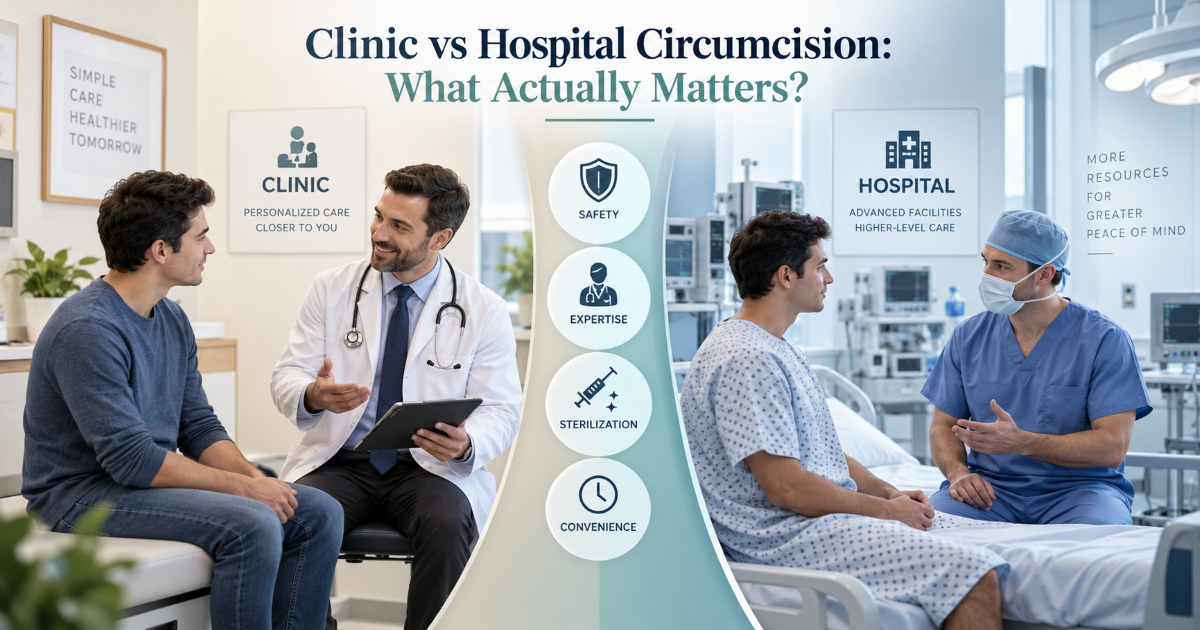
The question is not simply whether a clinic or a hospital is better. The more useful question is whether the setting is appropriate for your specific case. Adult circumcision may be done for phimosis, recurrent infections, hygiene difficulty, religious or cultural reasons, cosmetic preference, or preparation for another planned treatment. Each reason can change the risk-benefit discussion.
A good medical setting should provide a clear diagnosis, method explanation, anesthesia plan, sterile environment, bleeding control strategy, aftercare instructions, and follow-up pathway. If any of these are unclear, the setting may not be ready for your case.
| Decision factor | Clinic may be suitable when | Hospital may be safer when |
|---|---|---|
| Patient health | You are generally healthy and medically stable. | You have uncontrolled diabetes, major heart disease, bleeding risk, anticoagulant use, or complex medical history. |
| Anatomy | The foreskin condition is straightforward and infection is controlled. | There is severe scarring, complex phimosis, suspected penile disease, buried penis, or unusual anatomy. |
| Anesthesia | Local anesthesia or selected light sedation is enough and appropriate. | General anesthesia or deeper monitoring may be needed. |
| Complication planning | The clinic has clear protocols for bleeding, infection, wound issues, and referral. | The risk of needing wider surgical support is higher. |
When Clinic-Based Circumcision May Be Suitable
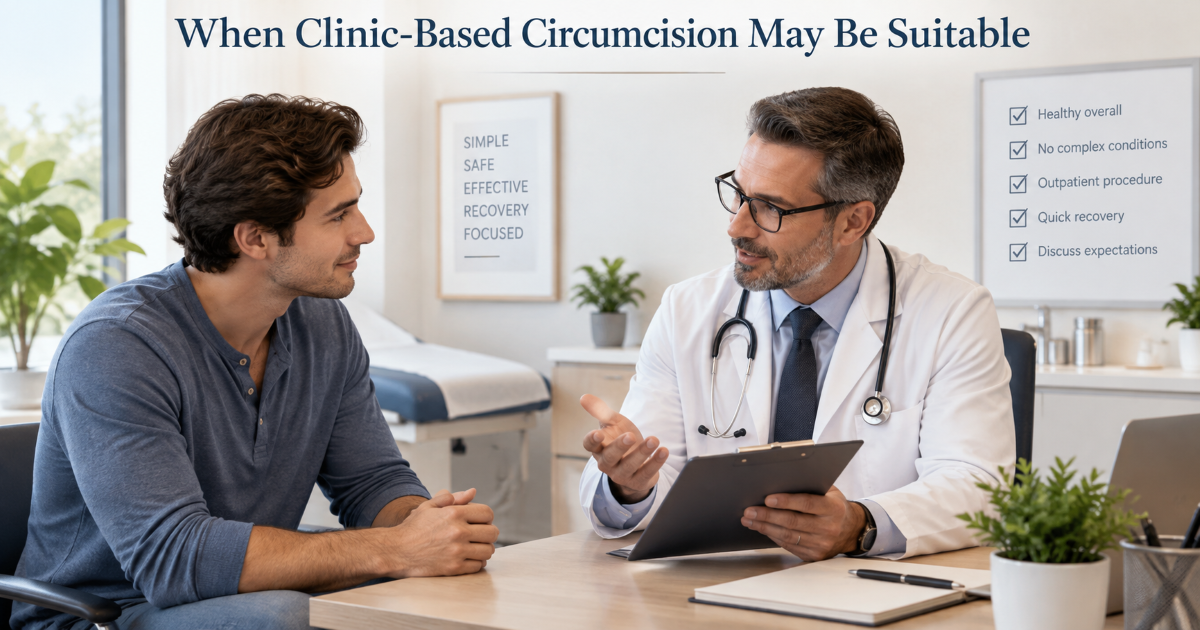
A clinic-based approach may work well for selected adults who want a private appointment, direct communication, shorter scheduling flow, and a setting focused on male sexual health. This does not mean every clinic is suitable. The clinic should still operate as a medical environment, not as a cosmetic shortcut.
Appropriate screening
The clinician reviews medical history, medications, allergies, diabetes risk, bleeding history, infection signs, and previous penile procedures.
Clear procedure plan
The method, anesthesia, wound closure, dressing, pain control, and follow-up schedule should be explained before booking.
Escalation pathway
The clinic should explain what happens if bleeding, infection, wound separation, urinary problems, or severe pain occurs after treatment.
When a Hospital May Be the Safer Setting

A hospital is often the safer option when a patient needs more intensive monitoring, a wider surgical team, access to operating theatre support, or management of complex medical conditions. This can include patients with significant bleeding risk, uncontrolled chronic disease, severe scarring, suspected penile lesions, or anatomy that makes a simple clinic procedure less predictable.
| Hospital-favoring factor | Why it matters | What to ask |
|---|---|---|
| General anesthesia consideration | Some adults may need deeper anesthesia planning or monitoring. | Ask whether local anesthesia, sedation, or general anesthesia is appropriate for you. |
| Higher bleeding risk | Anticoagulants, clotting disorders, and some supplements can increase bleeding risk. | Ask whether medication adjustment or hospital-based surgery is needed. |
| Complex phimosis or scarring | Severe scarring can affect the incision plan, wound closure, and cosmetic outcome. | Ask whether foreskin-preserving options or circumcision is more appropriate. |
| Suspected penile disease | Lesions, unusual lumps, or persistent ulcers may need diagnosis before circumcision. | Ask whether evaluation, biopsy, or referral is needed first. |
Method Choice: Surgical, Device-Assisted, and Staple Circumcision
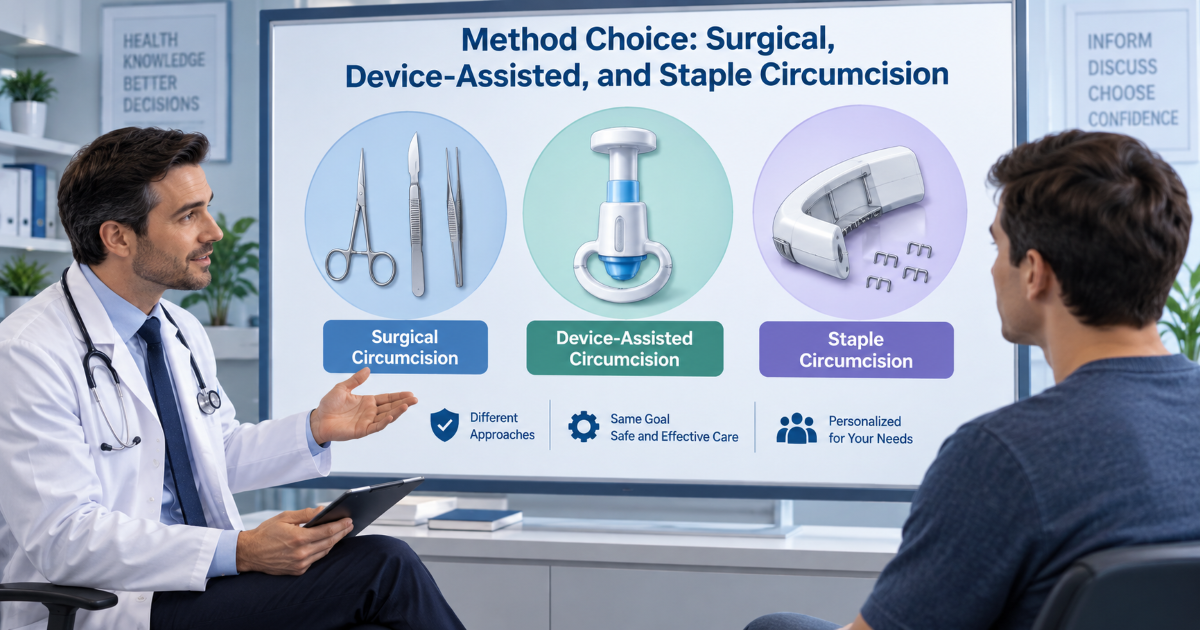
Patients often ask whether staple circumcision or a device-assisted method is better than conventional surgical circumcision. The answer depends on foreskin thickness, scarring, frenulum anatomy, infection status, cosmetic goals, and the clinician’s experience with the method. A newer or faster-sounding method is not automatically safer for every patient.
Conventional surgical circumcision
May allow flexible adjustment for anatomy, scarring, frenulum issues, and cosmetic planning. It also requires careful bleeding control and wound closure.
Device-assisted methods
May standardize some steps in selected cases, but candidacy still matters. Device fit and tissue condition should be assessed before use.
Staple circumcision
May be discussed for selected adults, but patients should still ask about pain control, staple care, wound healing, bleeding, infection, and follow-up.
Questions to Ask Before Booking Circumcision
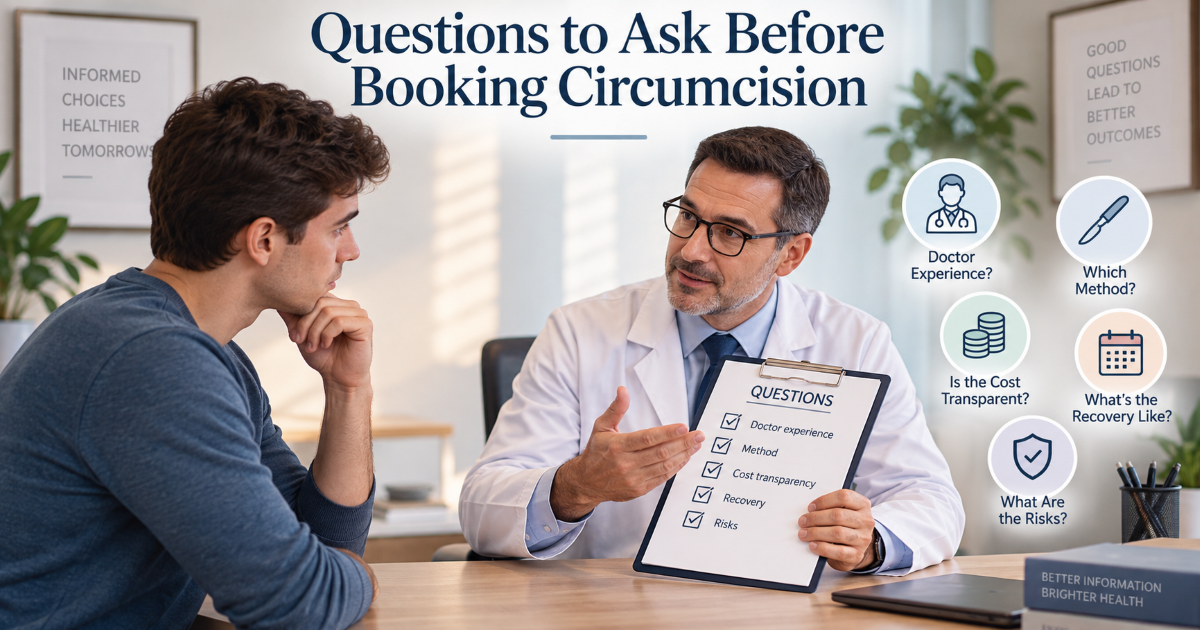
The safest consultation should make you feel informed, not rushed. You should leave with a clear understanding of why the provider recommends a certain setting and method.
Who performs the procedure?
Ask about the clinician’s role, training, experience with adult cases, and whether the same person provides follow-up if you have concerns.
What anesthesia is planned?
Ask whether local anesthesia, sedation, or hospital anesthesia is more appropriate for your anxiety level, health history, and procedure complexity.
What complications are possible?
Ask directly about bleeding, infection, wound separation, swelling, pain, sensitivity changes, scarring, cosmetic dissatisfaction, and delayed healing.
What follow-up is included?
Ask when the first wound check is, how to contact the clinic, and what symptoms require urgent care rather than waiting for a scheduled appointment.
Recovery, Aftercare, and Warning Signs
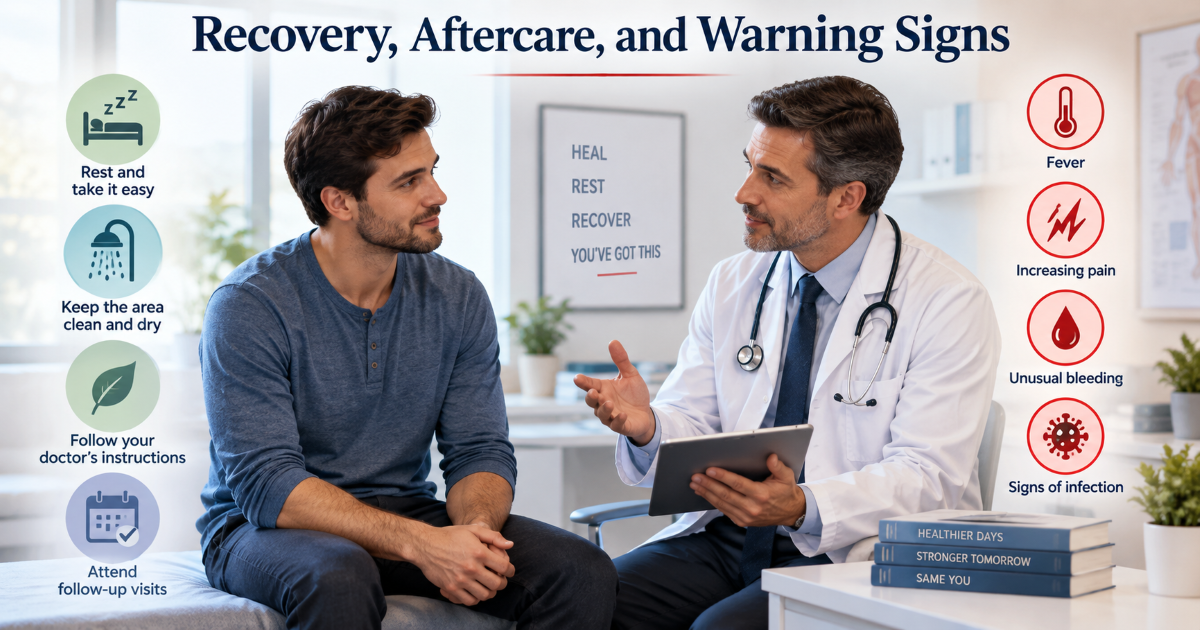
Recovery after adult circumcision varies. Swelling, sensitivity, bruising, and wound tenderness can occur. Many adult aftercare leaflets describe healing over several weeks, with sexual activity avoided until the wound has healed and the clinician confirms it is safe.
| Recovery topic | What to clarify | Why it matters |
|---|---|---|
| Dressing and wound care | How to clean, when to change dressing, and what products to avoid. | Poor wound care can increase irritation or infection risk. |
| Pain and swelling | Expected level, medication plan, and when pain is not normal. | Pain should be managed, but severe or worsening pain needs review. |
| Work and exercise | When to return to work, gym activity, cycling, swimming, and heavy lifting. | Too much friction or strain may affect wound healing. |
| Sexual activity | When masturbation or intercourse can safely resume. | Early sexual activity can disrupt healing or increase bleeding risk. |
Bangkok Clinic Checklist for International Patients
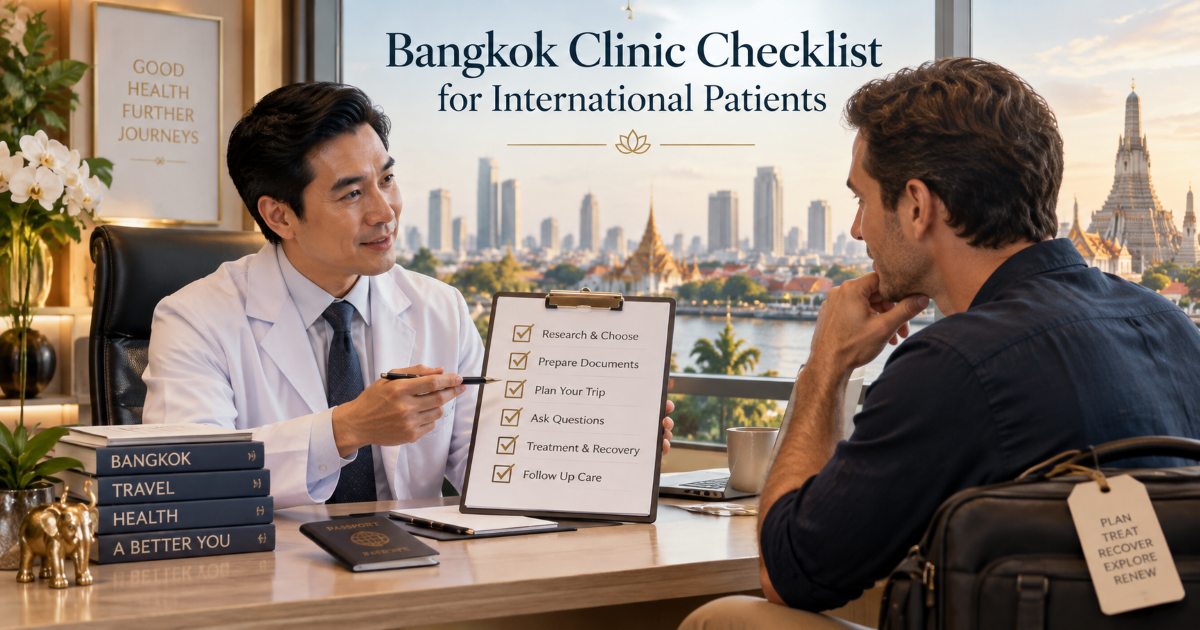
International patients often need to plan around travel, privacy, language support, and follow-up. Circumcision should not be scheduled too tightly before long flights, heavy exercise, or limited access to wound review.
Before arrival
Send relevant medical history, medication list, allergies, diabetes status, bleeding history, and photos only through secure clinic channels if requested.
During consultation
Confirm diagnosis, method, anesthesia, frenulum plan, wound closure, expected healing timeline, and what result is realistic.
After treatment
Ask for written aftercare, follow-up access, travel timing, activity restrictions, and urgent contact instructions.
FAQ About Clinic vs Hospital Circumcision
Is clinic-based circumcision always less safe than hospital circumcision?
No. A properly equipped medical clinic with qualified clinicians, sterile technique, clear emergency transfer planning, and appropriate patient selection can be suitable for selected adult circumcision cases. A hospital may be safer when the patient has complex medical risks, needs general anesthesia, or may require broader surgical support.
When should an adult choose a hospital for circumcision?
A hospital setting may be more appropriate for complex phimosis, suspected penile disease, significant bleeding risk, uncontrolled diabetes, anticoagulant use, severe anxiety requiring deeper anesthesia discussion, or any case where the clinician expects a higher chance of complications.
Can staple circumcision be done in a clinic?
Device-assisted or staple circumcision may be performed in selected clinical settings, but suitability depends on anatomy, foreskin condition, infection status, patient health, and the clinician’s equipment and experience. The method should not be chosen only because it sounds faster or newer.
What should I ask before choosing a circumcision provider?
Ask who performs the procedure, what anesthesia is used, which method is recommended and why, what complications are possible, how bleeding or infection is managed, what follow-up is included, and when to seek urgent care after the procedure.
How long does adult circumcision recovery take?
Recovery varies. Swelling, sensitivity, and wound care are expected after adult circumcision. Many hospital leaflets describe healing over several weeks, and sexual activity is usually delayed until the wound has healed and the clinician confirms it is safe.
Medical References
This page is written for patient education and medical SEO clarity. It does not replace diagnosis, in-person examination, emergency care, or individualized surgical advice from a qualified healthcare professional.
- Mayo Clinic: Circumcision
- Cleveland Clinic: Circumcision procedure, benefits, risks, and recovery
- NHS: Circumcision
- UCLH NHS Foundation Trust: Circumcision post-operative information for adults
- NHS England: Clinical commissioning policy: urology and gynaecology procedures

Doctor Review and Medical Safety
Adult circumcision should be planned after medical history review, physical examination, discussion of anesthesia options, and realistic expectation setting. Clinic-based care and hospital-based care can both be appropriate, but patient selection and complication planning are central to safety.
Reviewed by: Dr. Beer, Eternity Clinic
Last content update: 8 September 2026

Latest Articles
Circumcision at a Clinic vs Hospital: How to Choose the Right Medical Setting
Adult circumcision can be planned in different medical settings. The safest choice depends on your
Adult Circumcision Explained: Benefits, Methods, Recovery, and Safety
Adult circumcision is a procedure to remove the foreskin covering the head of the penis.
Where is the Best Place for Vasectomy (Male Sterilization): Hospital or Clinic?
A vasectomy is a permanent male contraception procedure, but choosing where to have it done
What Sexual Positions Are Best for Men with a Short Penis to Maximize Pleasure in the Bedroom?
A shorter penis or concern about penis size does not automatically mean poor intimacy. Comfort,
How many Methods for Increasing Penis Size? This Article Has the Answers.
Many men search for ways to increase penis size, but the safest first step is
Hormone Therapy Without Surgical Gender Transition
Hormone therapy can help some transgender and gender-diverse people align physical characteristics with personal goals
What Are the Symptoms of Cystitis? This Article Has the Answers.
Cystitis is inflammation of the bladder. It is often caused by a bacterial bladder infection,
How to Care for Your Manhood to Keep It Strong and Disease-Free
Penis health is not only about sexual performance. It includes daily hygiene, foreskin care, safer