
Many men compare their size with unrealistic images, internet claims, or locker-room stories. A smaller-than-expected penis does not automatically mean a medical problem. This guide explains genetics, puberty, erections, measurement error, body image, condom fit, and when a doctor-led assessment is more useful than chasing risky enlargement claims.
Your penis may seem smaller than expected because of genetics, puberty hormones, a partially firm erection, weight or pubic fat pad, measurement technique, cold temperature, anxiety, or comparison with unrealistic content. True medical micropenis is uncommon and requires professional diagnosis. For most men, the more useful questions are: how to measure correctly, whether condoms fit, whether erections are reliable, and whether size worry is affecting confidence or sex.
Why Your Penis May Not Look as Big as You Expect
Expectation is often shaped by poor comparisons. Pornography, camera angles, selective online stories, and non-standard measurements can make normal size look inadequate. A penis can also look smaller when flaccid, cold, stressed, partially erect, or visually buried by pubic fat.
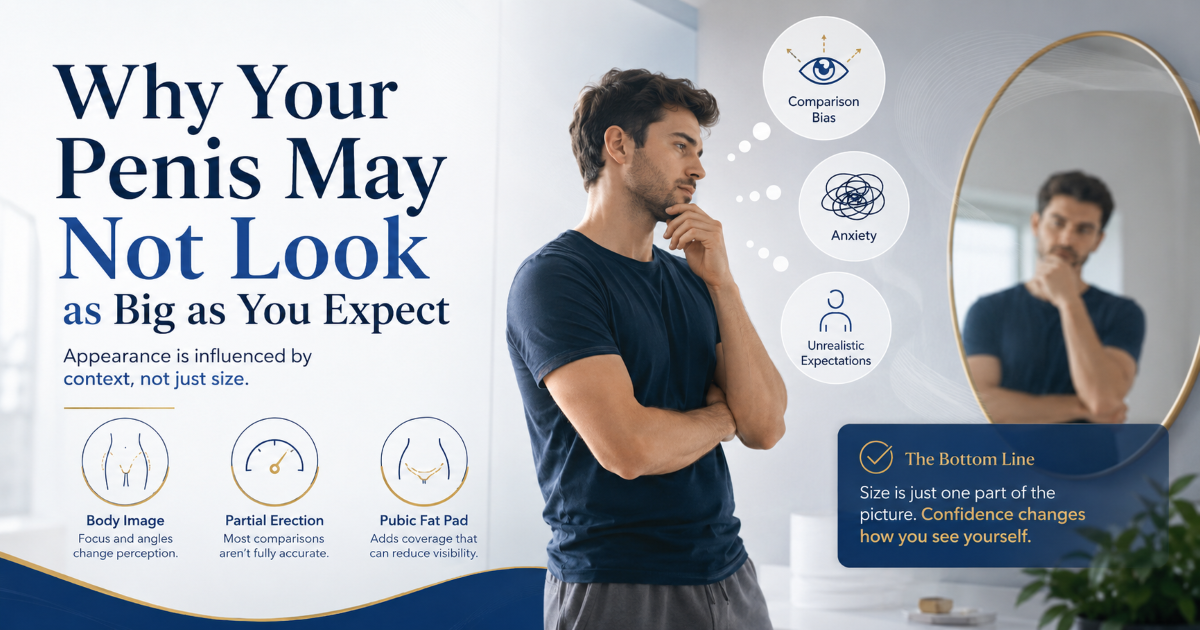
Comparison bias
You may compare yourself with edited, selected, or exaggerated examples rather than normal clinical measurements.
Erection quality
A partial erection can look shorter and thinner than a full erection. ED, anxiety, sleep loss, and circulation can affect firmness.
Body composition
Pubic fat can hide part of the shaft visually. Weight loss may improve visible length without changing true penile tissue length.
How to Measure Penis Size Correctly
If you do measure, use a consistent method. Do not compare flaccid size with another person’s erect size, and do not use photos or visual guessing as evidence. Measurement is most useful for condom fit and for discussing a medical concern accurately.
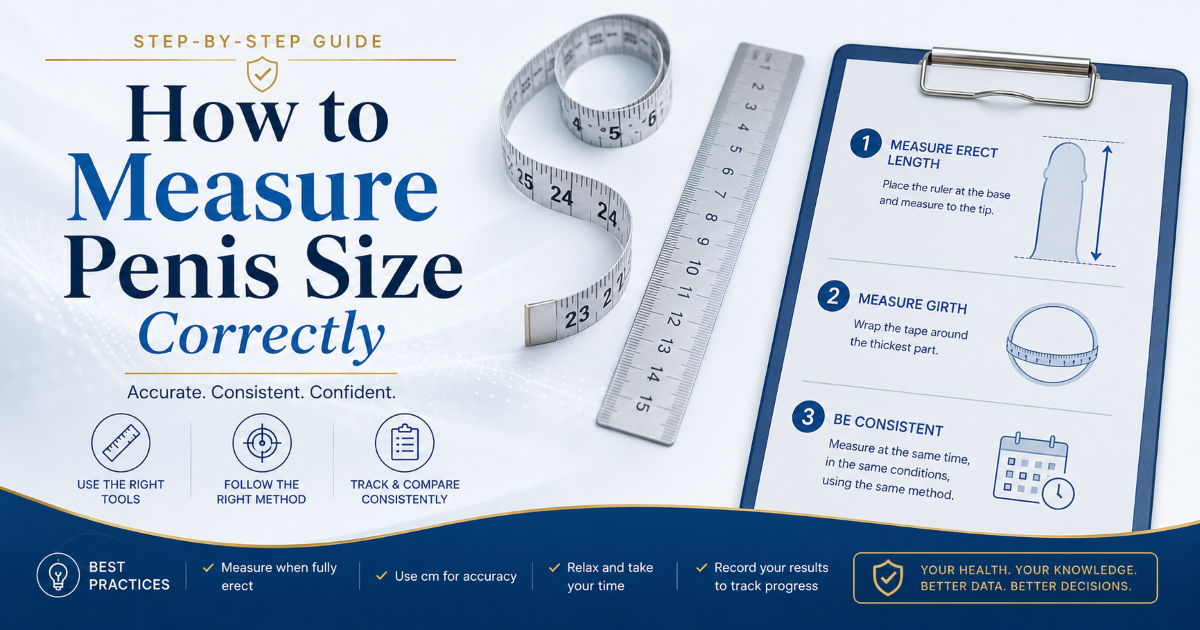
Measure erect length
Use a ruler on the top side of the fully erect penis, from the pubic bone to the tip of the glans. Press gently to the pubic bone to reduce pubic fat pad variation.
Measure erect girth
Wrap a flexible tape around the thickest part of the erect shaft. Girth is usually more important than length for condom width selection.
Record context
Temperature, stress, alcohol, anxiety, and erection firmness can change the result. Recheck under similar conditions rather than measuring repeatedly in panic.
Average Size: What the Data Can and Cannot Tell You
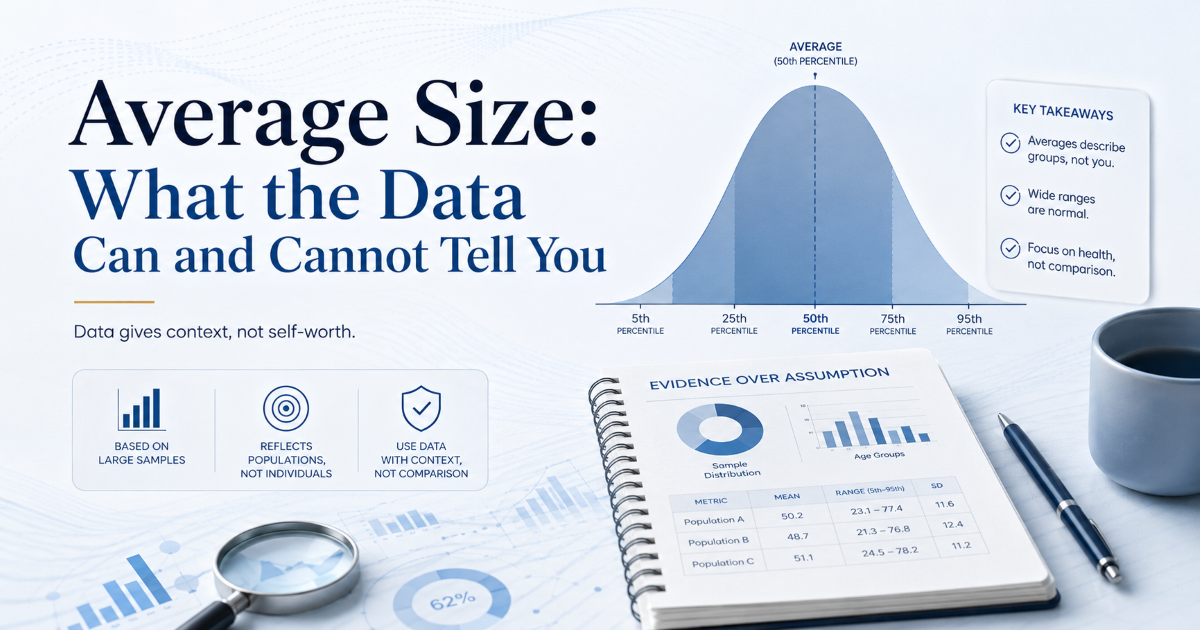
Average-size studies can give context, but they should not be used to judge masculinity, sexual skill, fertility, or partner satisfaction. Study methods vary, and self-reported size tends to be less reliable than clinician-measured data.
| Question | Better interpretation | What not to assume |
|---|---|---|
| Am I below average? | Use correct erect length and girth measurement, then compare with reliable clinical data. | Do not diagnose yourself from photos, country rankings, or internet comments. |
| Does size predict sexual satisfaction? | Comfort, arousal, communication, lubrication, consent, and erectile function are major factors. | Do not assume larger size guarantees better sex. |
| Does size affect fertility? | Fertility is usually assessed through semen analysis, ejaculation, hormones, anatomy, and partner factors. | Do not assume a smaller penis means infertility. |
| Should I seek enlargement? | Start with measurement, function, expectations, and medical risk assessment. | Do not start unverified enlargement methods without a qualified consultation. |
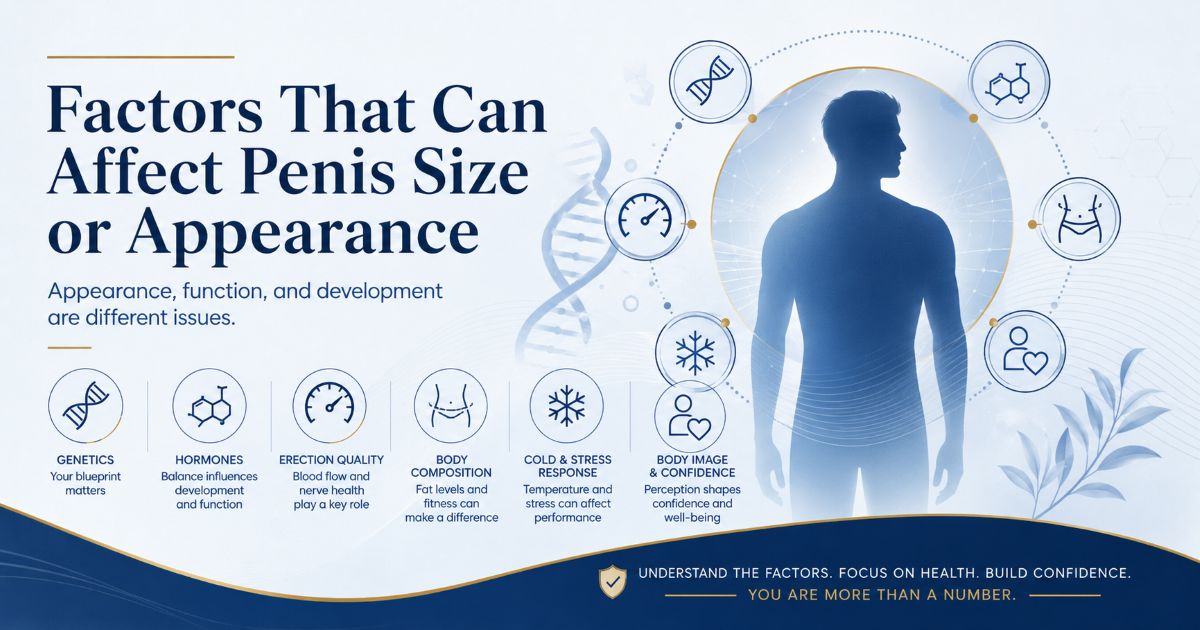
Factors That Can Affect Penis Size or Appearance
Penile development is mainly influenced by genetics and hormones during fetal development and puberty. In adulthood, most concerns are related to appearance, erection quality, body weight, measurement error, or anxiety rather than ongoing growth failure.
Genetics and puberty
Genetics and pubertal hormone exposure influence final adult size. Adult testosterone therapy should not be framed as a guaranteed way to enlarge an adult penis.
Hormone or developmental issues
Delayed puberty, testicular conditions, or suspected hypogonadism may need medical assessment, especially if there are broader symptoms.
Erection and circulation
A weaker erection can make size look reduced. ED evaluation may be more useful than enlargement treatment.
Pubic fat pad
Weight gain can hide visible shaft length. This changes appearance more than true anatomical length.
Cold or stress response
Flaccid size changes throughout the day. Cold, anxiety, and exercise can cause temporary retraction.
Body image and distress
Persistent preoccupation with size can be emotionally exhausting and may benefit from professional counselling.
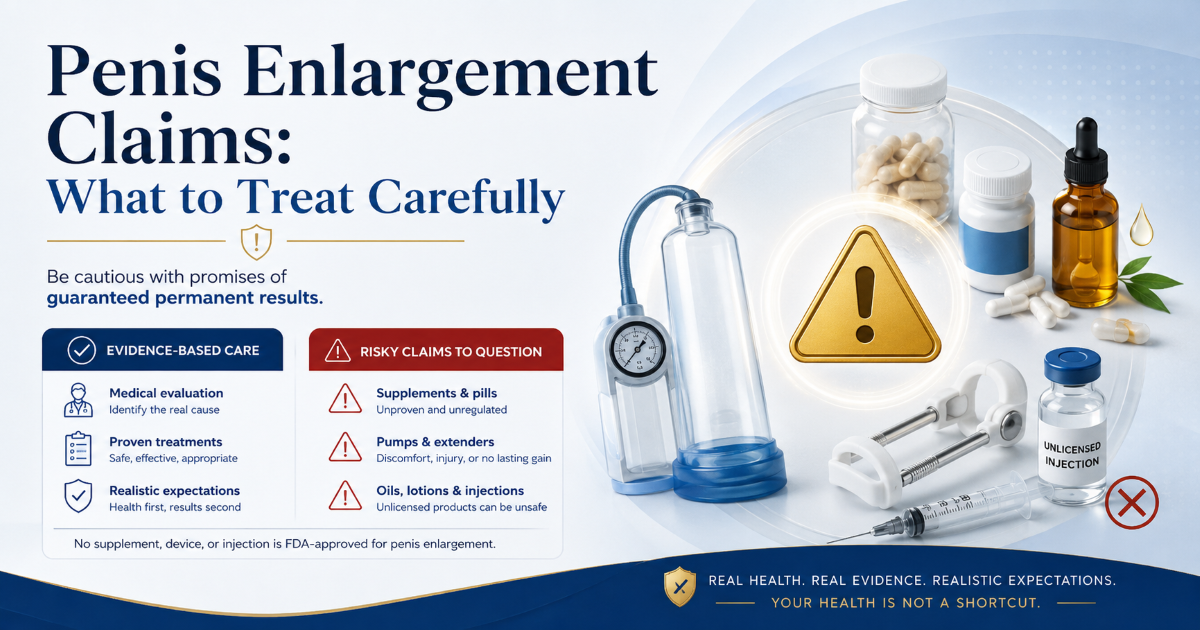
Penis Enlargement Claims: What to Treat Carefully
Many products and programs claim to increase size. Some are unsupported; others may carry meaningful risk. Even medical options are not suitable for everyone and should be discussed with realistic expectations, limitations, and complication risks.
| Method or claim | What patients often expect | Safer medical framing |
|---|---|---|
| Pills, oils, supplements | Permanent enlargement without effort or risk. | Evidence is limited. Ingredients may interact with medicines or cause side effects. |
| Exercises or forceful stretching | Natural enlargement at home. | Aggressive techniques may cause pain, bruising, scarring, or erectile problems. |
| Vacuum pumps | Permanent size gain. | May be used for selected ED contexts but should not be sold as guaranteed permanent enlargement. |
| Traction devices | Major length increase. | Requires selection, time, and adherence. Results vary and irritation or injury can occur. |
| Filler or surgical options | Immediate improvement with no trade-off. | May be considered for selected patients, but risks include asymmetry, infection, nodules, scarring, dissatisfaction, and revision needs. |
Condom Fit Matters More Than Chasing a Number
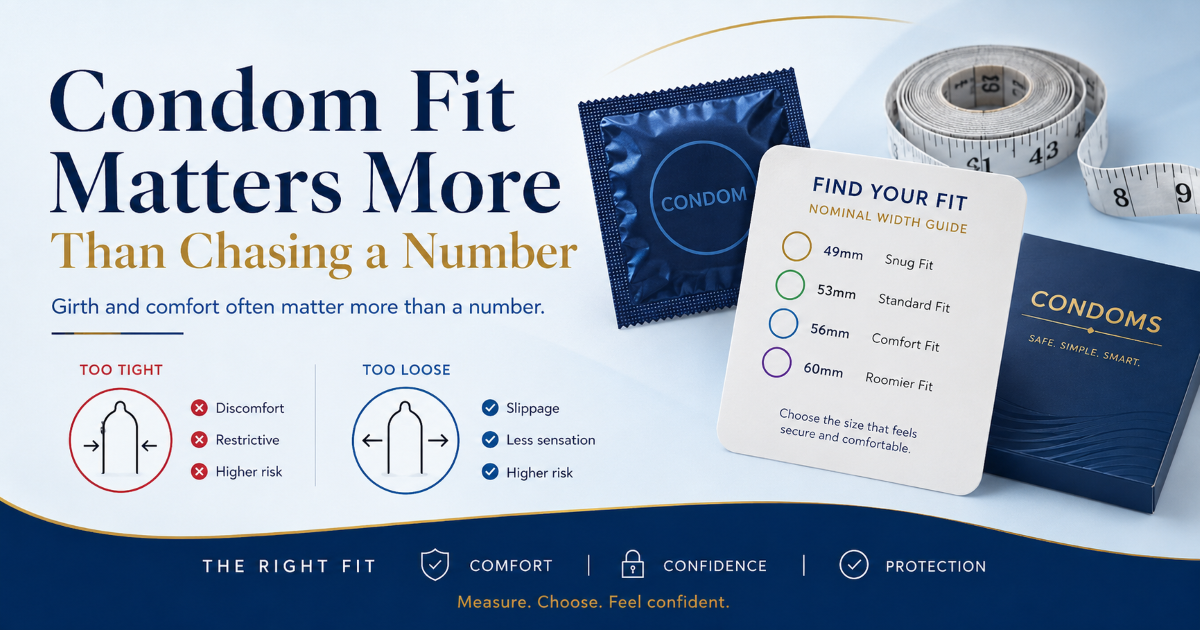
One of the most practical reasons to measure penis size is condom fit. A condom that is too loose may slip. A condom that is too tight may feel uncomfortable or be more likely to break. Length matters, but girth and nominal width often matter more for fit.
Signs a condom may be too tight
- Pain or numbness
- Difficulty unrolling
- Strong pressure around the shaft
- Breakage during sex
Signs a condom may be too loose
- Slipping during sex
- Wrinkling or bunching
- Leakage risk
- Loss of confidence using it
When to See a Doctor About Penis Size Concerns
A confidential medical consultation is reasonable when size worry is intense, when erections are unreliable, when there is pain or curvature, when puberty or hormone symptoms are a concern, or when you are considering any medical enhancement procedure.
Start with the real problem
Is the concern true size, visible length, erection firmness, condom fit, partner feedback, anxiety, or comparison? The answer changes the plan.
Check function and symptoms
Review erection quality, ejaculation, pain, curvature, urinary symptoms, hormone symptoms, fertility concerns, and sexual confidence.
Discuss options without pressure
A responsible plan may include reassurance, measurement guidance, ED care, lifestyle changes, counselling, or selected procedures only when the benefits and risks are clear.

FAQ About Penis Size, Measurement, and Expectations
Why does my penis look smaller than expected?
It may be due to genetics, flaccid retraction, cold temperature, anxiety, partial erection, pubic fat pad, measurement error, or comparison with unrealistic online content. Correct measurement and erectile function are more useful than visual comparison.
Does low testosterone make an adult penis smaller?
Low testosterone can affect libido, energy, mood, and erection quality. In adults, testosterone treatment should not be presented as a guaranteed penis enlargement method. Suspected low testosterone requires symptoms plus properly timed blood tests before treatment decisions.
Can exercises or pills make the penis permanently bigger?
Many pills, oils, and home exercises lack strong evidence for permanent enlargement and may cause harm. A medical consultation is safer before using any method that applies force, suction, injection, or unverified ingredients to the penis.
How should I measure penis size for condom fit?
Measure erect length from the pubic bone to the tip and measure erect girth around the thickest part of the shaft. Girth is often especially important when choosing condom width.
When should I see a doctor?
See a doctor if you have erection problems, pain, curvature, a sudden change in shape, hormone symptoms, puberty concerns, fertility concerns, or severe distress about size. Also seek medical advice before any enlargement procedure.
Medical References
This page is written for patient education and medical SEO clarity. It does not replace diagnosis, individualized counselling, or consultation with a qualified medical professional.
- Mayo Clinic: Penis-enlargement products: Do they work?
- Mayo Clinic: Men’s sexual health
- ISSM: How and why should a man measure his penis?
- BJU International / King’s College London: Penile size nomograms systematic review
- NHS: Condoms

Doctor Review and Medical Safety
Penis size concerns should be handled with accurate measurement, function assessment, realistic expectations, and careful screening for erectile dysfunction, hormone symptoms, curvature, pain, or body image distress. Enhancement procedures, if considered, require shared decision-making and a clear discussion of limitations and risks.
Reviewed by: Dr. Beer, Eternity Clinic
Last content update: 30 June 2026

Latest Articles
Permanent Solution for Premature Ejaculation with Surgery
Premature ejaculation can be distressing, but it should not be reduced to a single promise
Delayed Ejaculation: Is It Really Good? What to Do If You’re Facing This Issue
Delayed ejaculation may sound positive to some men, but when climax takes much longer than
How to Measure Condom Size Properly: Understanding Sizes 49, 52, 54, and 56
Condom size is not judged by length alone. For most men, the most useful measurement
Penile Enlargement With “Your Own Tissue” or “Your Own Fat”: Why It May Not Be Worth the Pain
Using your own tissue or your own fat can sound more natural than synthetic material,
Circumcision at a Clinic vs Hospital: How to Choose the Right Medical Setting
Adult circumcision can be planned in different medical settings. The safest choice depends on your
Adult Circumcision Explained: Benefits, Methods, Recovery, and Safety
Adult circumcision is a procedure to remove the foreskin covering the head of the penis.
Where is the Best Place for Vasectomy (Male Sterilization): Hospital or Clinic?
A vasectomy is a permanent male contraception procedure, but choosing where to have it done
What Sexual Positions Are Best for Men with a Short Penis to Maximize Pleasure in the Bedroom?
A shorter penis or concern about penis size does not automatically mean poor intimacy. Comfort,