

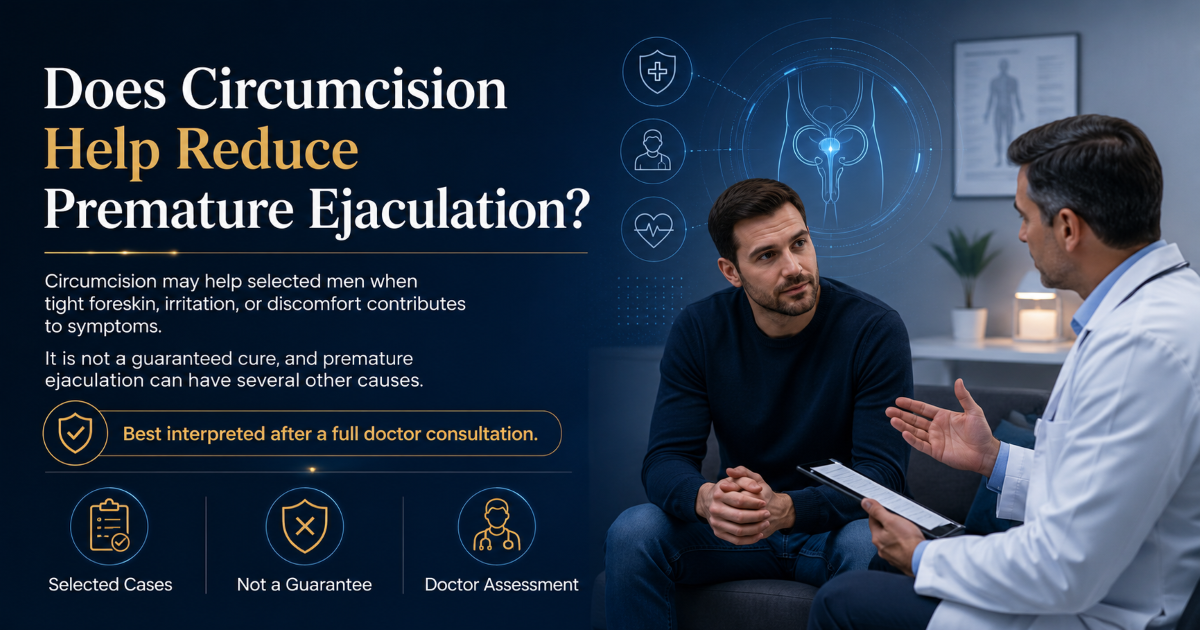
Many adult men ask whether circumcision, including device-assisted or so-called bloodless circumcision, can help with premature ejaculation. The honest answer is that circumcision may help selected men when foreskin tightness, inflammation, friction sensitivity, or hygiene problems contribute to symptoms, but it is not a guaranteed treatment for premature ejaculation.
Circumcision can improve comfort, hygiene, and foreskin-related symptoms, but it should not be sold as a guaranteed cure for premature ejaculation. Some studies report improvement in ejaculation control after adult circumcision, while sexual response varies by person. If premature ejaculation is your main concern, a doctor should assess foreskin anatomy, glans sensitivity, anxiety, erectile function, infection, prostatitis symptoms, medication history, and relationship factors before recommending treatment.
Best candidate profile
Men with tight foreskin, recurrent inflammation, painful retraction, tearing during sex, hygiene difficulty, or sensitivity linked to foreskin irritation may benefit from a circumcision consultation.
Not a guaranteed PE cure
Premature ejaculation can have psychological, neurological, hormonal, inflammatory, medication-related, or relationship-related causes. Circumcision is only one possible consideration in selected cases.
Bangkok planning point
International patients should plan consultation, procedure timing, wound care, follow-up access, and travel restrictions before booking adult circumcision in Bangkok.
Table of Contents
1. Does circumcision help reduce premature ejaculation?
2. Why adult men consider circumcision
3. What does bloodless circumcision mean?
4. Traditional vs device-assisted circumcision
5. Candidate checklist
6. What happens during the procedure?
7. Recovery timeline and aftercare
8. Risks and when not to rush
9. How to choose a clinic in Bangkok
10. FAQ
Does Circumcision Help Reduce Premature Ejaculation?
The relationship between circumcision and premature ejaculation is not simple. Some adult men feel better control after circumcision because the foreskin no longer traps moisture, becomes inflamed, pulls painfully, or creates excessive friction. Some clinical studies have also reported improvements in intravaginal ejaculatory latency time and self-reported control after adult circumcision.
However, premature ejaculation is not always caused by the foreskin. It can be associated with anxiety, stress, erectile dysfunction, prostatitis, thyroid issues, medications, relationship factors, hypersensitivity, or learned sexual response patterns. For that reason, circumcision should be considered only after a proper consultation, not as a universal solution.
Why Adult Men Consider Circumcision
Adult circumcision is the surgical removal of the foreskin covering the glans. Men commonly consider it for medical, hygiene, comfort, or personal reasons.
Medical or functional reasons
- Tight foreskin or phimosis
- Repeated balanitis or foreskin inflammation
- Painful retraction or tearing during sex
- Difficulty cleaning under the foreskin
- Recurrent odor, smegma, or irritation
- Foreskin-related discomfort during erection
Personal or sexual comfort reasons
- Preference for easier daily hygiene
- Desire to reduce foreskin friction or pulling
- Cosmetic preference
- Religious or cultural reasons
- Concern about sensitivity related to foreskin irritation
- Planning before selected male intimate procedures
For a full service overview, see Adult Circumcision at Eternity Clinic International.
What Does Bloodless Circumcision Mean?
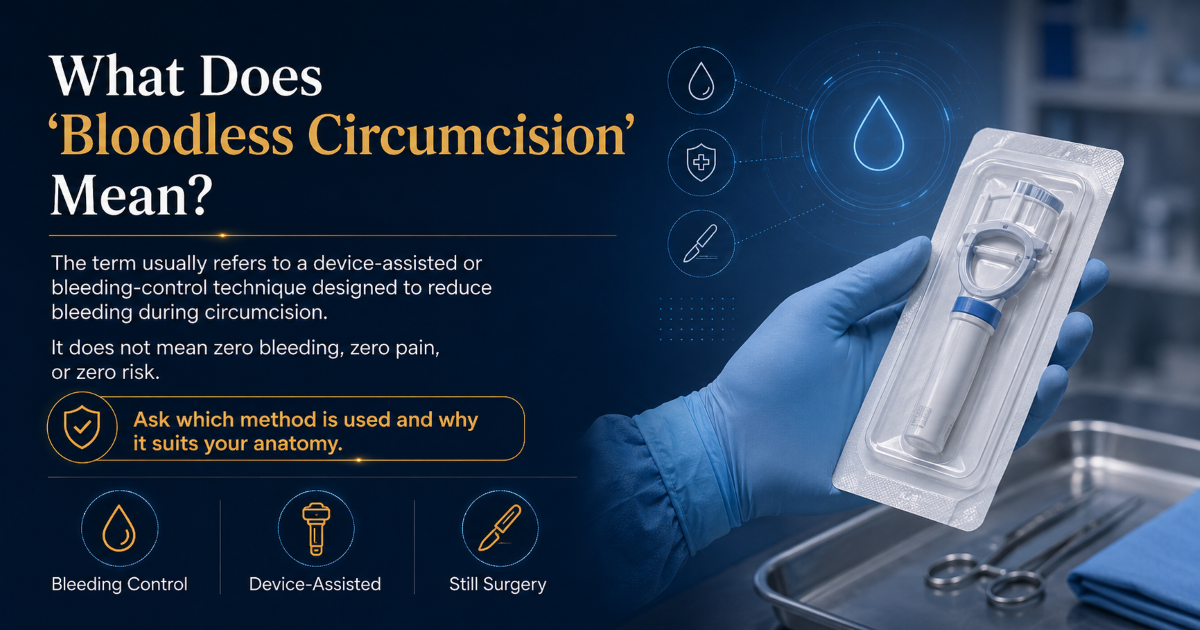
In clinic marketing, bloodless circumcision usually refers to a device-assisted or bleeding-control circumcision technique designed to cut and close the foreskin edge in a controlled way. It may involve a disposable circumcision suture device, stapler-type device, or other hemostasis-focused technique.
The term bloodless should be interpreted carefully. Any surgical procedure can still involve bleeding, swelling, bruising, wound separation, infection, pain, scar sensitivity, or cosmetic dissatisfaction. A more medically accurate description is bleeding-control circumcision technique or device-assisted circumcision designed to reduce bleeding.
Traditional Circumcision vs Device-Assisted Circumcision
There is no single best method for every man. The safest approach depends on foreskin tightness, scarring, inflammation, frenulum anatomy, bleeding risk, cosmetic preference, doctor experience, and aftercare compliance.
| Method | How it works | Potential advantages | Points to discuss |
|---|---|---|---|
| Traditional surgical circumcision | The foreskin is removed surgically and the wound is closed with sutures. | Flexible for different anatomies and allows doctor-controlled shaping. | Bleeding control, suture care, scar line, swelling, wound separation, and follow-up. |
| Electrocautery or laser-assisted technique | Energy device may support cutting or bleeding control depending on protocol. | May help hemostasis when used correctly. | Heat injury risk, wound healing, whether sutures are needed, and doctor experience. |
| Device-assisted or staple circumcision | A device removes foreskin and closes the wound edge with staples or a device-specific mechanism. | May support shorter procedure time, consistent wound edge, and bleeding control in suitable patients. | Device size, staple care, swelling, when staples loosen, and suitability for severe phimosis or scarring. |
Candidate Checklist: When Circumcision May Be Worth Discussing
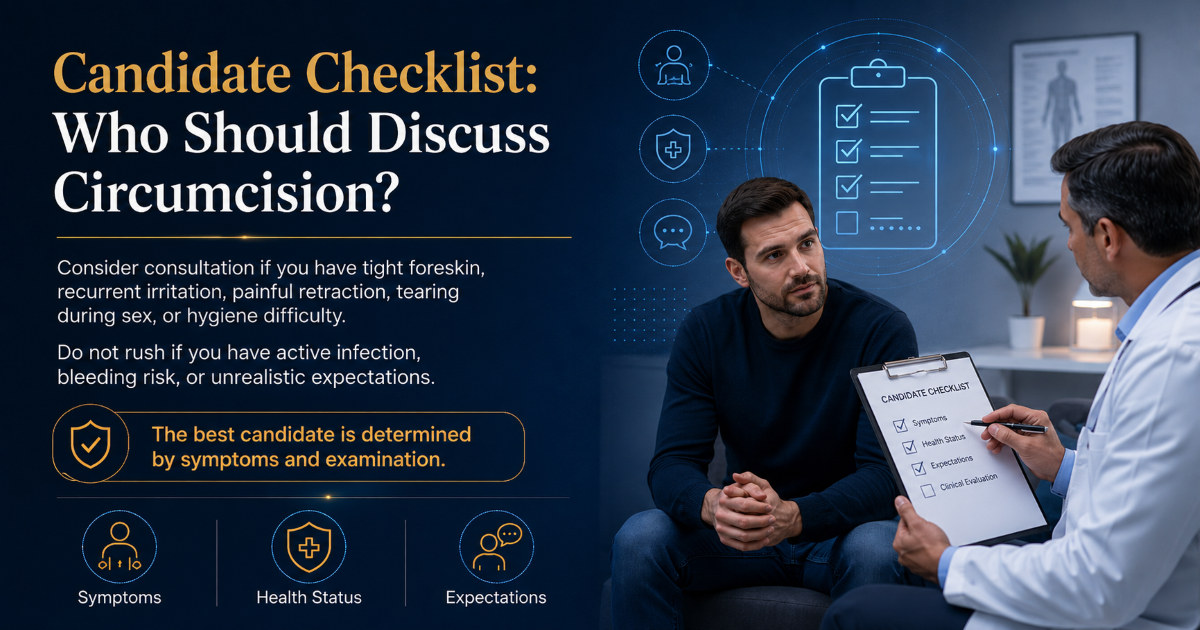
Use this checklist before booking treatment. It does not replace a doctor assessment, but it can help organize your consultation.
You may be a stronger candidate if you have
- Foreskin that is difficult or painful to retract
- Recurrent swelling, redness, odor, or discharge under the foreskin
- Repeated tearing during sex or masturbation
- Painful erection due to tight foreskin
- Hygiene difficulty despite proper cleaning
- Premature ejaculation symptoms plus clear foreskin irritation or hypersensitivity triggers
You should not rush if you have
- Active infection that has not been treated
- Uncontrolled diabetes or poor wound healing risk
- Bleeding disorder or blood-thinning medication
- Unclear cause of ejaculation symptoms
- Unrealistic expectation of guaranteed sexual performance improvement
- Concern about irreversible cosmetic change
What Happens During Adult Circumcision?
The exact process depends on the selected method and clinic protocol, but most adult circumcision pathways include these steps.
Private consultation
The doctor reviews foreskin tightness, inflammation history, sexual discomfort, premature ejaculation symptoms, medications, allergies, medical conditions, and expectations.
Examination and treatment planning
The doctor checks whether circumcision is appropriate, whether phimosis or frenulum issues are present, and whether PE needs separate evaluation.
Method and anesthesia discussion
You should understand the planned method, anesthesia, wound closure, expected swelling, pain control, activity restrictions, risks, and follow-up access.
Procedure and wound closure
The foreskin is removed using the selected technique. Bleeding is controlled and the wound is closed with sutures, staples, or device-specific closure.
Aftercare and follow-up
The clinic explains dressing care, cleaning, medication, warning signs, and when to return to exercise, sex, travel, and daily routines.
Recovery Timeline After Adult Circumcision
Recovery varies by technique, anatomy, wound healing, smoking status, diabetes control, sexual abstinence, and aftercare. Always follow the instructions from your treating doctor.
| Period | What is common | What to do |
|---|---|---|
| First 24-48 hours | Mild bleeding spots, swelling, tenderness, dressing tightness, and sensitivity. | Rest, keep the dressing clean and dry, take medication as prescribed, and avoid heavy movement. |
| Days 3-7 | Bruising, swelling, sensitivity, and mild discomfort may continue. | Clean as instructed, avoid friction, wear supportive underwear, and attend follow-up if scheduled. |
| Weeks 2-3 | The wound usually starts settling. Stitches or staples may loosen depending on method. | Do not pull stitches or staples by force. Continue avoiding sex, masturbation, swimming, sauna, and heavy training unless cleared. |
| Weeks 4-6 | Many adults feel more comfortable, but scar firmness and sensitivity can remain. | Ask the doctor before returning to sex or intense exercise. Use protection and avoid friction if sensitivity remains. |
| After 6 weeks | Scar maturation continues for months and sensation may gradually adjust. | Contact the clinic if pain, swelling, discharge, scar tightness, or sexual discomfort persists. |
- Keep the wound clean and dry according to clinic instructions.
- Take medication exactly as prescribed.
- Avoid sex and masturbation until medically cleared.
- Avoid cycling, swimming, sauna, gym training, and friction during early healing.
- Do not remove staples or stitches by force.
- Contact the clinic if bleeding, swelling, pain, fever, pus, or urinary difficulty occurs.
Risks, Limitations, and When to Seek Medical Help
Circumcision is commonly performed, but it is still surgery. Safe medical content should explain limitations clearly, especially when the page discusses sexual performance or premature ejaculation.
Possible risks
- Bleeding or hematoma
- Wound infection
- Swelling, bruising, or delayed healing
- Wound separation
- Excess or insufficient skin removal
- Scar sensitivity or tightness
- Change in sensation
- Cosmetic dissatisfaction
- Need for revision in selected cases
PE-related limitations
- Circumcision does not treat every cause of premature ejaculation.
- Improvement in studies does not mean every patient improves.
- Sexual sensation varies after healing.
- Some men may need behavioral therapy, medication, pelvic floor evaluation, or treatment for infection or prostatitis.
- Expectations should be discussed before surgery.

How to Choose a Circumcision Clinic in Bangkok
For international patients, clinic choice should be based on medical assessment, sterile protocol, realistic explanation, aftercare, and follow-up access rather than only price, speed, or promotional wording.
| What to check | Why it matters | Question to ask |
|---|---|---|
| Doctor assessment | Confirms whether your foreskin anatomy and symptoms match circumcision. | Will the doctor examine me and explain whether PE may need separate treatment? |
| Method explanation | Different techniques have different closure methods, aftercare, and swelling patterns. | Why is this method suitable for my case? |
| Risk disclosure | Transparent risk discussion is a sign of safer medical practice. | What are the most common complications and what should I do if they happen? |
| Recovery planning | Travel, work, sex, gym, swimming, and follow-up should be planned realistically. | How many days should I stay in Bangkok after the procedure? |
| Aftercare access | Patients need support if bleeding, swelling, pain, or wound concerns occur. | How can I contact the clinic after hours or after returning home? |
Read more about adult circumcision in Bangkok. If you have tight foreskin, also review the phimosis and tight foreskin guide.
Book a Private Adult Circumcision Consultation
Send your case for doctor review if you have tight foreskin, repeated inflammation, hygiene difficulty, pain during sex, or questions about whether circumcision may relate to sensitivity or premature ejaculation in your case.

Doctor Review and Medical Safety
This page is prepared as patient education for adult circumcision, device-assisted circumcision, foreskin-related symptoms, and the question of premature ejaculation. Suitability, technique selection, anesthesia, risks, recovery, and whether premature ejaculation needs separate treatment must be confirmed during a private doctor consultation.
Reviewed by: Dr. Beer, Eternity Clinic
Last content update: 17 June 2026
FAQ: Circumcision, Bloodless Method, and Premature Ejaculation
Can circumcision cure premature ejaculation?
Circumcision should not be presented as a guaranteed cure for premature ejaculation. It may help selected men when foreskin tightness, inflammation, tearing, or irritation contributes to sensitivity or discomfort, but PE can have many causes and may need separate treatment.
Is bloodless circumcision really bloodless?
The term usually refers to a bleeding-control or device-assisted technique designed to reduce bleeding. It does not mean zero bleeding, zero pain, or zero risk. Any surgical procedure can involve bleeding, swelling, infection, and delayed healing.
Is device-assisted circumcision better than traditional circumcision?
Device-assisted circumcision can be suitable for many adult patients, but it is not automatically better for everyone. Suitability depends on foreskin tightness, scarring, inflammation, frenulum anatomy, device size, bleeding risk, and doctor experience.
How long does adult circumcision recovery take?
Many adults need several weeks for comfortable healing. Scar maturation and sensation adjustment can take longer. Avoid sex, masturbation, swimming, sauna, cycling, and heavy exercise until the doctor confirms safe healing.
Will circumcision change sexual sensation?
Sexual sensation varies. Some men report improved comfort because tight foreskin or irritation is removed. Others notice sensitivity changes during the healing period. Expectations should be discussed before treatment.
Who should consider circumcision?
Men with phimosis, recurrent foreskin inflammation, painful retraction, tearing during sex, hygiene difficulty, or foreskin-related discomfort may benefit from a consultation. Personal preference can also be discussed with a doctor.
When should I avoid or delay circumcision?
Delay treatment if you have active infection, uncontrolled diabetes, unexplained penile symptoms, blood-thinning medication issues, bleeding disorder, unrealistic expectations, or uncertain diagnosis. A doctor should assess these first.
What warning signs require medical help after circumcision?
Contact your clinic promptly if you have heavy bleeding, fever, pus, worsening redness, severe pain, inability to urinate, blackened skin, rapid swelling, or significant wound opening.
Medical References
The following references were used for general medical context. They do not replace personalized diagnosis, sexual health assessment, or treatment planning.

Latest Articles
Permanent Solution for Premature Ejaculation with Surgery
Premature ejaculation can be distressing, but it should not be reduced to a single promise
Delayed Ejaculation: Is It Really Good? What to Do If You’re Facing This Issue
Delayed ejaculation may sound positive to some men, but when climax takes much longer than
How to Measure Condom Size Properly: Understanding Sizes 49, 52, 54, and 56
Condom size is not judged by length alone. For most men, the most useful measurement
Penile Enlargement With “Your Own Tissue” or “Your Own Fat”: Why It May Not Be Worth the Pain
Using your own tissue or your own fat can sound more natural than synthetic material,
Circumcision at a Clinic vs Hospital: How to Choose the Right Medical Setting
Adult circumcision can be planned in different medical settings. The safest choice depends on your
Adult Circumcision Explained: Benefits, Methods, Recovery, and Safety
Adult circumcision is a procedure to remove the foreskin covering the head of the penis.
Where is the Best Place for Vasectomy (Male Sterilization): Hospital or Clinic?
A vasectomy is a permanent male contraception procedure, but choosing where to have it done
What Sexual Positions Are Best for Men with a Short Penis to Maximize Pleasure in the Bedroom?
A shorter penis or concern about penis size does not automatically mean poor intimacy. Comfort,