

Ejaculating sooner than wanted can affect confidence, intimacy, and relationships, but it is not a character flaw. Premature ejaculation may involve psychological pressure, erectile dysfunction, penile sensitivity, medical conditions, medication effects, and learned arousal patterns. The safest approach is to identify the cause pattern first, then choose behavioral, medication-based, counseling, ED, or selected procedural treatment according to the diagnosis.
Men may ejaculate too quickly because of reduced ejaculatory control, performance anxiety, stress, erectile dysfunction, penile hypersensitivity, prostatitis or inflammation, thyroid or neurological factors, medication or substance effects, or conditioned rushed sexual habits. PE is usually treatable, but treatment should not start with a guaranteed surgery claim. A doctor should classify whether PE is lifelong or acquired, screen for ED and medical triggers, review psychological and relationship factors, then discuss stop-start or squeeze techniques, topical anesthetics, oral medication, counseling, ED treatment, or selected procedures such as dorsal neurotomy only when appropriate.
PE is common
Many men experience early ejaculation at some point, and persistent PE can be evaluated medically.
Causes often overlap
Stress, ED, sensitivity, medication, inflammation, and relationship pressure may appear together.
Treatment should be staged
Most men should review behavioral and medical options before considering surgery.
Table of Contents
1. What does ejaculating too quickly mean?
2. Main causes of premature ejaculation
3. Daily life and relationship impact
4. Diagnosis pathway
5. Treatment and solutions
6. When dorsal neurotomy may be considered
7. Consultation checklist
8. FAQ
What Does Ejaculating Too Quickly Mean?
Premature ejaculation usually means ejaculation happens sooner than desired, is difficult to delay, and causes distress for the patient or partner. It may happen before penetration, shortly after penetration, or earlier than the patient wants during sexual activity.
Timing matters, but it is not the only factor. Control, distress, partner impact, erection quality, and whether the problem is lifelong or acquired are essential parts of diagnosis.

Main Causes of Premature Ejaculation
PE is often multifactorial. The original article listed psychological, physical, behavioral, and genetic causes. The safer medical approach is to explain that these factors may contribute, but no single cause should be assumed without assessment.
| Cause category | Examples | Why it matters for treatment |
|---|---|---|
| Psychological factors | Performance anxiety, stress, negative sexual experiences, shame, depression, fear of disappointing a partner. | Counseling, sex therapy, pacing, communication, and anxiety reduction may be central. |
| Erectile dysfunction | Weak or unreliable erection, fear of losing erection, rushing to finish before erection softens. | ED treatment may be needed before PE procedures are considered. |
| Penile hypersensitivity | Very rapid sensory response to stimulation or lifelong pattern of fast ejaculation. | Condoms, topical anesthetics, medication, and selected procedural review may be discussed. |
| Medical conditions | Prostatitis, pelvic discomfort, thyroid factors, neurological disease, urinary symptoms, or inflammation. | The underlying condition should be treated rather than masking symptoms. |
| Medication or substance effects | Stimulants, recreational drugs, alcohol pattern, medication changes, or withdrawal from some medicines. | Medication review and safer lifestyle changes may be necessary. |
| Behavioral conditioning | Rushed masturbation, sex under pressure, fear of being caught, or repeated panic during arousal. | Stop-start, pause-squeeze, arousal awareness, and partner communication may help selected men. |
Daily Life and Relationship Impact
PE can affect mental health, self-image, sexual confidence, communication, and relationship satisfaction. Some men avoid sex because they fear another disappointing experience, while partners may misinterpret avoidance as loss of attraction.

Possible emotional impact
- Stress, embarrassment, frustration, or avoidance of sex
- Reduced confidence or fear of repeated failure
- Over-focusing on timing instead of connection
Possible relationship impact
- Less communication about sex and needs
- Partner dissatisfaction or misunderstanding
- More pressure during intimacy, which may worsen PE
Diagnosis Pathway: What a Doctor Should Check
A good consultation should not simply ask how many minutes you last. It should identify the pattern and cause group so treatment can be matched to the patient.
Classify the PE type
Is it lifelong, acquired, situational, or generalized? Did it start from first sexual experiences or develop later?
Assess control and distress
How often does it happen, how difficult is it to delay, and how much does it affect confidence or relationships?
Screen for ED
Ask whether erection is firm enough, whether it is lost quickly, and whether the patient rushes because he fears losing it.
Review medical and medication factors
Check urinary symptoms, pelvic pain, prostatitis concern, thyroid symptoms, medicines, alcohol, stimulants, and recreational drugs.
Review psychological and partner context
Performance anxiety, shame, stress, depression, conflict, or poor communication can sustain the cycle.
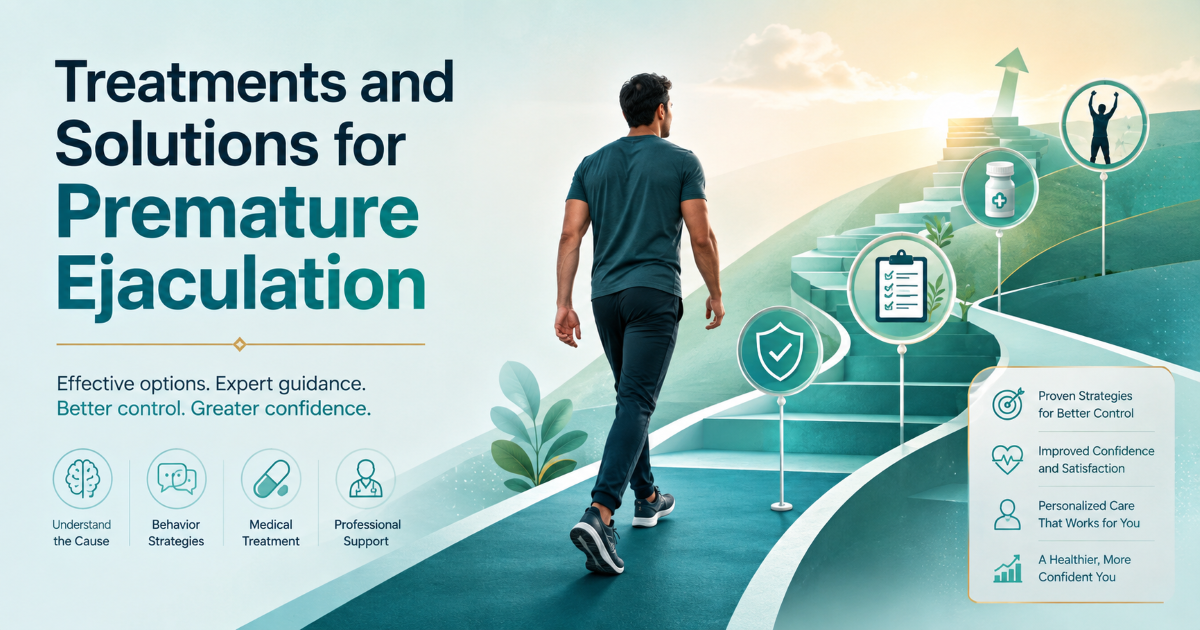
Treatments and Solutions for Premature Ejaculation
PE treatment should be staged. Many patients benefit from a combination plan rather than one single method.
| Treatment option | How it may help | Important caution |
|---|---|---|
| Stop-start and pause-squeeze techniques | May improve arousal awareness and help selected men delay ejaculation. | Requires consistent practice and should not be painful. |
| Pelvic floor training | May improve control in selected men. | Over-tensing can worsen pelvic discomfort; relaxation matters too. |
| Topical anesthetic creams or sprays | May reduce penile sensitivity temporarily. | Can reduce pleasure or numb a partner if used incorrectly. |
| Oral medication discussion | SSRIs, dapoxetine where available, or other prescribed options may be considered. | Requires medical review for side effects, contraindications, and interactions. |
| ED treatment | May reduce rushing when poor erection quality contributes to PE. | ED medicines require cardiovascular and medication interaction review. |
| Psychosexual counseling or CBT-informed care | May help anxiety, shame, avoidance, trauma, depression, or relationship pressure. | Often works best with partner communication and realistic goals. |
For a full overview, see Premature Ejaculation Treatment.
When Dorsal Neurotomy May Be Considered
The original article described surgery as a long-term solution with a 4-5x increase in duration. That type of result should not be promised. Dorsal neurotomy may be discussed only for selected persistent PE cases with suspected penile hypersensitivity after assessment.
May be considered
- Persistent or lifelong PE with suspected penile hypersensitivity
- Significant distress despite non-surgical treatment review
- ED has been assessed or treated if present
- Patient understands altered sensation and variable outcome risk
- Realistic expectations, with no demand for guaranteed minutes
Usually address first
- Untreated ED
- Active infection, prostatitis symptoms, penile pain, or urinary symptoms
- Severe anxiety, depression, or relationship conflict without support
- Medication or substance-related ejaculation changes
- Expectation of a permanent cure for every patient
For procedure-specific information, see Dorsal Neurotomy.
Consultation Checklist
Before choosing any PE treatment, prepare details that help the doctor identify your cause pattern and safety risks.

- When PE started and whether it is lifelong or acquired.
- Whether it happens every time, only with certain partners, or only in certain situations.
- Approximate timing, control level, and distress level.
- Whether erection quality is reliable.
- Any urinary symptoms, pelvic pain, prostatitis concern, medication, alcohol, or stimulant use.
- Treatments already tried, including supplements, numbing products, or delay pills.
Book a Private Premature Ejaculation Consultation
Send your case for doctor review if you have persistent early ejaculation, reduced control, relationship distress, suspected penile hypersensitivity, erectile dysfunction, anxiety-related PE, or questions about medication or dorsal neurotomy. The clinic team can help explain diagnosis, treatment options, risks, recovery, and realistic expectations.

Doctor Review and Medical Safety
This page is prepared as patient education for premature ejaculation causes, diagnosis, behavioral techniques, medication discussion, ED screening, dorsal neurotomy consideration, and male intimate health. Suitability, method choice, risks, recovery, and expected results must be confirmed during a private doctor consultation.
Reviewed by: Dr. Beer, Eternity Clinic
Last content update: 18 June 2026
Why Men Ejaculate Too Quickly FAQ
Why do men ejaculate too quickly?
Possible reasons include performance anxiety, stress, erectile dysfunction, penile hypersensitivity, prostatitis or inflammation, thyroid or neurological factors, medications, substances, and rushed sexual habits.
Is premature ejaculation psychological or physical?
It can be either or both. Psychological pressure and physical contributors often overlap, so diagnosis should not assume only one cause.
Can ED cause premature ejaculation?
Yes. Some men rush because they fear losing erection. ED should be evaluated before PE procedures are considered.
Can PE be treated?
Often, yes. Treatment may include behavioral techniques, topical anesthetics, oral medication, ED treatment, counseling, and selected procedures after assessment.
Are SSRIs or dapoxetine safe for PE?
They may help selected patients but require doctor review for side effects, contraindications, availability, and drug interactions.
Does dorsal neurotomy guarantee longer intercourse?
No. It may help selected cases with suspected hypersensitivity, but exact duration, permanent cure, and recurrence-free results cannot be guaranteed.
When should I see a doctor?
See a doctor if PE is persistent, distressing, new, associated with ED, pain, urinary symptoms, medication changes, anxiety, or relationship difficulty.
Is PE something to be ashamed of?
No. PE is a common sexual health concern and can be discussed privately with a clinician.
Medical References
The following references were used for general medical context. They do not replace personalized diagnosis or treatment planning.

Latest Articles
What Sexual Positions Are Best for Men with a Short Penis to Maximize Pleasure in the Bedroom?
A shorter penis or concern about penis size does not automatically mean poor intimacy. Comfort,
How many Methods for Increasing Penis Size? This Article Has the Answers.
Many men search for ways to increase penis size, but the safest first step is
Hormone Therapy Without Surgical Gender Transition
Hormone therapy can help some transgender and gender-diverse people align physical characteristics with personal goals
What Are the Symptoms of Cystitis? This Article Has the Answers.
Cystitis is inflammation of the bladder. It is often caused by a bacterial bladder infection,
How to Care for Your Manhood to Keep It Strong and Disease-Free
Penis health is not only about sexual performance. It includes daily hygiene, foreskin care, safer
Permanent Solution for Premature Ejaculation with Surgery
Premature ejaculation can be distressing, but it should not be reduced to a single promise
Delayed Ejaculation: Is It Really Good? What to Do If You’re Facing This Issue
Delayed ejaculation may sound positive to some men, but when climax takes much longer than
How to Measure Condom Size Properly: Understanding Sizes 49, 52, 54, and 56
Condom size is not judged by length alone. For most men, the most useful measurement