
Many young men and teenagers worry whether their penis shape and curvature are normal. Some may notice that their penis leans left or right, curves toward the body, or even bends downward, leading to concerns that they might have an abnormal condition.
A slight penile curvature is normal and can be influenced by how one positions their penis in underwear. However, a significant curvature may be congenital (from birth) or develop later in life. The abnormal curvature typically becomes noticeable only during an erection and not when flaccid.
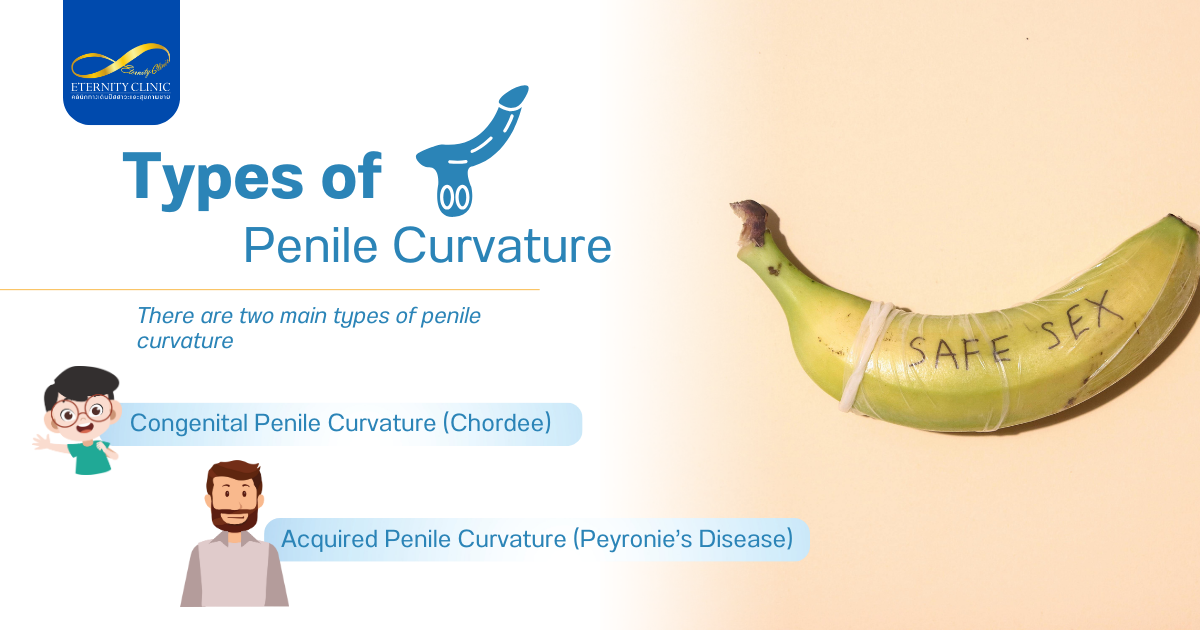
Types of Penile Curvature
There are two main types of penile curvature:
- Congenital Penile Curvature (Chordee)
- This condition is present from birth and often requires surgical correction to straighten the penis.
- Surgery is usually performed before a child starts school, as a severely curved penis can cause difficulties with urination, leading to wet clothes instead of a direct urine stream into the toilet.
- If left untreated, congenital curvature may cause sexual dysfunction later in life.
- This condition may also be associated with hypospadias, where the urethral opening is in an abnormal location.
- Acquired Penile Curvature (Peyronie’s Disease)
- The exact cause is unknown, but it is believed to result from minor repeated trauma to the penis.
- When the body repairs these injuries, calcium deposits may form, leading to scar tissue (fibrosis or plaques) that causes the penis to bend in any direction—left, right, upward, or downward.
- The most common direction is upward toward the abdomen.
- This curvature can occur at any part of the penis—base, midshaft, or tip.
- In severe cases, Peyronie’s disease causes pain and prevents penetration during intercourse, making sex impossible.
Does It Require Treatment?
- If you can have pain-free sex and are not psychologically distressed, treatment is unnecessary.
- However, if intercourse is painful or penetration is difficult due to excessive curvature, treatment is recommended.

Can It Be Fixed?
Yes! The standard treatment is surgery to remove the hardened scar tissue (plaques).
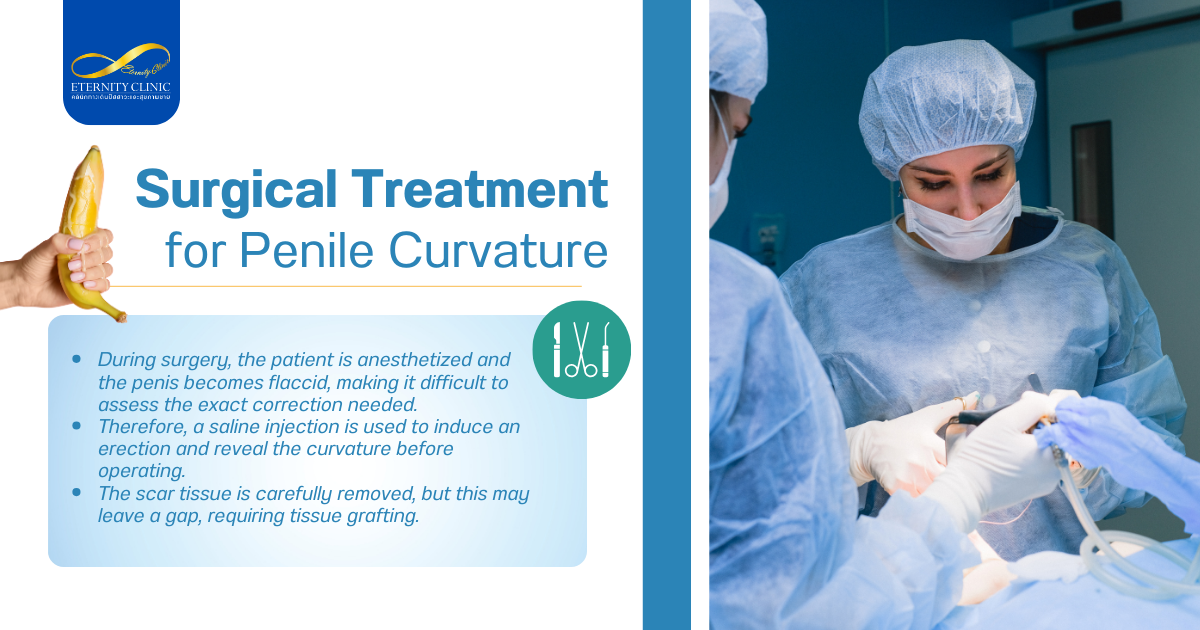
Surgical Treatment for Penile Curvature
- During surgery, the patient is anesthetized and the penis becomes flaccid, making it difficult to assess the exact correction needed.
- Therefore, a saline injection is used to induce an erection and reveal the curvature before operating.
- The scar tissue is carefully removed, but this may leave a gap, requiring tissue grafting.
Types of Grafts Used for Repair:
- Autologous Tissue (Patient’s Own Tissue)
- Best option with the most natural results.
- Commonly taken from the saphenous vein (thigh) or groin area.
- However, this method leaves a scar at the donor site.
- Synthetic Grafts
- Specially designed medical materials.
- Avoids additional scars but may have a higher rejection risk.
Summary: Is a Curved Penis Normal?
- A slight curvature is normal and does not affect sexual function.
- Erections naturally vary—pointing upward, downward, or sideways—depending on ligament tightness.
- Only extreme curvatures (Peyronie’s disease) with hardened plaques cause issues.
- If intercourse is impossible or painful, surgical correction is an option.
- Surgery should be performed by a qualified urologist, such as Dr. Beer, to ensure safety and effectiveness.
DO NOT attempt self-treatment this area contains sensitive nerves and blood vessels.
Post-surgery, a slight reduction in length is common, but Dr. Beer specializes in penile enhancement to restore both size and aesthetics.
Need expert help? Consult Dr. Beer, a specialist in urology and male reproductive surgery.
For more information on penile enhancement and straightening, visit: Eternity Clinic – Enlargement Services
Q&A About Curved or Bent Penis: Is It Dangerous? Can It Be Fixed? Dr. Beer Has the Answers!
Q1: Is a curved penis normal?
A: Yes. A slight curve left/right/up/down can be normal, especially when erect.
Q2 When should I worry about penile curvature?
A: If the curve is new, getting worse, causes pain, or makes sex difficult, you should see a doctor.
Q3: What causes a curved penis?
A: It can be congenital (from birth) or acquired later, often linked to scar tissue (Peyronie’s disease).
Q4: What is Peyronie’s disease?
A: Peyronie’s disease is scar tissue (plaque) in the penis that can cause bending, pain, and problems with penetration.
Q5: Can penile curvature be corrected?
A: Yes. Treatment depends on severity; options include medical evaluation and, in severe cases, surgery performed by a qualified urologist.

Get an initial consultation with Dr.Beer FREE!!!
Ask for information about treatment and additional services make an appointment at
LINE:@ETERNITYCLINIC2
M.D. SUEBPONG ANGCHOUN
Urologist & General Surgeon of advance Endo-Uro and Laparoscopic Surgery
Latest Articles
Can You Really Make Your Penis Bigger?
Does Penis Size Matter? The answer varies from person to person. However, many men have
Can You Enlarge Your Penis Naturally Fact or Fiction?
Enlarge penis — Let’s be honest, penis size is one of those topics that men
Risky or Worth It? Popular Penis Enlargement Techniques
In today’s world, where confidence matters more than ever, many men are turning their attention
Want to Go Bigger? Safe and Proven Penis Enlargement Options
In today’s world, self-confidence plays a vital role in how we live and interact. For
Just by Changing a Few Habits Can Improve Penis Length?
Improve Penis Length | When it comes to penis size, many men can’t help but
Breakthrough Techniques! Can You Really Increase Penis Length?
Penis length has long been a hot topic, especially among men who often associate it
How to Increase Penis Length Without Ruining Your Health
Penis length is a topic that many men worry about, often quietly. This leads to
The Hidden Truth: Why Your Penis Isn’t as Big as You Expect
For many men, penis size can be a source of insecurity. Some wonder why their