
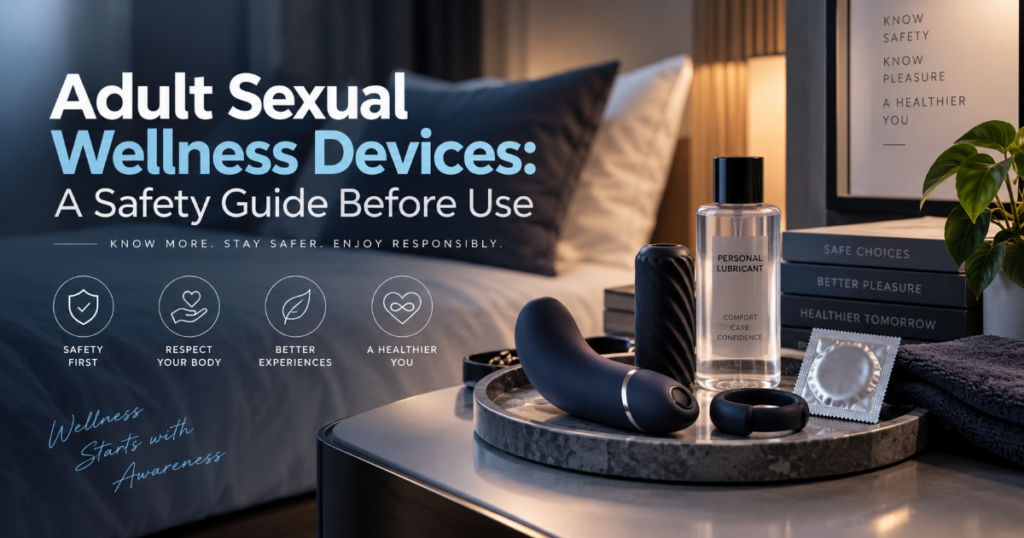
Adult Sexual Wellness Devices: A Safety Guide Before Use
Adult sexual wellness devices should be approached as intimate-contact products, not ordinary online accessories. Before use, focus on clearly identified materials, cleaning, storage, compatible lubricant, personal comfort, and warning signs that need medical advice.
For adults considering sexual wellness devices, safety comes before popularity. Choose products with clearly listed materials, smooth intact surfaces, cleaning instructions, and a size or design that does not cause pain. Clean before and after use, do not share without barrier protection and hygiene steps, use compatible lubricant, and stop if irritation, pain, bleeding, abnormal discharge, swelling, odor, or wounds occur.
Why Safety Matters Before Using Adult Sexual Wellness Devices
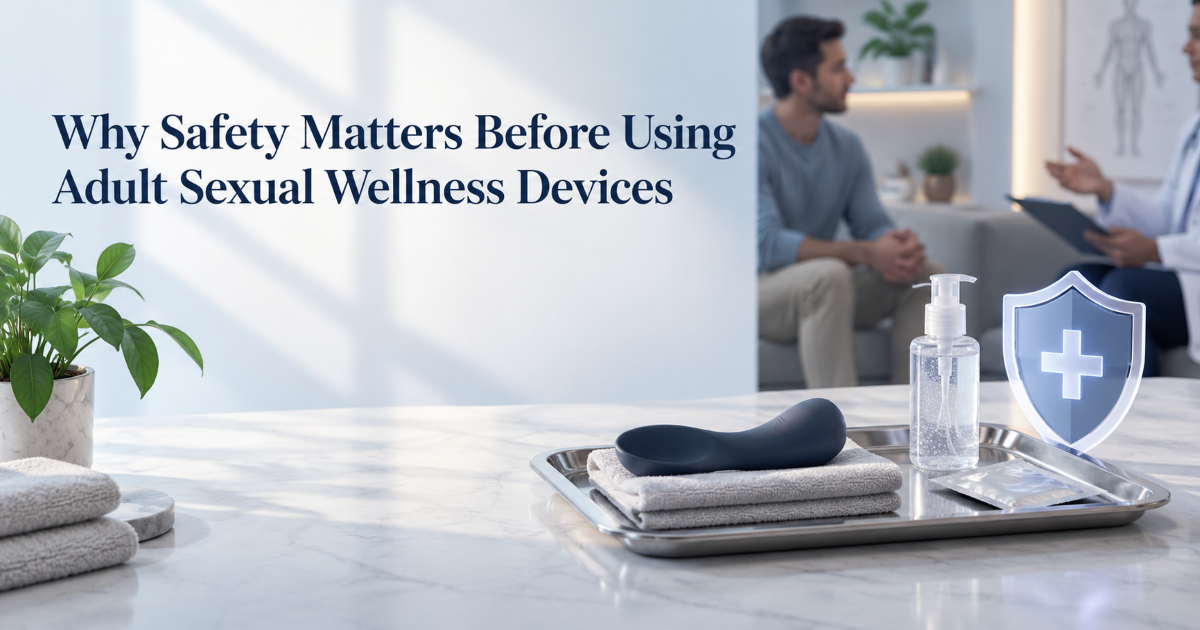
Adult sexual wellness devices come in many forms and are often promoted through reviews, influencers, and online marketplaces. Popularity does not prove that a product is suitable for every body, every use case, or every medical history.
The main safety issues are irritation, allergy, infection risk, poor hygiene, unsuitable material, lubricant mismatch, surface damage, excessive pressure, and tissue injury. A safer decision starts with checking the product, understanding the instructions, and listening to pain or discomfort early.
Check the product
Look for clear material labeling, cleaning instructions, intact surfaces, and a design that is appropriate for intimate contact.
Check your body
Do not continue if burning, itching, pressure, pain, bleeding, or swelling appears during or after use.
Check the setting
Use slowly, communicate clearly, and avoid trial-and-error when intoxicated, rushed, or unable to stop safely.
Material Safety: What Adults Should Look For
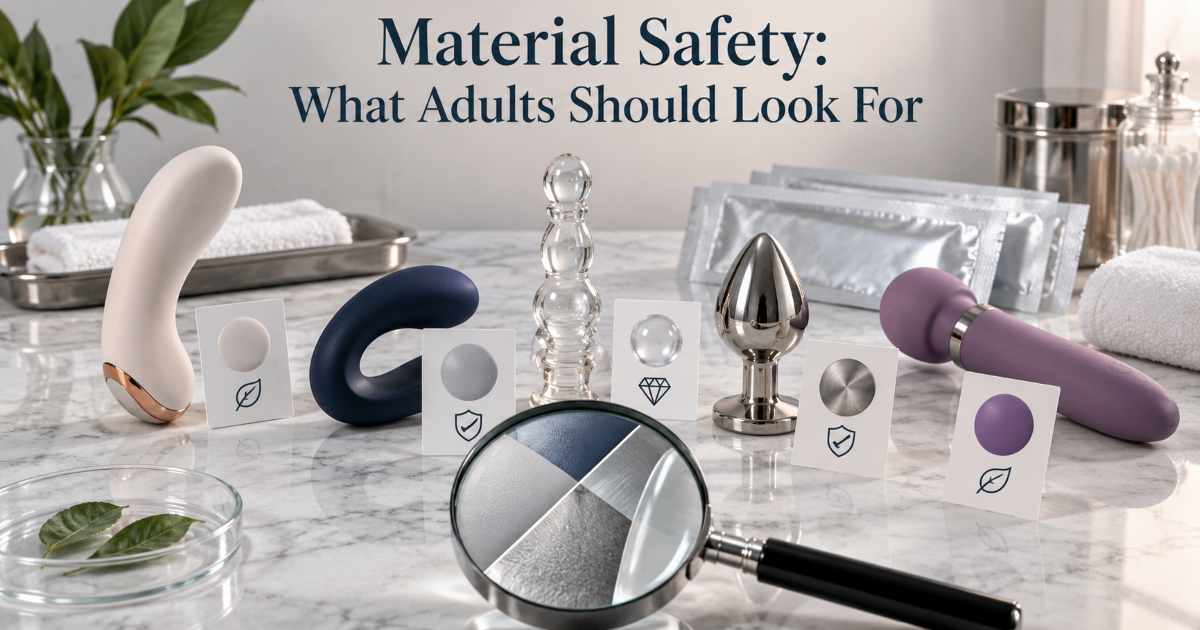
Material matters because sexual wellness devices may touch sensitive skin or mucosal tissue. Products with unclear material labels, strong chemical odor, peeling color, sticky texture, cracks, or damaged surfaces should be treated with caution.
| Material or surface factor | What to check | Why it matters |
|---|---|---|
| Clear material label | The manufacturer identifies the material rather than using vague terms only. | Unclear materials make it harder to judge cleaning, lubricant compatibility, and irritation risk. |
| Non-porous surface where appropriate | The surface is smooth, intact, and not sticky, cracked, peeling, or absorbent. | Damaged or porous surfaces may be harder to clean and may hold residue. |
| Appropriate size and firmness | The product should not require force, create sharp pressure, or cause pain. | Excessive pressure can irritate or injure tissue. |
| Electrical or motorized parts | Follow charging, waterproofing, and cleaning instructions exactly. | Water exposure and cleaning methods vary by device design. |
Cleaning and Storage: Reduce Irritation and Infection Risk
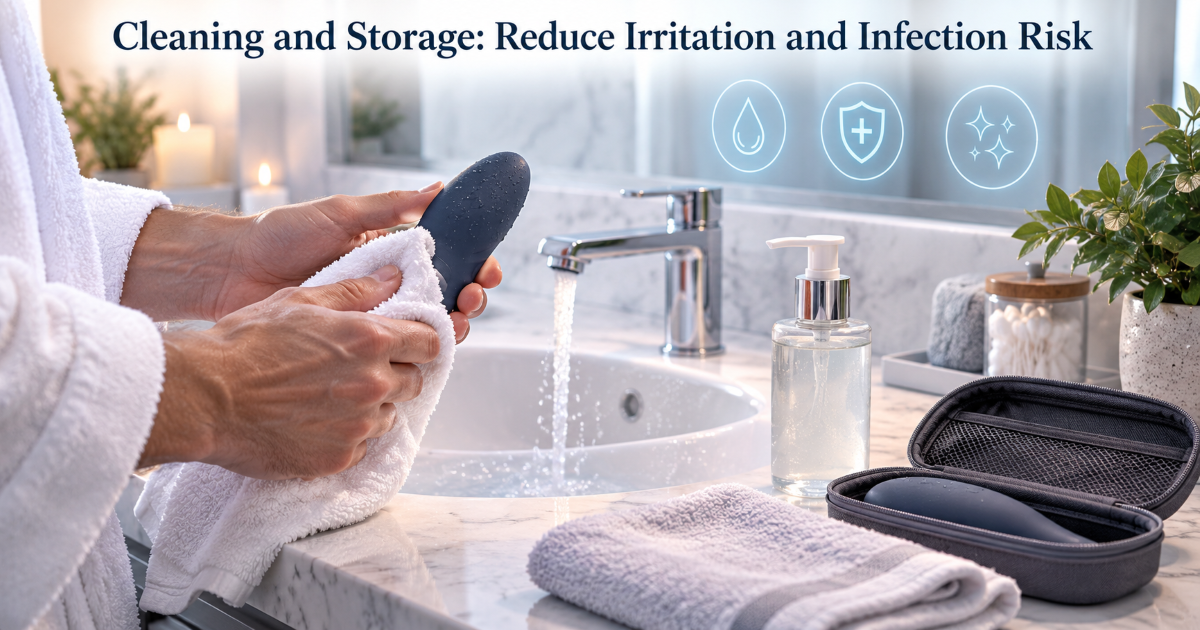
Cleaning should follow the product instructions because different materials and motorized parts tolerate different methods. As a general safety habit, clean before first use, clean after each use, dry fully, and store separately from dust, heat, and other items that may contaminate the surface.
Read the instructions first
Check whether the device is waterproof, water-resistant, motorized, rechargeable, or limited to surface cleaning only.
Clean before and after use
Use the cleaning method recommended for that material. Do not assume every product can be boiled, soaked, disinfected, or scrubbed.
Dry and store separately
Moist storage can encourage residue and odor. Store the device in a clean pouch or container away from heat and damaged surfaces.
Lubricant Compatibility: Avoid Damage and Friction
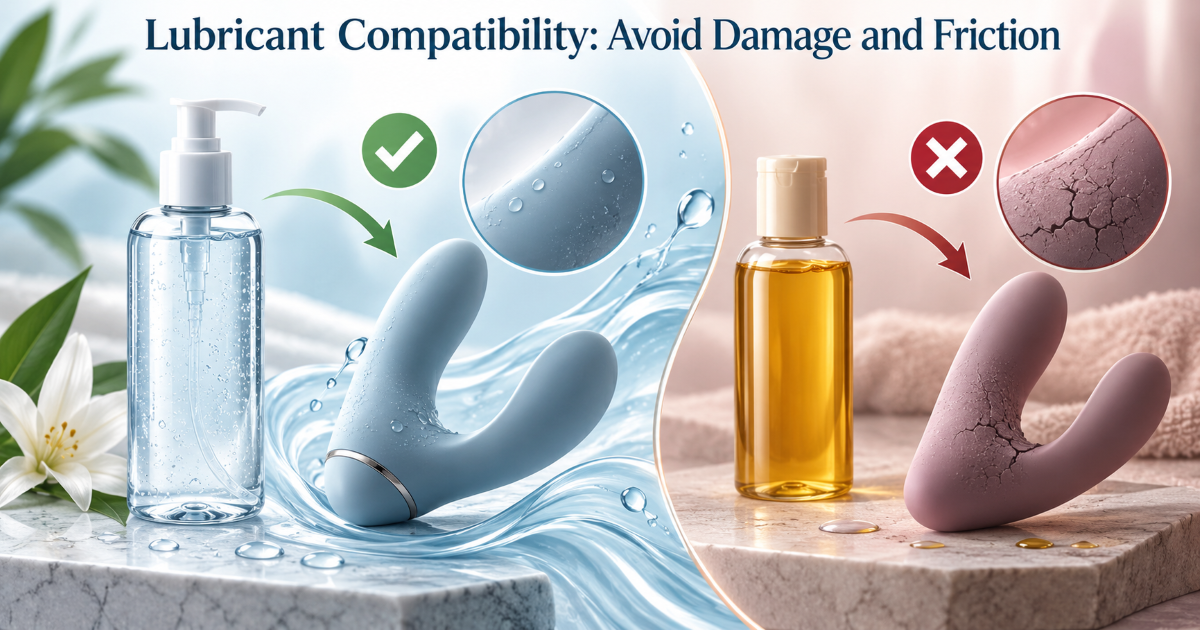
Lubricant can reduce friction, but the wrong formula may damage some materials or weaken latex condoms. Water-based lubricants are often the simplest starting option, while silicone-based lubricants and oil-based products require more caution depending on the device and condom type.
| Lubricant type | Potential use | Caution |
|---|---|---|
| Water-based | Common first choice for many devices and condoms. | May dry faster and require reapplication. |
| Silicone-based | Longer-lasting glide for some situations. | May not be compatible with some silicone devices. Check manufacturer instructions. |
| Oil-based | Not ideal when latex condoms are used. | Oil-based products can weaken latex condoms and increase breakage risk. |
| Warming, flavored, or scented formulas | May be marketed for novelty or sensation. | May irritate sensitive skin or mucosal tissue. Stop if burning or itching occurs. |
Sharing Devices, Condoms, and STI Risk
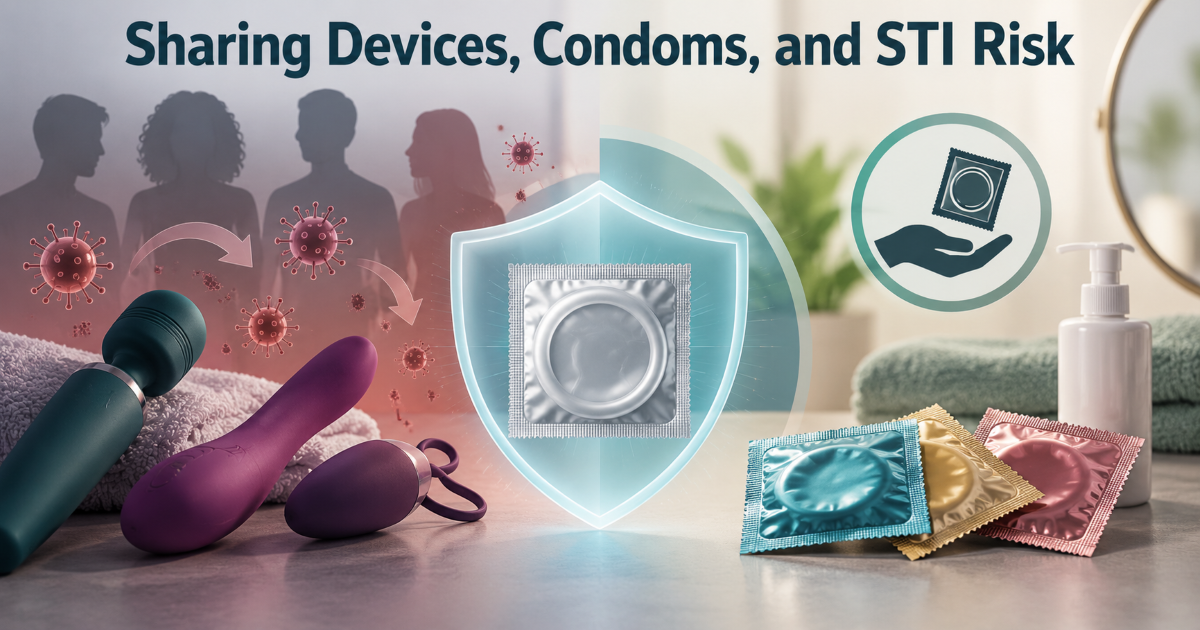
Sharing sexual wellness devices can transfer bodily fluids or microorganisms if the device is not cleaned properly or if barriers are not changed. Risk may increase when a device moves between partners or body sites without cleaning and a fresh condom or barrier.
Do not share casually
Personal devices are safest when kept personal. If sharing occurs, hygiene and barriers matter.
Use a fresh barrier
Use a new condom or barrier when switching users or body sites, and clean according to instructions.
Test when concerned
Consider STI testing if there was unprotected sharing, symptoms, a partner diagnosis, or higher-risk exposure.
Warning Signs: When to Stop and Seek Medical Advice
Discomfort should not be dismissed as normal if it is sharp, persistent, recurrent, or associated with visible tissue changes. Stop using the device and seek medical advice when symptoms suggest irritation, infection, allergy, or injury.
| Warning sign | Possible concern | Suggested next step |
|---|---|---|
| Pain, burning, or itching | Irritation, friction injury, allergy, infection, or unsuitable lubricant. | Stop use and monitor. Seek care if symptoms persist or recur. |
| Bleeding, cuts, wounds, or swelling | Tissue injury or infection risk. | Avoid further use and seek medical evaluation promptly. |
| Abnormal discharge or odor | Possible infection or microbiome disruption. | Consider STI or infection evaluation rather than self-treatment. |
| Urinary pain or difficulty urinating | Urinary tract irritation, urethral injury, or infection. | Seek medical advice, especially if fever or severe pain occurs. |
| Device stuck or injury during use | Urgent mechanical injury risk. | Seek urgent care. Do not force removal if it may worsen injury. |
Buying Checklist Before You Use Any Device
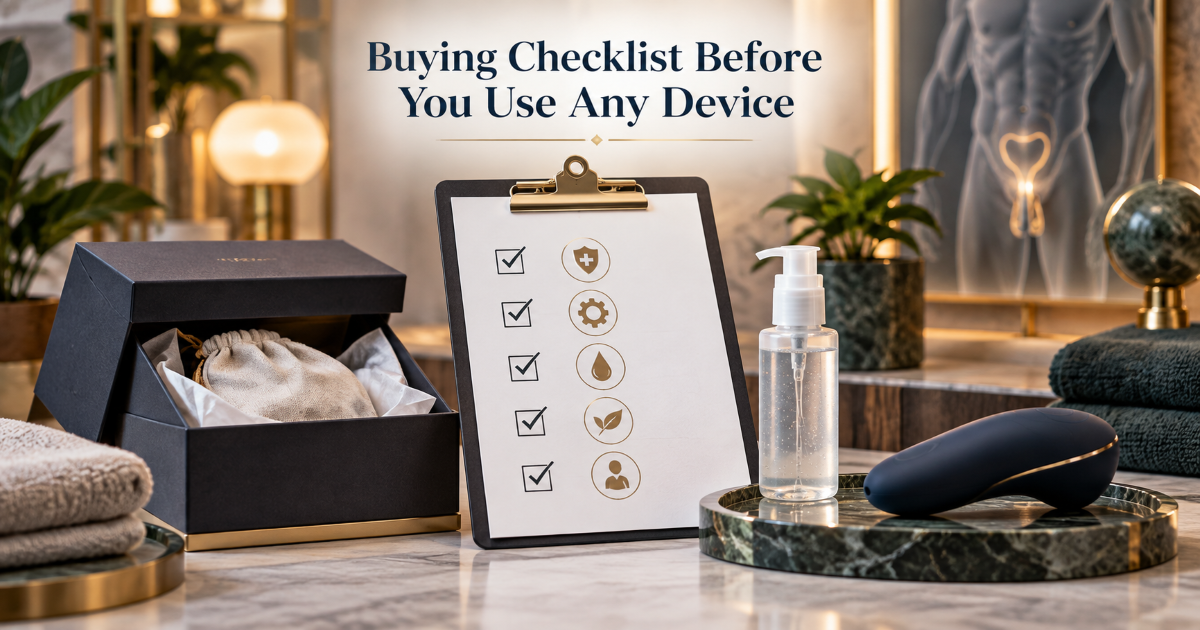
A safer purchase is not necessarily the most expensive product. It is the product that gives you enough information to judge material, cleaning, compatibility, and warning signs.
Confirm material and surface
Choose products with clearly identified materials and avoid items that look cracked, sticky, peeling, or strongly scented.
Check cleaning instructions
Make sure the cleaning method is practical and compatible with the device design.
Check size and use case
A product should not require force, create pressure pain, or be used in a way that conflicts with instructions.
Plan privacy and follow-up
If you have symptoms, a medical condition, recent surgery, STI concern, or repeated discomfort, ask a clinician before continuing use.
FAQ About Adult Sexual Wellness Device Safety
Are adult sexual wellness devices safe for everyone?
No product is safe for everyone. Suitability depends on material, design, hygiene, personal sensitivity, medical history, STI risk, recent procedures, and whether pain or irritation occurs.
What material should I choose?
Choose products with clearly identified materials, smooth intact surfaces, and cleaning instructions. Non-porous materials may be easier to clean when used and maintained properly, but the correct choice depends on the product and body site.
Can sexual wellness devices spread STIs?
Sharing devices without cleaning and fresh barriers may transfer bodily fluids or microorganisms. If sharing occurs, use proper cleaning and a new condom or barrier when switching users or body sites.
Which lubricant is safest with devices?
Water-based lubricant is often the simplest starting option. Silicone-based lubricant may not suit some silicone devices. Oil-based products can weaken latex condoms. Always check both the device and condom instructions.
When should I see a doctor after using a device?
Seek medical advice for persistent or repeated pain, burning, itching, bleeding, swelling, wounds, abnormal discharge, odor, urinary symptoms, fever, or any injury during use.
Medical References
This page is written for adult patient education and medical SEO clarity. It does not replace diagnosis, individualized medical advice, emergency care, or in-person assessment by a qualified healthcare professional.
- Planned Parenthood: Sex toys and safer use
- NHS inform: Types of sex and safer sex guidance
- Cleveland Clinic: Practicing safe sex and why it is important
- Sexual Health St Helens NHS: After sex: things you should know
- International Journal of Impotence Research / PMC: Genital vibration for sexual function and enhancement best practice recommendations

Doctor Review and Medical Safety
Adult sexual wellness devices should be used only when the material is appropriate, the product can be cleaned properly, and the user can stop immediately if discomfort occurs. Persistent irritation, bleeding, discharge, odor, swelling, urinary symptoms, or injury should be evaluated medically rather than managed by changing products repeatedly.
Reviewed by: Dr. Beer, Eternity Clinic
Last content update: 7 September 2026

Get an initial consultation with Dr.Beer FREE!!!
Ask for information about treatment and additional services make an appointment at
LINE:@ETERNITYCLINIC2
M.D. SUEBPONG ANGCHOUN
Urologist & General Surgeon of advance Endo-Uro and Laparoscopic Surgery
Latest Articles
10 Techniques to Enhance Sensation During Sexual Intimacy
10 Techniques to Enhance Sensation During Sexual Intimacy Sensation during intimacy is influenced by arousal,
Best Sexual Wellness Devices for Beginners: A Safety Guide for Adults
Best Sexual Wellness Devices for Beginners: A Safety Guide for Adults If you are considering
(N) Adult Sexual Wellness Devices: A Safety Guide Before Use
Adult Sexual Wellness Devices: A Safety Guide Before Use Adult sexual wellness devices should be
Comfortable Intimacy Positions for Men With Penile Curvature
Comfortable Intimacy Positions for Men With Penile Curvature Penile curvature does not always prevent sexual
How Many Types of Gonorrhea Are There? Can It Be Completely Cured?
How Many Types of Gonorrhea Are There? Can It Be Completely Cured? Gonorrhea is one
Natural Penile Curvature vs. Curvature Caused by Disease: What Is the Difference?
Natural Penile Curvature vs. Curvature Caused by Disease: What Is the Difference? A curved penis
Men in Their 30s: 5 Early Warning Signs of Erectile Dysfunction
Men in Their 30s: 5 Early Warning Signs of Erectile Dysfunction Erectile dysfunction is not
Pelvic Floor Exercises for Men
Pelvic Floor Exercises for Men: A Safe Guide to Better Control and Pelvic Health Pelvic