
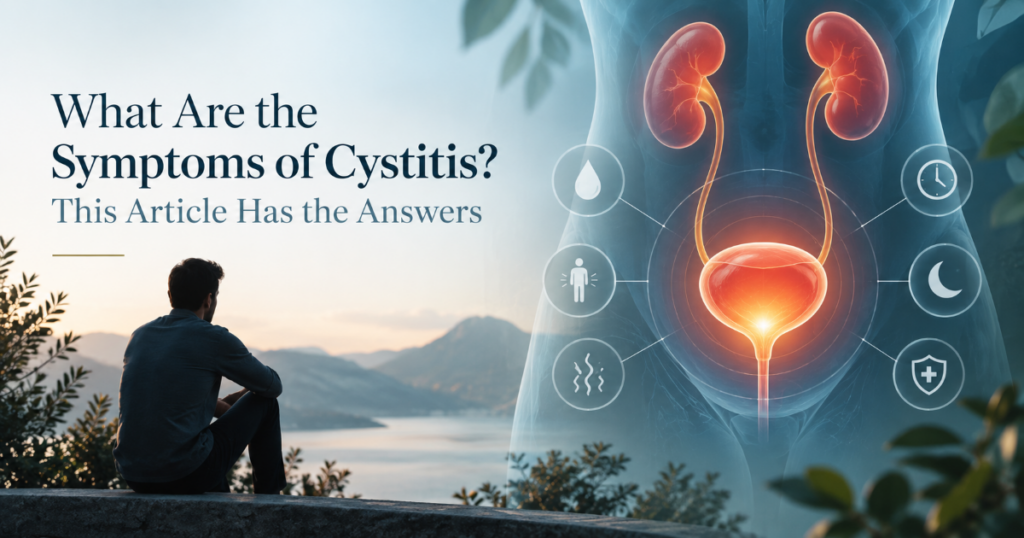
Cystitis is inflammation of the bladder. It is often caused by a bacterial bladder infection, but urinary symptoms can also overlap with sexually transmitted infections, prostate problems, kidney infection, or non-infectious bladder irritation. This guide explains what symptoms to watch for, what may cause them, and when medical care is safer than self-treatment.
Common cystitis symptoms include burning or pain when urinating, frequent urgency, passing only small amounts of urine, lower abdominal discomfort, cloudy or strong-smelling urine, and sometimes blood in urine. In men, cystitis-like symptoms should be assessed carefully because they may be linked with prostate enlargement, urethral infection, sexually transmitted infection, stones, or other urinary tract problems.
Symptoms of Cystitis

Cystitis symptoms usually come from irritation or infection in the bladder and lower urinary tract. The pattern can feel obvious to some patients, but it is still important to confirm the cause when symptoms are new, severe, recurrent, or occur in men.
Burning urination
Pain, stinging, or burning may occur during urination, often more noticeable toward the end of urination.
Frequent urgency
You may feel the need to urinate often, even when only a small amount of urine comes out.
Lower abdominal pain
Discomfort, pressure, or dull pain may be felt around the lower abdomen or bladder area.
| Symptom | What it can feel like | Why it matters |
|---|---|---|
| Cloudy or strong-smelling urine | Urine may look cloudy or smell different from usual. | Can occur with infection, but it is not enough to diagnose cystitis by itself. |
| Blood in urine | Urine may look pink, red, tea-colored, or blood may appear near the end of urination. | Needs medical assessment, especially if visible or recurrent. |
| Difficulty holding urine | Urgency may make it hard to wait before using the toilet. | Can affect daily life and may point to bladder irritation or infection. |
| Painful urination in men | Burning may overlap with urethritis, prostatitis, STI, or bladder infection. | Men should not assume it is simple cystitis without evaluation. |
Causes and Risk Factors for Cystitis
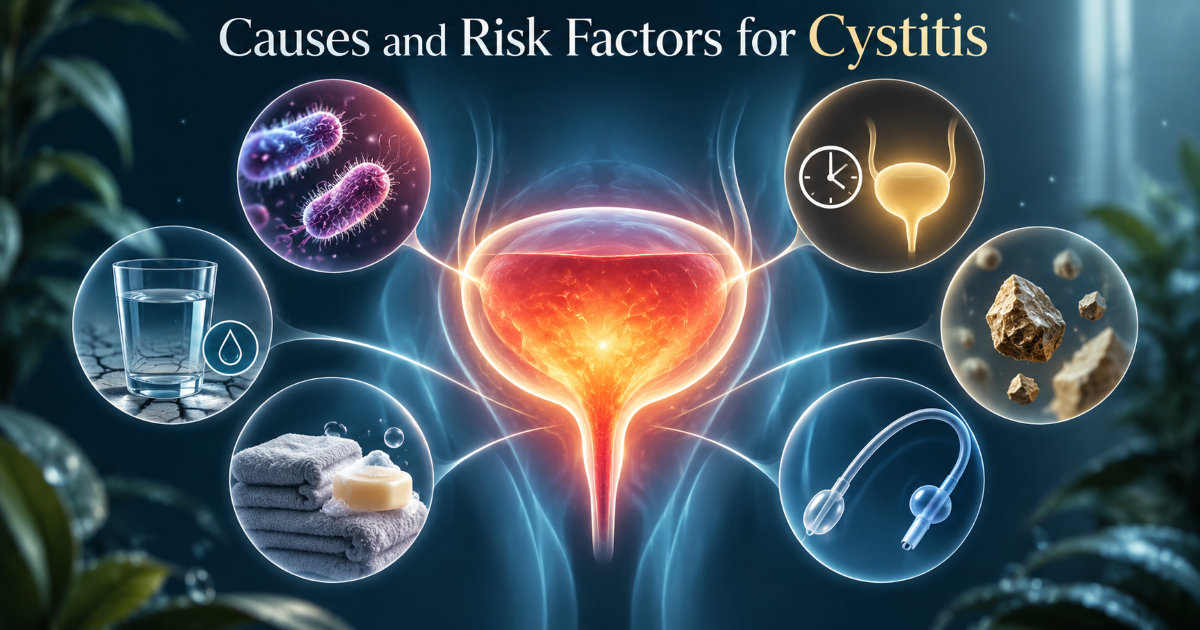
Bacterial cystitis often occurs when bacteria enter the urethra and move into the bladder. E. coli from the bowel area is a common cause. However, bladder inflammation can also be related to medicines, radiation, irritants, catheter use, or other urinary tract conditions.
Holding urine for long periods
Regularly delaying urination may allow bacteria more time to multiply and may irritate the bladder.
Hygiene and sexual activity
Bacteria can enter the urethral area after bowel movements or sexual contact. Gentle hygiene is useful, but harsh washing or irritants can worsen discomfort.
Male urinary tract factors
In men, cystitis is less common than in women. Symptoms may require evaluation for prostate enlargement, incomplete bladder emptying, stones, urethral narrowing, catheter history, or STI-related urethritis.
How to Take Care of Yourself to Reduce Cystitis Risk

Prevention is not about one guaranteed habit. It is about reducing avoidable triggers, supporting normal urination, and seeking care early when warning signs appear.
Do not hold urine
Try to urinate when the bladder feels full rather than delaying for many hours.
Hydrate consistently
Regular fluid intake helps maintain urine flow. Hydration needs vary by body size, activity, climate, and medical conditions.
Use gentle hygiene
Clean the genital area gently. Avoid strong fragrances or harsh products if they trigger irritation.
Treatment Methods for Cystitis

The right treatment depends on whether the problem is bacterial cystitis, another UTI, STI-related urethritis, bladder irritation, prostate-related obstruction, or a more serious infection. Bacterial cystitis is commonly treated with antibiotics, but the antibiotic choice and duration should be based on the patient profile and local medical judgment.
| Step | What may happen | Why it matters |
|---|---|---|
| History and symptom review | The clinician asks about timing, pain, urine changes, fever, sexual exposure, medication, pregnancy status, and previous UTIs. | Helps separate simple cystitis from more complex causes. |
| Urine testing | Urinalysis or urine culture may be used depending on symptoms and risk factors. | Can help confirm infection and guide treatment when needed. |
| Antibiotic decision | Antibiotics may be prescribed when bacterial infection is likely or confirmed. | Wrong antibiotic use can increase resistance and may delay proper treatment. |
| Follow-up | Follow-up is important if symptoms persist, recur, or occur in men. | Persistent symptoms may require culture, imaging, STI testing, or urology review. |
Summary: Cystitis Should Not Be Ignored

Cystitis can feel like a minor urinary problem, but persistent or recurrent symptoms may signal a larger issue. This is especially important for men, older adults, people with diabetes, patients with urinary retention, and anyone with fever, back pain, vomiting, or visible blood in urine.
Most common pattern
Burning urination, frequent urgency, lower abdominal discomfort, cloudy urine, and small urine volumes can fit cystitis.
Safer decision
When symptoms are new, severe, recurrent, or occur in men, medical evaluation is safer than guessing from symptoms alone.
Warning Signs: When Cystitis Symptoms Need Prompt Care
Some urinary symptoms should not be handled as routine cystitis. They may suggest kidney infection, prostate involvement, urinary blockage, STI-related complications, or another condition that needs faster care.
| Warning sign | Why it matters | Suggested action |
|---|---|---|
| Fever, chills, back or flank pain | May suggest kidney infection or infection beyond the bladder. | Seek medical care promptly. |
| Visible blood in urine | May occur with infection, stones, trauma, or other urinary tract problems. | Do not ignore, especially if recurrent. |
| Symptoms in men | Male urinary symptoms may involve prostate, urethral, or structural issues. | Arrange clinician assessment rather than self-treatment. |
| Vomiting or severe pain | May indicate a more serious infection or urinary obstruction. | Choose urgent medical evaluation. |
| Discharge or STI exposure | Burning urination may overlap with urethritis or STI. | Ask about STI testing and partner safety. |
Bangkok Consultation Checklist for Cystitis Symptoms

If you are visiting a clinic in Bangkok for cystitis symptoms, prepare details that help the clinician decide whether you need urine testing, STI testing, antibiotics, imaging, or urology referral.
Symptom timing
When symptoms started, how often you urinate, pain severity, fever, and whether blood is visible.
Risk factors
Recent sex, condom break, new partner, diabetes, prostate symptoms, kidney stones, catheter use, or previous UTIs.
Medication history
Any antibiotics already taken, allergies, supplements, pain medicine, and previous culture results if available.
FAQ About Cystitis Symptoms
What are common cystitis symptoms?
Common symptoms can include burning or pain during urination, frequent urgency, passing small amounts of urine, lower abdominal discomfort, cloudy or strong-smelling urine, and sometimes blood in urine.
Is cystitis the same as a urinary tract infection?
Cystitis means inflammation of the bladder. It is often caused by a bacterial bladder infection, which is a type of lower urinary tract infection, but bladder inflammation can have other causes as well.
When should men see a doctor for cystitis symptoms?
Men with urinary burning, frequent urination, blood in urine, fever, pelvic pain, back pain, recurrent symptoms, or suspected sexually transmitted infection should seek medical assessment rather than self-medicating.
Can cystitis be treated with antibiotics?
Bacterial cystitis is commonly treated with antibiotics, but the correct treatment depends on symptoms, urine test results, medical history, sex, pregnancy status, and complication risk. Do not use leftover antibiotics without medical advice.
What warning signs suggest cystitis may be more serious?
Seek prompt care for fever, chills, nausea or vomiting, flank or back pain, severe pain, blood in urine, inability to urinate, pregnancy, symptoms in men, or symptoms that persist or recur after treatment.
Medical References
This page is written for patient education and medical SEO clarity. It does not replace diagnosis, urine testing, antibiotic selection, emergency care, or treatment by a qualified healthcare professional.
- Mayo Clinic: Cystitis symptoms and causes
- Mayo Clinic: Cystitis diagnosis and treatment
- NIDDK: Bladder infection in adults
- NIDDK: Treatment for bladder infection in adults
- Cleveland Clinic: Bladder inflammation cystitis
- Healthdirect Australia: Cystitis symptoms and treatment

Doctor Review and Medical Safety
Cystitis symptoms should be interpreted with the patient’s sex, age, symptom timing, urine changes, fever status, sexual exposure, and recurrence pattern. In men, recurrent symptoms, blood in urine, fever, back pain, or suspected STI should be assessed rather than treated as a simple bladder infection without testing.
Reviewed by: Dr. Beer, Eternity Clinic
Last content update: 8 September 2026

Latest Articles
How to Care for Your Manhood to Keep It Strong and Disease-Free
Penis health is not only about sexual performance. It includes daily hygiene, foreskin care, safer
Permanent Solution for Premature Ejaculation with Surgery
Premature ejaculation can be distressing, but it should not be reduced to a single promise
Delayed Ejaculation: Is It Really Good? What to Do If You’re Facing This Issue
Delayed ejaculation may sound positive to some men, but when climax takes much longer than
How to Measure Condom Size Properly: Understanding Sizes 49, 52, 54, and 56
Condom size is not judged by length alone. For most men, the most useful measurement
Penile Enlargement With “Your Own Tissue” or “Your Own Fat”: Why It May Not Be Worth the Pain
Using your own tissue or your own fat can sound more natural than synthetic material,
Circumcision at a Clinic vs Hospital: How to Choose the Right Medical Setting
Adult circumcision can be planned in different medical settings. The safest choice depends on your
Adult Circumcision Explained: Benefits, Methods, Recovery, and Safety
Adult circumcision is a procedure to remove the foreskin covering the head of the penis.
Where is the Best Place for Vasectomy (Male Sterilization): Hospital or Clinic?
A vasectomy is a permanent male contraception procedure, but choosing where to have it done