
A tight foreskin, also called phimosis, can make it difficult or impossible to pull the foreskin back over the head of the penis. Some cases are mild and manageable, while others cause pain, hygiene problems, infections, painful erections, or urgent complications. This guide explains when tight foreskin is normal, when it needs medical assessment, and how treatment is usually selected.
Phimosis means the foreskin is too tight to retract fully. In young boys, a non-retractable foreskin can be normal and often improves with age. In adults, tight foreskin is more concerning when it causes pain, cracks, recurrent inflammation, difficulty cleaning, painful sex, ballooning during urination, or paraphimosis. Treatment may include hygiene guidance, gentle stretching, topical steroid medicine in selected cases, treatment of infection or skin disease, frenulum assessment, preputioplasty, or circumcision depending on the cause and severity.
What Is Phimosis?
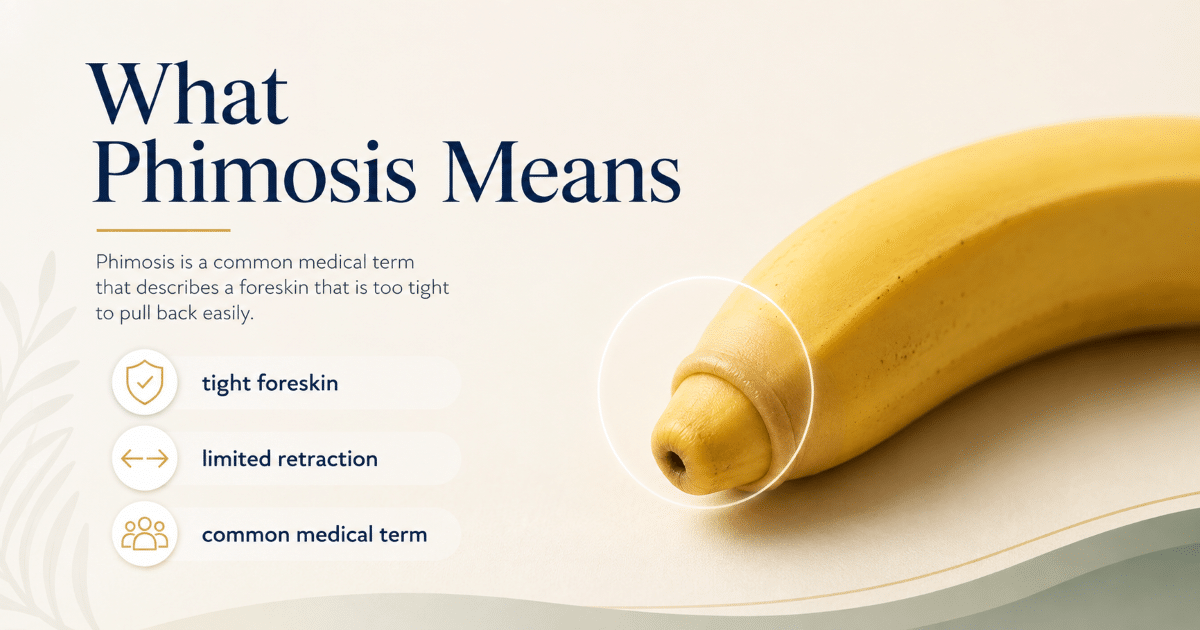
Phimosis is a condition where the foreskin opening is too narrow or tight to pull back comfortably over the glans. The tightness may be mild, only noticeable during erection, or severe enough to prevent cleaning, cause pain, or interfere with urination and sexual activity.
The important first step is to distinguish natural developmental tightness from acquired scarring or disease. A treatment plan for a child is not the same as a treatment plan for an adult with painful erections, recurrent balanitis, or a scarred white tight ring.
Normal Tight Foreskin vs. Concerning Phimosis
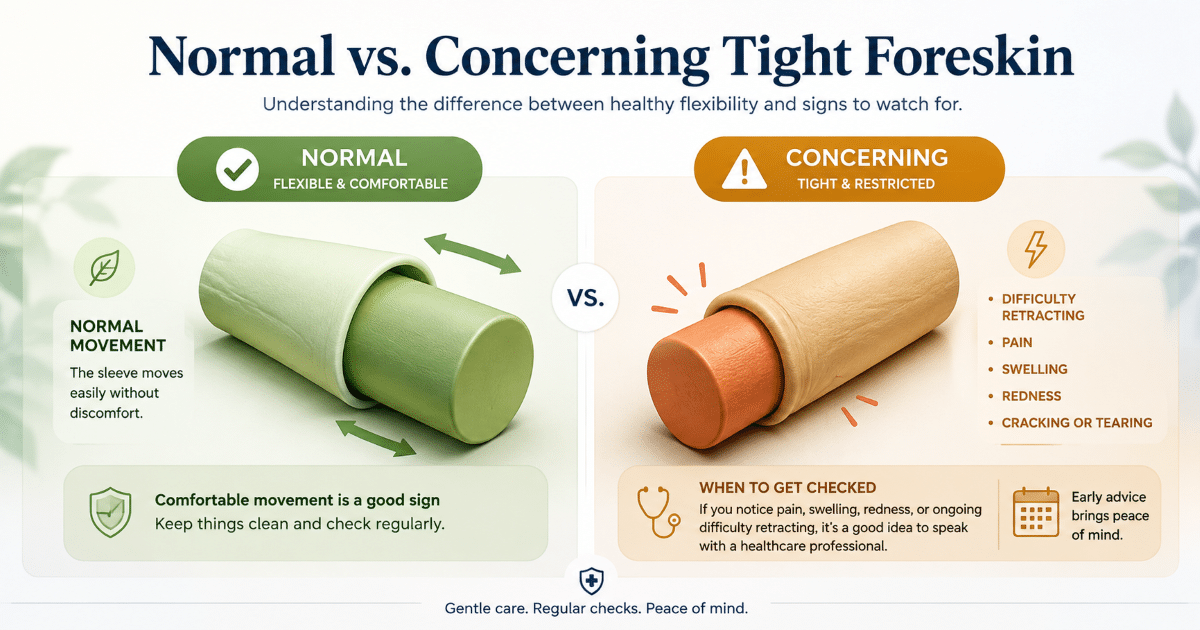
In children, the foreskin may naturally be non-retractable for years and can separate gradually. In adults, new or worsening tightness usually needs more careful evaluation because it may involve scarring, inflammation, repeated infection, skin disease, diabetes-related irritation, or lichen sclerosus.
| Feature | Often less concerning | Needs medical assessment |
|---|---|---|
| Age and timing | Young child with no pain, infection, or urinary problem. | Adult-onset tightness or worsening tightness over time. |
| Pain | No pain during washing, urination, erection, or sex. | Pain, cracks, bleeding, tearing, or painful erections. |
| Skin appearance | Normal skin color and no scarring. | White scar ring, thickened skin, redness, swelling, ulcers, discharge, or repeated inflammation. |
| Urination | Normal stream and no ballooning concern. | Ballooning, weak stream, straining, recurrent urinary symptoms, or infection signs. |
| Emergency risk | Foreskin is not forced back. | Foreskin is stuck behind the glans and cannot move forward again. |
What Causes Tight or Non-Retractable Foreskin?
Adult phimosis is often acquired rather than simply developmental. Repeated inflammation, yeast or bacterial balanitis, poor healing after small tears, chronic irritation, diabetes, and skin conditions can narrow the foreskin opening. Some men also have a short frenulum that makes retraction feel tight even when the foreskin opening is not the only problem.
Inflammation and infection
Recurrent balanitis, moisture, irritation, and difficulty cleaning can create a cycle of swelling, cracking, and scarring.
Skin conditions
Lichen sclerosus, dermatitis, psoriasis-like conditions, and scarring disorders may cause a tight ring or fragile skin.
Mechanical tearing
Forcing retraction, rough sex, or repeated small splits can heal with scar tissue and make retraction harder.

Symptoms and Complications to Watch For
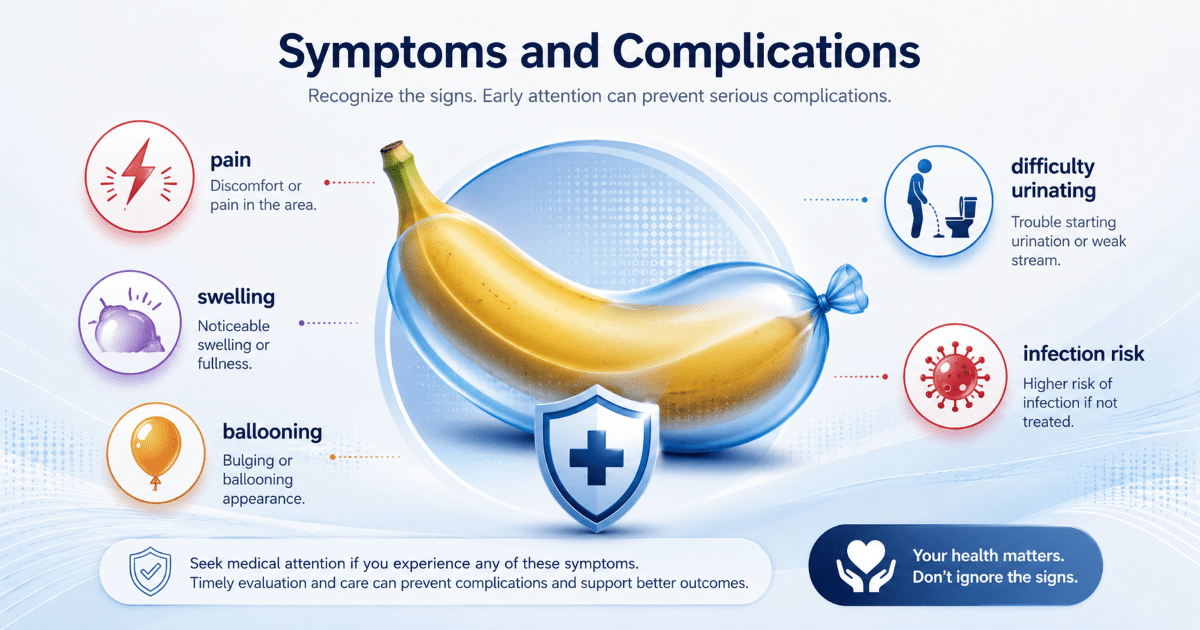
Some men with phimosis have few symptoms. Others notice problems mainly during erection or sex. The severity depends on how tight the opening is, whether there is scarring, whether infection is present, and whether the foreskin can return to its normal position after being pulled back.
| Symptom or finding | What it may suggest | Suggested next step |
|---|---|---|
| Cannot retract foreskin fully | Phimosis or scarring of the foreskin opening. | Book assessment if adult, painful, worsening, or affecting hygiene. |
| Pain during erection or sex | Tight ring, micro-tears, frenulum breve, or inflammation. | Avoid forcing intercourse and get a medical review. |
| Redness, swelling, discharge, odor | Possible balanitis, yeast, bacterial infection, or irritation. | Assessment and targeted treatment may be needed. |
| White scar-like ring | Possible scarring or lichen sclerosus pattern. | Doctor assessment is important before choosing treatment. |
| Foreskin stuck behind the glans | Possible paraphimosis. | Seek urgent medical care. |
How a Doctor Assesses Phimosis

A good assessment should not jump directly to surgery without checking the cause. The doctor should evaluate severity, skin quality, infection history, diabetes risk, urinary symptoms, sexual pain, frenulum tightness, and whether conservative treatment is reasonable.
Symptom history
When tightness started, whether it is worsening, pain level, infections, urination issues, sexual discomfort, and previous treatments.
Physical examination
The doctor checks the foreskin opening, glans exposure, scar ring, inflammation, discharge, frenulum length, and signs of lichen sclerosus or other skin disease.
Risk factor review
Diabetes, immune status, repeated balanitis, hygiene difficulty, medication history, and sexual activity may affect treatment choice.
Shared decision-making
The plan may involve medical treatment, watchful care, frenulum treatment, preputioplasty, or circumcision depending on symptoms, scarring, goals, and risk tolerance.
Phimosis Treatment Options
There is no single treatment that fits every patient. The right path depends on age, severity, scarring, infection, skin disease, sexual function, and whether the foreskin can be retracted safely. Adults with significant scarring, recurrent inflammation, or painful sex often need a more definitive discussion than simple home stretching.
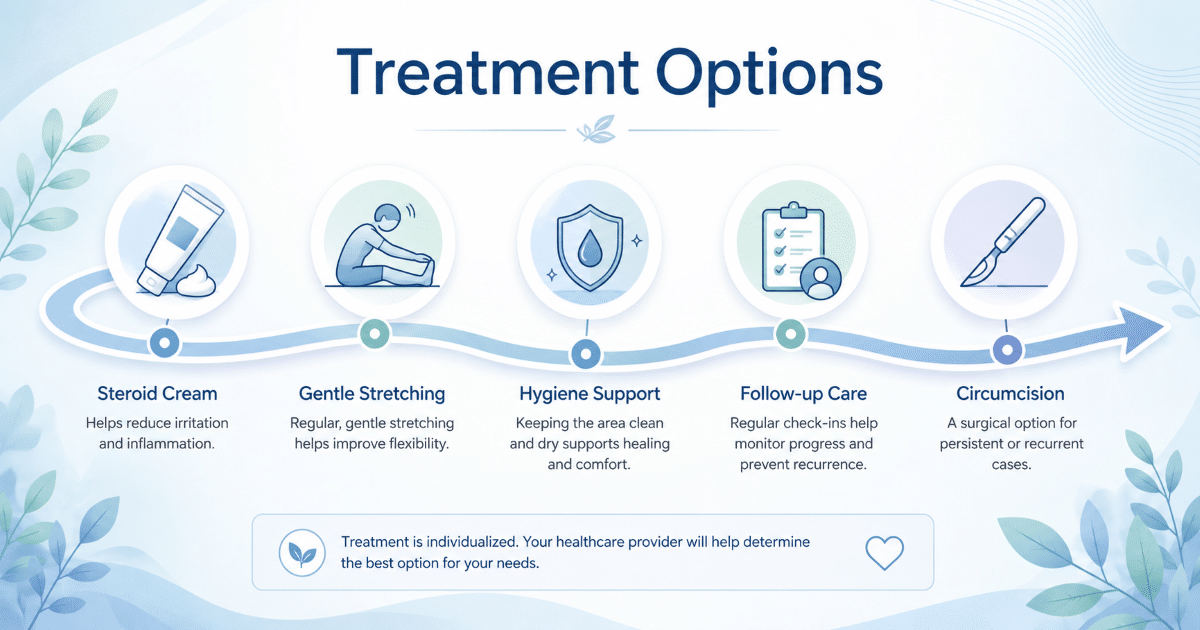
| Option | When it may be discussed | Limitations and cautions |
|---|---|---|
| Hygiene and observation | Mild tightness without pain, infection, scarring, or urinary problems. | Do not force retraction. Reassess if symptoms appear. |
| Topical steroid with gentle stretching | Selected cases without severe scarring or urgent complication. | Needs correct use and follow-up. It is not guaranteed and may not suit scarred adult phimosis. |
| Treat infection or skin disease | Redness, discharge, soreness, recurrent balanitis, or suspected lichen sclerosus. | Requires diagnosis. Repeated inflammation may still lead to scarring. |
| Frenulum treatment | Retraction is limited mainly by a short or painful frenulum. | Only appropriate if frenulum breve is the main issue; it does not treat a scarred foreskin ring. |
| Preputioplasty | Selected patients who want foreskin-preserving surgery and have suitable anatomy. | Not suitable for every case. Recurrence or later circumcision may still be possible. |
| Circumcision | Recurrent infection, scarring, painful adult phimosis, failed conservative care, or patient preference after counselling. | Involves wound healing, bleeding/infection risk, sensitivity changes, swelling, and abstinence during recovery. |
Aftercare, Recovery, and Red Flags
After treatment, aftercare depends on whether the plan was medical therapy, frenulum treatment, preputioplasty, or circumcision. Follow the doctor’s wound-care and activity instructions. Sex, masturbation, swimming, and heavy friction are usually avoided until the treatment area has healed and the clinician clears activity.
Normal early recovery may include
- Mild swelling or bruising
- Temporary tenderness
- Sensitivity changes while healing
- Small amount of spotting if advised as expected
Seek medical care if you notice
- Fever or feeling unwell
- Spreading redness, heat, pus, or foul odor
- Bleeding that does not stop with pressure
- Severe pain, dark skin color change, or inability to urinate
FAQ About Phimosis Treatment
What is phimosis?
Phimosis means the foreskin is too tight to pull back fully over the glans. In children it may be normal development, while adult-onset tightness is more likely to need assessment for scarring, inflammation, infection, diabetes-related irritation, or skin disease.
Can phimosis go away without surgery?
Some mild cases may improve with hygiene guidance, gentle stretching, or prescribed topical medicine in selected patients. Adult phimosis with scarring, recurrent infection, painful erections, or failed conservative treatment may require a surgical discussion.
Is circumcision always required for tight foreskin?
No. Circumcision is one option and can be appropriate for selected adult cases, especially when there is recurrent inflammation or scarring. Other options may include medical treatment, infection treatment, frenulum assessment, or foreskin-preserving surgery depending on the cause.
What is the difference between phimosis and paraphimosis?
Phimosis means the foreskin cannot retract properly. Paraphimosis means the foreskin has been retracted and is stuck behind the glans. Paraphimosis can reduce blood flow and needs urgent medical care.
What should I avoid if I have a tight foreskin?
Avoid forceful retraction, self-cutting, non-medical injections, unverified creams, and stretching through pain. These can cause tears, infection, scarring, and worsening tightness.
Medical References
This page is written for patient education and medical SEO clarity. It does not replace diagnosis, examination, procedural counselling, or individualized treatment planning.
- NHS: Tight foreskin (phimosis)
- Cleveland Clinic: Phimosis causes, symptoms, diagnosis, and treatment
- British Association of Urological Surgeons: Tight foreskin (phimosis)
- Cleveland Clinic: Paraphimosis
- MSD Manual Consumer Version: Phimosis and paraphimosis

Doctor Review and Medical Safety
Phimosis treatment should begin with diagnosis, not assumptions. The safest plan depends on age, severity, scarring, infection history, hygiene difficulty, pain during erection or sex, urinary symptoms, frenulum involvement, and patient preference. Conservative treatment may be reasonable in selected cases, while circumcision or other procedures may be more appropriate when symptoms are recurrent, painful, or scar-related.
Reviewed by: Dr. Beer, Eternity Clinic
Last content update: 30 June 2026

Latest Articles
Adult Circumcision Explained: Benefits, Methods, Recovery, and Safety
Adult circumcision is a procedure to remove the foreskin covering the head of the penis.
Where is the Best Place for Vasectomy (Male Sterilization): Hospital or Clinic?
A vasectomy is a permanent male contraception procedure, but choosing where to have it done
What Sexual Positions Are Best for Men with a Short Penis to Maximize Pleasure in the Bedroom?
A shorter penis or concern about penis size does not automatically mean poor intimacy. Comfort,
How many Methods for Increasing Penis Size? This Article Has the Answers.
Many men search for ways to increase penis size, but the safest first step is
Hormone Therapy Without Surgical Gender Transition
Hormone therapy can help some transgender and gender-diverse people align physical characteristics with personal goals
What Are the Symptoms of Cystitis? This Article Has the Answers.
Cystitis is inflammation of the bladder. It is often caused by a bacterial bladder infection,
How to Care for Your Manhood to Keep It Strong and Disease-Free
Penis health is not only about sexual performance. It includes daily hygiene, foreskin care, safer
Permanent Solution for Premature Ejaculation with Surgery
Premature ejaculation can be distressing, but it should not be reduced to a single promise