

Shockwave therapy for erectile dysfunction, also called LI-ESWT, LiSWT, EDSWT, or low-intensity shockwave therapy, is a device-based treatment discussed for selected men with blood-flow-related erection problems. This guide explains the mechanism, candidacy, evidence limits, safety points, and how to decide whether it belongs in your ED treatment plan.
Shockwave therapy for erectile dysfunction uses low-intensity acoustic waves applied to penile tissue with the goal of supporting blood-flow-related erection function in selected patients. It is not a guaranteed cure, not a penis enlargement procedure, and not a replacement for a proper ED evaluation. It may be discussed for men with vasculogenic or blood-flow-related ED, especially when the goal is to support erectile quality rather than use medication alone.
What Is Shockwave Therapy for Erectile Dysfunction?
Shockwave therapy for ED refers to low-intensity acoustic wave treatment applied externally to areas of the penis. The treatment is discussed as a possible way to support penile blood flow and tissue response in selected men with erectile dysfunction, particularly when vascular factors are part of the problem.
The term can be confusing because shockwave devices are used in different areas of medicine at different intensities. For ED, the discussion usually focuses on low-intensity extracorporeal shockwave therapy, not high-energy orthopedic treatment and not a cosmetic penis enlargement method.

How Shockwave Therapy May Help Erectile Function
Erections depend on blood flow, nerve signalling, hormones, psychological readiness, medication effects, and vascular health. LI-ESWT is most often discussed in relation to the vascular component of ED. The intended goal is to stimulate local biological responses that may support blood-flow-related erection quality over time.

Blood-flow focus
It is most relevant when reduced penile blood flow is suspected or documented.
Gradual response
It is not designed as an on-demand erection trigger like some ED pills.
Assessment first
Diabetes, cardiovascular risk, testosterone, medication effects, and psychological stress may change the treatment plan.
Who May Be a Candidate?
Candidacy depends on the type of ED, severity, erection quality, response to medication, vascular health, lifestyle factors, and expectations. Men with blood-flow-related ED may be more suitable for discussion than men whose ED is mainly due to severe nerve injury, uncontrolled diabetes, major hormonal deficiency, recent pelvic surgery, severe psychological distress, or medication side effects that have not been reviewed.

| Assessment factor | Why it matters | What to discuss with the doctor |
|---|---|---|
| ED pattern | Gradual vascular ED is different from sudden ED after surgery, injury, or major stress. | When symptoms started, morning erections, erection firmness, and ability to maintain erection. |
| Cardiometabolic health | High blood pressure, diabetes, obesity, smoking, and cholesterol can affect penile blood flow. | Whether ED may be a warning sign of broader vascular health issues. |
| Medication response | Some men respond well to PDE5 inhibitors, while others need evaluation for non-response. | Which ED medications were tried, dose, timing, side effects, and contraindications. |
| Hormones and mental health | Low testosterone, anxiety, depression, and relationship stress can contribute to ED. | Whether lab testing, counselling, or combined treatment is appropriate. |
Who May Need Another ED Treatment First?
Shockwave therapy is not automatically the right first step. Some men need urgent or broader medical evaluation before any device-based ED treatment. Others may need medication adjustment, cardiovascular review, diabetes control, testosterone assessment, counselling, pelvic surgery review, or a different ED treatment pathway.
May be less suitable without further workup
- Sudden ED with chest pain, shortness of breath, or vascular symptoms
- ED after pelvic surgery or major pelvic trauma
- Severe uncontrolled diabetes or cardiovascular risk
- Suspected low testosterone symptoms
- Severe performance anxiety or relationship distress as the main driver
Alternative or combined paths
- Lifestyle and vascular risk control
- PDE5 inhibitor optimization when safe
- Hormonal evaluation if indicated
- Counselling or sex therapy when psychological factors are important
- Injection therapy, vacuum device, or implant discussion in selected cases
Shockwave Therapy vs. ED Pills
ED pills and shockwave therapy work differently. PDE5 inhibitor medications are usually taken before sex and help improve the erectile response when sexual stimulation occurs. Shockwave therapy is not an on-demand medication. It is usually planned as a course of sessions with the aim of supporting erectile function over time in selected patients.
| Comparison point | ED pills | Shockwave therapy for ED |
|---|---|---|
| Main role | On-demand or scheduled medication support for erections. | Device-based course aimed at supporting vascular erectile function in selected cases. |
| Timing | Often used before sexual activity depending on medication type. | Usually delivered across multiple clinic sessions; not an immediate erection trigger. |
| Best fit | Many ED patients when medically safe and correctly prescribed. | Selected men, often with suspected vasculogenic ED and realistic expectations. |
| Limitations | May cause side effects, interact with nitrates, or be unsuitable for some heart patients. | Evidence and protocols vary; not guaranteed; may not help non-vascular ED drivers. |

What Happens During the Treatment Process?
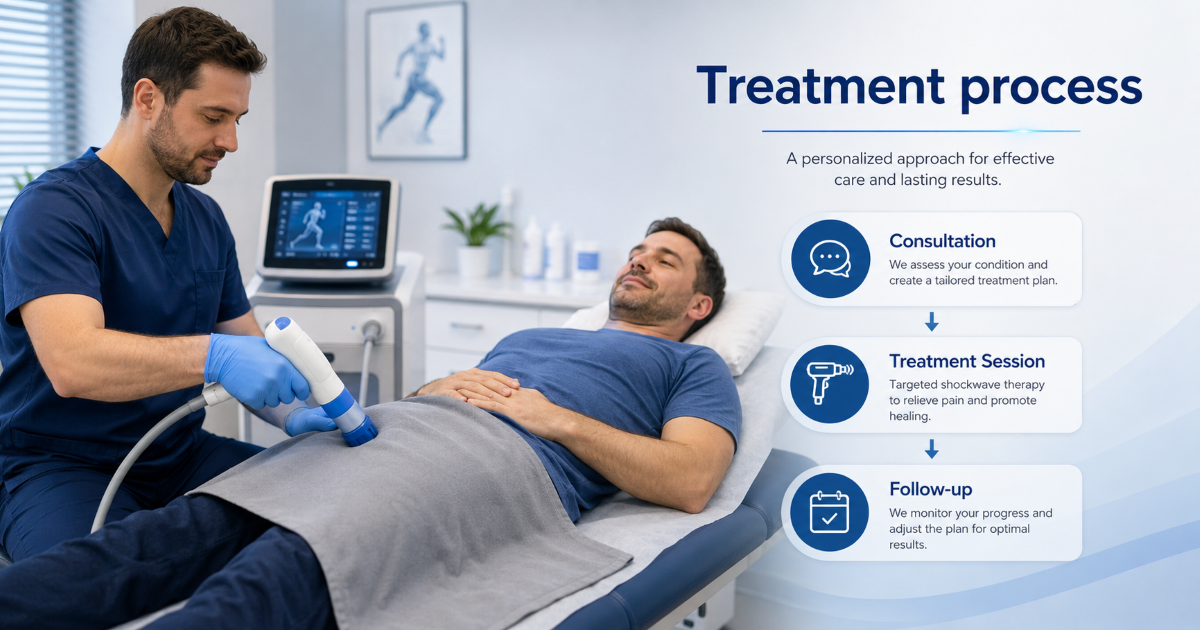
The process should start with consultation, not the device. A doctor-led assessment helps determine whether shockwave therapy is appropriate and whether ED has a vascular, hormonal, medication-related, psychological, neurologic, post-surgical, or mixed cause.
ED consultation
The doctor reviews symptom timeline, erection firmness, duration, morning erections, libido, medical history, medications, and cardiovascular risk.
Candidacy discussion
The clinic explains whether LI-ESWT is suitable, whether another ED treatment is more appropriate, and what level of response is realistic.
Session planning
If selected, treatment is usually scheduled as a course of sessions. Protocols may differ by device, dose, number of pulses, sites treated, and treatment interval.
Follow-up and adjustment
Erectile function, medication use, side effects, and lifestyle factors should be reviewed. Some patients may need combination care rather than shockwave alone.
Risks, Side Effects, and Evidence Limits
Many men tolerate low-intensity shockwave sessions, but the treatment should not be framed as risk-free. Possible issues can include temporary discomfort, skin redness, bruising, local tenderness, or no meaningful improvement. More importantly, the evidence base has variation in devices, dosing, protocols, patient selection, follow-up time, and outcome measures.

| Issue | What it means | Safer decision point |
|---|---|---|
| No response | Not every patient improves, especially if ED is severe or non-vascular. | Ask how response will be measured and when the plan will be reassessed. |
| Protocol variation | Studies and clinics may use different devices and treatment schedules. | Ask what protocol is used and why it is appropriate for your case. |
| Underlying disease | ED can reflect diabetes, vascular disease, hormone issues, medication effects, or psychological factors. | Do not skip medical evaluation before treatment. |
| Commercial overclaiming | Some marketing presents shockwave as a guaranteed cure or performance upgrade. | Choose evidence-based counselling and avoid unrealistic promises. |
FAQ About Shockwave Therapy for Erectile Dysfunction
What is shockwave therapy for erectile dysfunction?
Shockwave therapy for erectile dysfunction is a low-intensity acoustic wave treatment applied externally to penile tissue. It is discussed as a possible option for selected men with blood-flow-related ED, but it is not a guaranteed cure and should follow a medical evaluation.
Is shockwave therapy for ED proven?
Evidence is still evolving. Some studies and guidelines discuss potential benefit in selected vasculogenic ED patients, while the AUA considers low-intensity ESWT investigational. Patients should receive counselling about uncertainty, alternatives, and realistic expectations before treatment.
Does shockwave therapy replace ED pills?
Not necessarily. ED pills and shockwave therapy work differently. Pills can provide on-demand support for erections when medically safe, while shockwave therapy is usually delivered as a course of sessions. Some patients may use combined care under medical supervision.
Who is a better candidate for shockwave therapy?
Men with suspected blood-flow-related or vasculogenic ED may be more suitable for discussion. Men with severe neurologic ED, uncontrolled diabetes, major hormone issues, medication-related ED, or significant psychological drivers may need another evaluation or combined treatment plan first.
Can shockwave therapy enlarge the penis?
No. Shockwave therapy for ED should not be marketed as a penis enlargement procedure. The goal, when appropriate, is erectile function support, not guaranteed length or size increase.
Medical References
This page is written for patient education and medical SEO clarity. It does not replace diagnosis, individualized ED treatment planning, or consultation with a qualified doctor.
- American Urological Association: Erectile Dysfunction Guideline
- European Association of Urology: Management of Erectile Dysfunction
- NIDDK: Erectile Dysfunction
- NIDDK: Treatment for Erectile Dysfunction
- Cochrane: Low-intensity shockwave therapy for erectile dysfunction

Doctor Review and Medical Safety
Shockwave therapy for ED should be considered only after reviewing the cause of erectile dysfunction, vascular risk, medication history, testosterone-related symptoms, psychological factors, and previous treatment response. A safe plan should define the treatment goal, explain evidence limitations, and include follow-up rather than promising guaranteed restoration.
Reviewed by: Dr. Beer, Eternity Clinic
Last content update: 28 June 2026

Latest Articles
How to Measure Condom Size Properly: Understanding Sizes 49, 52, 54, and 56
Condom size is not judged by length alone. For most men, the most useful measurement
Penile Enlargement With “Your Own Tissue” or “Your Own Fat”: Why It May Not Be Worth the Pain
Using your own tissue or your own fat can sound more natural than synthetic material,
Circumcision at a Clinic vs Hospital: How to Choose the Right Medical Setting
Adult circumcision can be planned in different medical settings. The safest choice depends on your
Adult Circumcision Explained: Benefits, Methods, Recovery, and Safety
Adult circumcision is a procedure to remove the foreskin covering the head of the penis.
Where is the Best Place for Vasectomy (Male Sterilization): Hospital or Clinic?
A vasectomy is a permanent male contraception procedure, but choosing where to have it done
What Sexual Positions Are Best for Men with a Short Penis to Maximize Pleasure in the Bedroom?
A shorter penis or concern about penis size does not automatically mean poor intimacy. Comfort,
How many Methods for Increasing Penis Size? This Article Has the Answers.
Many men search for ways to increase penis size, but the safest first step is
Hormone Therapy Without Surgical Gender Transition
Hormone therapy can help some transgender and gender-diverse people align physical characteristics with personal goals