
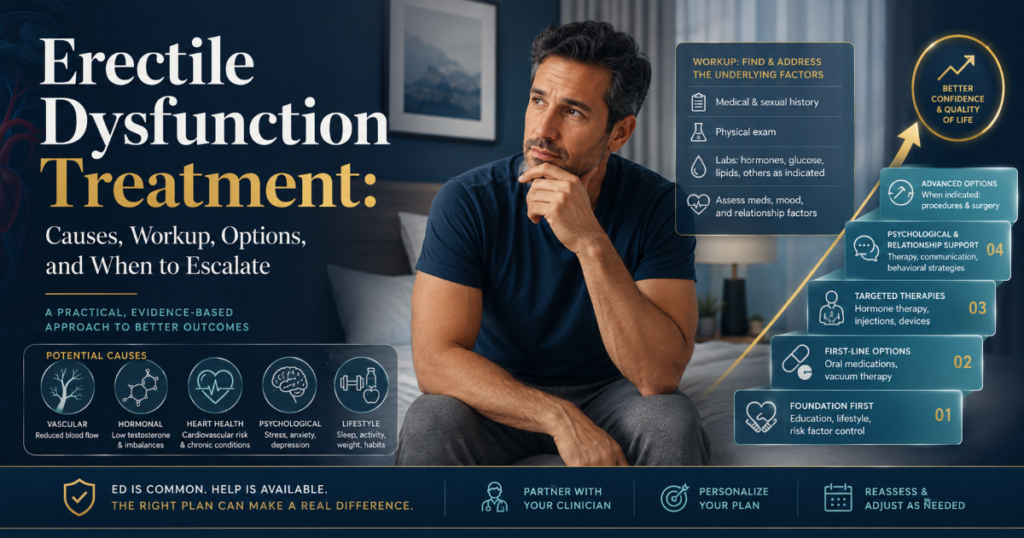
Erectile dysfunction means difficulty getting or keeping an erection firm enough for satisfying sexual activity. It can be temporary, but persistent ED may signal vascular, metabolic, hormonal, neurologic, medication-related, or psychological factors that need evaluation. This guide explains ED causes, the erection mechanism, diagnostic workup, non-surgical options, shockwave considerations, and when advanced treatment may be appropriate.
Erectile dysfunction is treatable in many men, but treatment should start with cause assessment rather than buying pills or supplements. ED can be related to blood flow, nerves, hormones, diabetes, high blood pressure, cholesterol, smoking, obesity, medication effects, stress, anxiety, depression, relationship issues, or pelvic surgery. Treatment may include lifestyle changes, managing underlying disease, PDE5 inhibitors when safe, vacuum devices, injections, hormone treatment only when indicated, shockwave for selected vascular ED cases, or implants for specific refractory cases.
ED can be a health signal
Persistent ED may reflect cardiovascular, metabolic, hormonal, neurologic, medication-related, or psychological factors.
Treatment is individualized
Pills, shockwave, injections, devices, and implants are not equally suitable for every patient.
Safety first
Do not use ED medication with nitrates or unsafe online products. Medical screening matters.
Table of Contents
1. What is erectile dysfunction?
2. How erections work
3. Common causes and risk factors
4. ED workup and diagnosis
5. ED treatment options
6. Shockwave for ED
7. Safety cautions and red flags
8. FAQ
What Is Erectile Dysfunction?
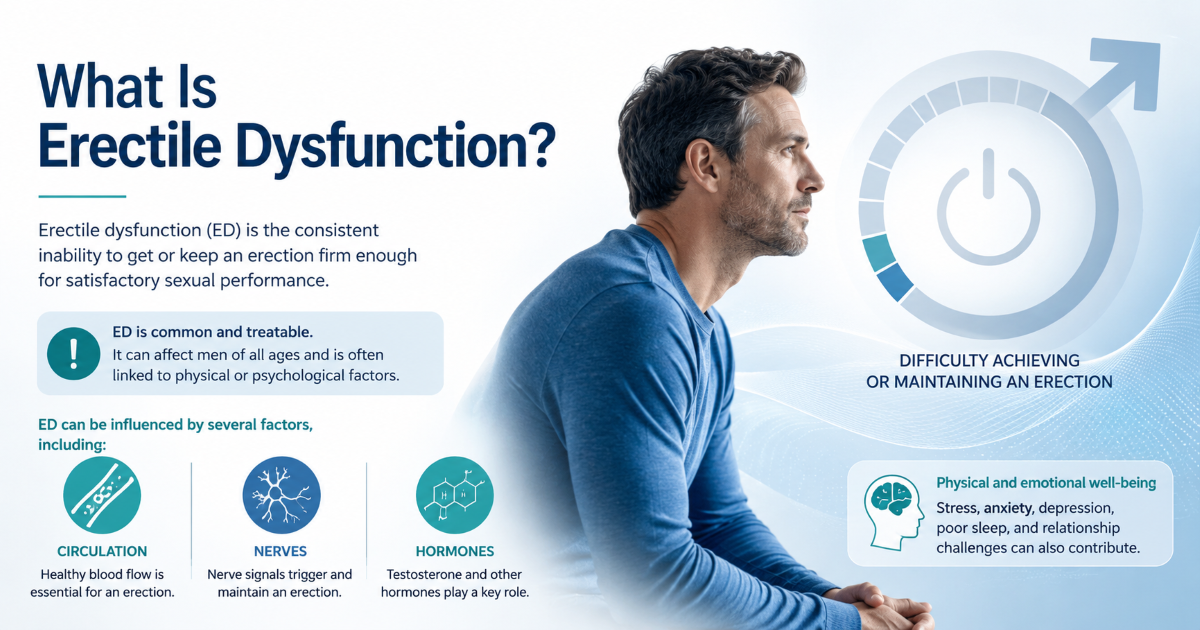
Erectile dysfunction, often shortened to ED, means a man has ongoing difficulty getting or keeping an erection firm enough for sexual activity. Occasional erection difficulty can happen with stress, fatigue, alcohol, or relationship pressure. ED becomes more clinically important when it is persistent, repeated, distressing, or linked with other symptoms.
ED is different from low sexual desire, premature ejaculation, delayed ejaculation, or pain with ejaculation, although these problems can overlap. A proper consultation should clarify whether the main concern is erection firmness, erection duration, libido, ejaculation timing, pain, or partner-related distress.
How Erections Work
An erection begins with sexual arousal and nerve signals from the brain and spinal cord. Blood vessels relax, blood flows into erectile tissue in the penis, and pressure inside the erectile chambers helps maintain firmness. Problems at any step can cause ED.
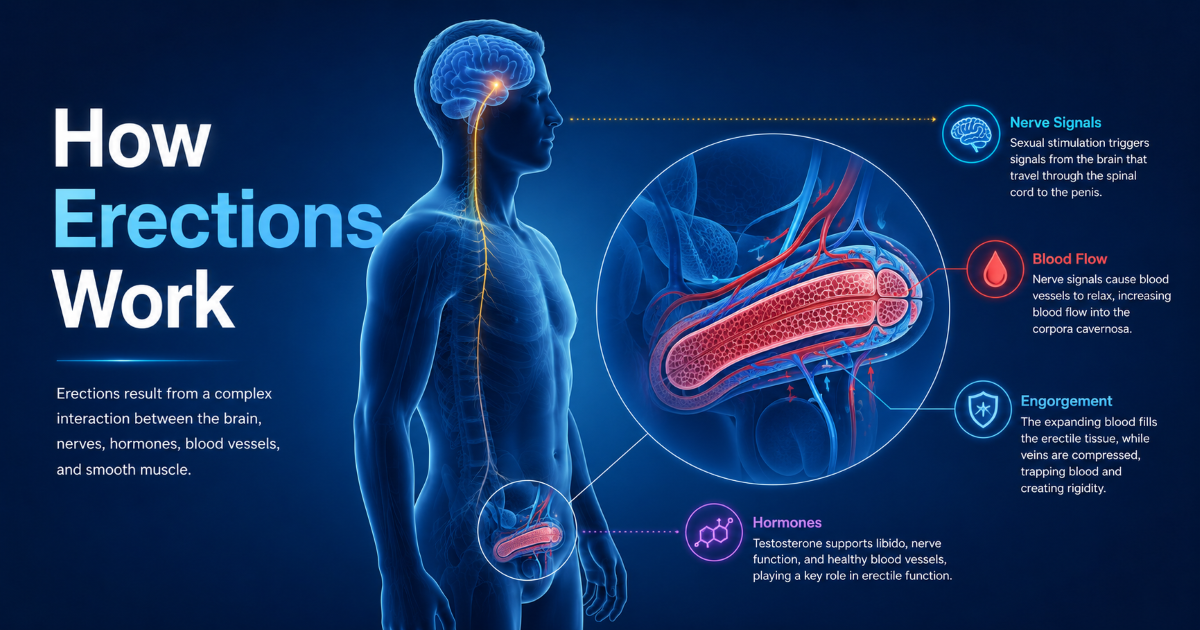
| Mechanism | What can disrupt it? |
|---|---|
| Blood flow into the penis | Diabetes, high blood pressure, smoking, high cholesterol, obesity, vascular disease, or aging-related vascular change. |
| Nerve signaling | Spinal injury, pelvic surgery, prostate surgery, diabetic neuropathy, neurologic disease, or medication effects. |
| Hormonal support | Low testosterone, thyroid issues, prolactin problems, or broader endocrine disease in selected cases. |
| Psychological arousal | Stress, anxiety, depression, performance pressure, relationship conflict, or past negative sexual experiences. |
| Medication and substances | Some blood pressure medicines, antidepressants, opioids, alcohol, nicotine, recreational drugs, or unregulated supplements. |
Common Causes and Risk Factors
ED is rarely caused by one factor only. Many patients have a combination of vascular, metabolic, psychological, and lifestyle contributors. Identifying the pattern helps avoid ineffective treatment.
Physical and medical factors
- Diabetes, high blood pressure, high cholesterol, obesity, and cardiovascular disease
- Smoking, heavy alcohol use, poor sleep, sedentary lifestyle, and recreational drug use
- Prostate surgery, pelvic surgery, spinal injury, neurologic disease, or nerve damage
- Hormonal issues such as low testosterone in selected patients
- Medication side effects or drug interactions
Mental and relationship factors
- Performance anxiety or fear of losing the erection
- Depression, chronic stress, burnout, or low self-confidence
- Relationship conflict, low communication, or pressure to perform
- Past sexual trauma or negative experiences
- Overlap with premature ejaculation or delayed ejaculation
ED Workup and Diagnosis
A proper ED workup should be private, structured, and medically grounded. The aim is to identify treatable causes and select safe options.
Clarify the symptom pattern
When did ED start? Is it sudden or gradual? Does it happen every time or only with certain partners or situations?
Review erections and sexual function
Ask about morning erections, erection firmness, ability to maintain an erection, libido, ejaculation timing, pain, and orgasm.
Check medical history and medication
Review diabetes, blood pressure, cholesterol, heart disease, surgery, neurologic history, depression, medications, supplements, alcohol, and smoking.
Consider targeted testing
Depending on the case, a doctor may consider blood sugar, lipid profile, testosterone, kidney or liver function, hormone tests, or vascular assessment.
Choose treatment through shared decision-making
Treatment should match cause, safety profile, preference, invasiveness, cost, and realistic expectations.
Erectile Dysfunction Treatment Options
ED treatment should be individualized. Some men improve with lifestyle and medical risk control, while others need medication, devices, injections, shockwave, or advanced procedures.
| Treatment option | When it may help | Important caution |
|---|---|---|
| Lifestyle and risk-factor control | Smoking, obesity, sedentary lifestyle, diabetes, hypertension, cholesterol, sleep issues, or alcohol excess. | Benefits may take time and should not delay care for serious symptoms. |
| PDE5 inhibitors | Sildenafil, tadalafil, vardenafil, or avanafil may help blood flow response with sexual stimulation. | Unsafe with nitrates and some heart conditions. Side effects and interactions require medical review. |
| Counseling or sex therapy | Performance anxiety, depression, relationship conflict, trauma, or fear of failure. | May work best when combined with medical evaluation. |
| Vacuum erection device | May help some men create an erection mechanically. | Can cause bruising, cold sensation, discomfort, or ejaculation changes. |
| Injection or intraurethral medication | May be considered when oral medication is unsuitable or ineffective. | Requires training due to priapism, pain, bruising, and dosing risks. |
| Testosterone therapy | Only when confirmed low testosterone and symptoms are present. | Not an ED cure for men with normal testosterone; requires monitoring. |
| Penile implant | Selected severe ED cases not responding to conservative treatment. | Surgical risks, device considerations, and irreversibility must be reviewed. |
For a full service overview, see Erectile Dysfunction Treatment.
Shockwave for ED: When It May Be Discussed
Low-intensity shockwave therapy is discussed in some settings for selected men with vasculogenic ED, especially when blood-flow factors are suspected. However, candidacy, protocol, evidence strength, and expected benefit should be explained clearly. It should not be advertised as a guaranteed cure or as suitable for every ED case.
May be discussed
- Selected vascular ED cases after assessment
- Men who want a non-pill option and understand limitations
- Patients who can attend a full protocol and follow-up
- Cases where ED severity and medical history fit the treatment rationale
Usually address first
- Uncontrolled diabetes, high blood pressure, or cardiovascular risk
- Medication or hormone causes that have not been reviewed
- Severe ED requiring different treatment
- Psychological or relationship factors as the main driver
For procedure-specific information, see Shockwave for ED.
Safety Cautions and Red Flags
ED medication and sexual-health products should be used safely. Buying pills or supplements without screening can be dangerous, especially for men with heart disease, blood pressure issues, diabetes, or multiple medications.
| Seek urgent care if | Reason |
|---|---|
| Chest pain, shortness of breath, fainting, or severe dizziness during sex | Could indicate cardiovascular risk. |
| Painful erection lasting more than 4 hours | Possible priapism, a medical emergency. |
| Sudden ED with neurologic symptoms | Needs prompt medical evaluation. |
| Penile pain, curvature, injury, or swelling | May require urologic assessment. |
Book a Private Erectile Dysfunction Consultation
Send your case for doctor review if you have persistent erection difficulty, weak erections, unreliable firmness, ED with premature ejaculation, suspected vascular ED, medication-related ED, low libido, or interest in shockwave or other ED treatment. The clinic team can help explain diagnosis, treatment options, safety checks, risks, and realistic expectations.

Doctor Review and Medical Safety
This page is prepared as patient education for erectile dysfunction, ED causes, diagnostic workup, oral medication, shockwave, injection therapy, vacuum devices, implants, risk factors, and male intimate health. Suitability, medication safety, procedure choice, risks, recovery, and expected results must be confirmed during a private doctor consultation.
Reviewed by: Dr. Beer, Eternity Clinic
Last content update: 18 June 2026
Erectile Dysfunction FAQ
What is erectile dysfunction?
Erectile dysfunction means ongoing difficulty getting or keeping an erection firm enough for sexual activity.
Is ED always psychological?
No. ED can be vascular, neurologic, hormonal, medication-related, psychological, relationship-related, or mixed.
Can ED be a sign of heart disease?
Yes. Persistent ED can be associated with cardiovascular risk and should be evaluated, especially in men with diabetes, high blood pressure, smoking, or high cholesterol.
Do ED pills work for everyone?
No. PDE5 inhibitors help many men, but they require sexual stimulation, have contraindications, and may work less well in some conditions such as diabetes or after prostate surgery.
Can I take ED medication with heart medicine?
Do not take ED medication with nitrates. Men with heart disease or multiple medications should be evaluated before using ED pills.
What is shockwave for ED?
Low-intensity shockwave therapy is discussed for selected vascular ED cases. It is not a guaranteed cure and should follow medical assessment.
When should I see a doctor for ED?
See a doctor if ED is persistent, new, worsening, associated with chest symptoms, linked to diabetes or high blood pressure, or causing distress.
Can lifestyle changes improve ED?
They may help, especially when ED is linked to smoking, weight, inactivity, diabetes, blood pressure, cholesterol, alcohol, sleep, or stress.
Medical References
The following references were used for general medical context. They do not replace personalized diagnosis or treatment planning.
- Mayo Clinic: Erectile dysfunction symptoms and causes
- Mayo Clinic: Erectile dysfunction diagnosis and treatment
- Cleveland Clinic: Erectile dysfunction
- American Urological Association: Erectile Dysfunction Guideline
- European Association of Urology: Sexual and Reproductive Health Guidelines
- NIDDK: Symptoms and causes of erectile dysfunction

Latest Articles
What Are the Symptoms of Cystitis? This Article Has the Answers.
Cystitis is inflammation of the bladder. It is often caused by a bacterial bladder infection,
How to Care for Your Manhood to Keep It Strong and Disease-Free
Penis health is not only about sexual performance. It includes daily hygiene, foreskin care, safer
Permanent Solution for Premature Ejaculation with Surgery
Premature ejaculation can be distressing, but it should not be reduced to a single promise
Delayed Ejaculation: Is It Really Good? What to Do If You’re Facing This Issue
Delayed ejaculation may sound positive to some men, but when climax takes much longer than
How to Measure Condom Size Properly: Understanding Sizes 49, 52, 54, and 56
Condom size is not judged by length alone. For most men, the most useful measurement
Penile Enlargement With “Your Own Tissue” or “Your Own Fat”: Why It May Not Be Worth the Pain
Using your own tissue or your own fat can sound more natural than synthetic material,
Circumcision at a Clinic vs Hospital: How to Choose the Right Medical Setting
Adult circumcision can be planned in different medical settings. The safest choice depends on your
Adult Circumcision Explained: Benefits, Methods, Recovery, and Safety
Adult circumcision is a procedure to remove the foreskin covering the head of the penis.