
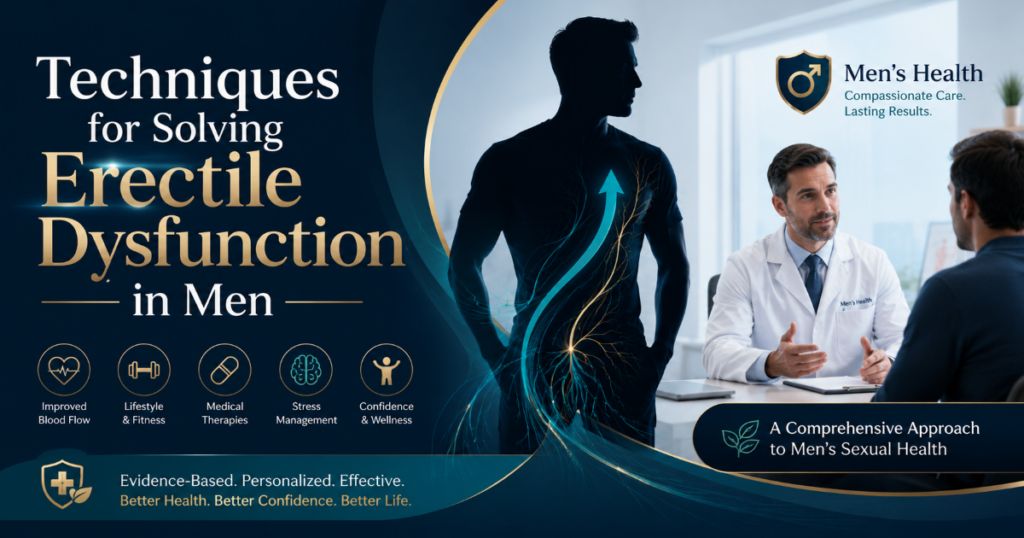
Erectile dysfunction is not solved by one universal trick. The safest path is to identify why the erection problem is happening, screen for medical risks, choose evidence-based treatment, and escalate only when simpler options are unsuitable or ineffective.
How do you solve erectile dysfunction safely?
The safest way to solve erectile dysfunction is to treat it as a medical signal, not just a performance issue. A practical plan usually includes health history, medication review, blood pressure and metabolic risk screening, lifestyle correction, careful use of ED medication when appropriate, and escalation to devices, injection therapy, shockwave for selected vascular cases, or penile implant surgery only after proper assessment.
What erectile dysfunction means
Erectile dysfunction means difficulty getting or keeping an erection firm enough for sexual activity. A one-off episode can happen because of fatigue, stress, alcohol, relationship tension, or temporary illness. Persistent or repeated erection difficulty deserves medical assessment because it may be linked with wider health issues.
No reliable erection
The penis does not become firm enough despite sexual stimulation. This may involve vascular, nerve, hormonal, medication-related, or psychological factors.
Cannot maintain firmness
An erection starts but fades before or during sex. This can be associated with blood flow, anxiety, venous leak patterns, diabetes, medication, or cardiovascular risk.
Situation-specific ED
Erections may be normal during masturbation or morning erections but unreliable with a partner. This pattern often needs both medical and psychological context.

Main causes of erectile dysfunction
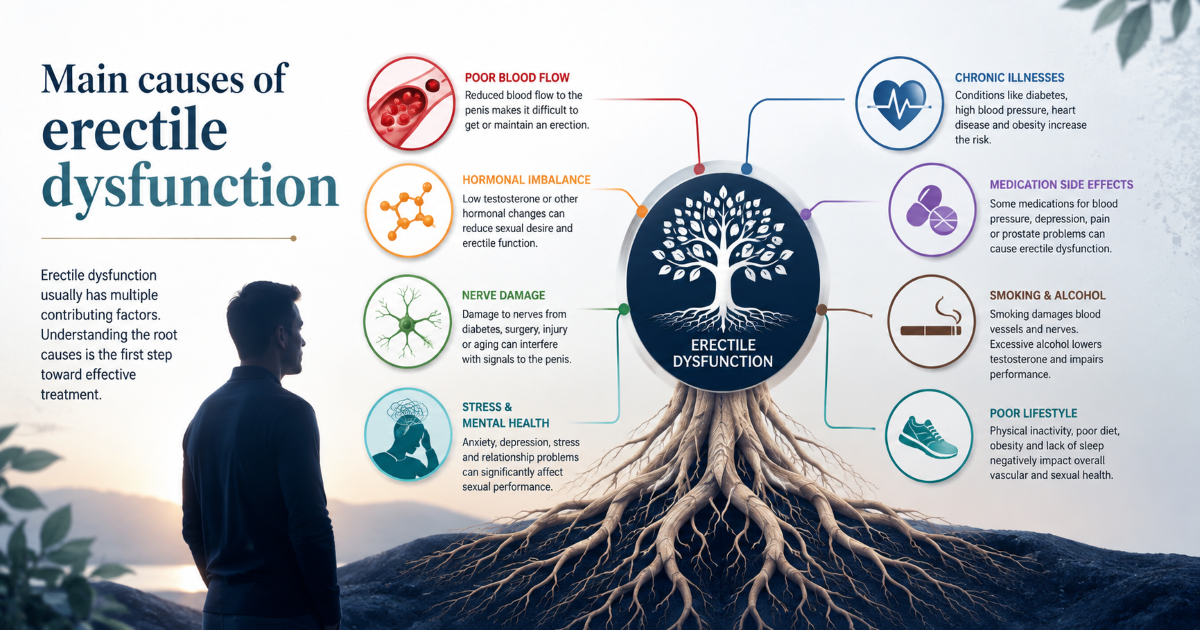
Male sexual arousal involves the brain, hormones, emotions, nerves, blood vessels, smooth muscle, and relationship context. ED can appear when one or more of these systems is disrupted. This is why a treatment that works for one man may not work for another.
Physical factors
- Diabetes, high blood pressure, high cholesterol, obesity, and metabolic syndrome
- Cardiovascular disease or reduced vascular function
- Smoking, heavy alcohol use, poor sleep, and inactivity
- Pelvic surgery, prostate cancer treatment, spinal or pelvic injury
- Medication side effects, including some antidepressants, blood pressure medicines, and prostate medicines
- Low testosterone or other hormone imbalance in selected cases
- Peyronie’s disease, penile curvature, or pain during erection
Mind and relationship factors
- Performance anxiety or fear of losing firmness
- Depression, chronic stress, burnout, or poor body confidence
- Relationship conflict, low desire, or pressure to perform
- Past sexual trauma or negative sexual experiences
- Overchecking erection quality during sex
- Porn-related arousal pattern issues in some patients
Workup before choosing an ED technique
A structured workup prevents trial-and-error treatment. It also reduces the risk of taking medication that is unsuitable for your heart, blood pressure, or current prescriptions.
Clarify the pattern
When did ED start? Is it sudden or gradual? Is it situation-specific or consistent? Are morning erections present? Is there pain, curvature, low desire, premature ejaculation, or delayed ejaculation?
Review medical risk
Blood pressure, diabetes risk, cholesterol, cardiovascular symptoms, smoking, alcohol, sleep, exercise, and weight all matter. Men with chest pain, shortness of breath, or reduced exercise tolerance need cardiac safety review.
Check medication and supplements
Some prescription medicines and supplements can affect erection quality or interact with ED medication. Bring a full list, including nitrates, alpha-blockers, blood pressure medicines, antidepressants, recreational substances, and herbal products.
Choose treatment level
Start with the safest appropriate level. Lifestyle and counseling may be enough for some. Others need PDE5 inhibitors, vacuum devices, injection therapy, shockwave discussion, hormone workup, or implant referral.
Techniques you can start before medical treatment
Lifestyle changes are not a guaranteed ED cure, but they can improve vascular health and help medical treatments work better. They are especially relevant when ED is linked with smoking, inactivity, weight gain, poor sleep, alcohol, diabetes risk, or high blood pressure.

| Technique | Why it may help | Safety note |
|---|---|---|
| Exercise and weight management | Supports vascular function, metabolic health, testosterone balance, mood, and stamina. | Men with chest symptoms or low exercise tolerance should be medically cleared. |
| Smoking cessation | Smoking damages blood vessels and is associated with ED risk. | Medication or nicotine replacement should be reviewed with a clinician if needed. |
| Alcohol reduction | Heavy alcohol use can impair erections, sleep, mood, and hormone balance. | Avoid abrupt withdrawal if dependence is possible; seek medical help. |
| Sleep and stress correction | Poor sleep and chronic stress can affect libido, testosterone, anxiety, and erection reliability. | Screen for sleep apnea if snoring, daytime sleepiness, obesity, or high blood pressure are present. |
| Nutrition and metabolic control | Better glucose, cholesterol, and blood pressure control can support erection quality. | Foods and supplements are not substitutes for diabetes, hypertension, or heart disease care. |
ED medication can help, but only after safety screening
PDE5 inhibitors such as sildenafil and tadalafil help many men by improving blood flow response during sexual stimulation. They do not create sexual desire by themselves, they do not work for everyone, and they should not be taken casually without reviewing contraindications and current medication.

On-demand option
Some men use medication before sex. Timing and dose depend on the drug, medical history, side effects, and response.
Daily option
Low-dose daily tadalafil may be discussed for selected men, including those who prefer more spontaneity or have urinary symptoms.
Non-responders
If pills do not work, check correct use, sexual stimulation, dose, timing, testosterone, diabetes, vascular disease, and medication interactions before escalating.
Shockwave therapy for ED: where it may fit
Low-intensity shockwave therapy is often discussed for men with vascular-type ED. It is non-surgical and aims to support penile blood-flow response. However, results vary, protocols differ, and it should not be described as a guaranteed cure or as suitable for every man.

| May be more relevant when | May be less relevant when |
|---|---|
| ED appears vascular, mild to moderate, and the patient wants a non-surgical option after evaluation. | ED is primarily medication-induced, psychological, hormonal, severe nerve injury related, or caused by advanced structural disease. |
| The patient can complete multiple sessions and understands that response is not immediate or guaranteed. | The patient expects one-session restoration, penis enlargement, or guaranteed medication-free erections. |
| Standard ED workup has reviewed blood pressure, diabetes risk, cholesterol, medications, and cardiac suitability. | Cardiovascular symptoms or unstable medical conditions have not been evaluated. |
Learn more on the clinic service page: shockwave for ED.
When to escalate beyond lifestyle and pills
Escalation is not a failure. It simply means the cause, severity, medication response, or patient preference requires another option. The key is to escalate in a medically logical sequence.

| Option | Where it fits | Important limitation |
|---|---|---|
| Vacuum erection device | Non-drug option or add-on when pills are unsuitable or insufficient. | May feel mechanical, cause bruising, cold sensation, or affect ejaculation comfort. |
| Injection or intraurethral therapy | For men who do not respond to or cannot take PDE5 inhibitors. | Requires training and dose control; priapism risk must be understood. |
| Hormone treatment | Only when clinically confirmed low testosterone or endocrine disorder is relevant. | Not a general ED cure and requires monitoring. |
| Penile implant | For severe ED when less invasive options fail, are unsuitable, or are not preferred after counseling. | Surgery has infection, mechanical, revision, and expectation risks. It does not increase libido or true penis size. |
| Psychosexual therapy | Helpful when anxiety, depression, relationship conflict, or performance pressure contributes to ED. | May need time and partner involvement; not a replacement for medical assessment when physical risk is present. |
For a full service overview, see erectile dysfunction treatment.
When ED needs faster medical attention
- Chest pain, shortness of breath, fainting, or reduced exercise tolerance with sexual activity.
- An erection lasting more than four hours, which may be priapism and requires urgent care.
- New penile pain, trauma, sudden curvature, or severe testicular pain.
- ED after pelvic surgery, prostate cancer treatment, spinal injury, or new medication.
- ED with high blood pressure, diabetes symptoms, obesity, smoking history, or strong family history of heart disease.
How Eternity Clinic structures ED consultations
For international patients, the goal is to avoid unnecessary treatment and build a clear pathway before travel or procedure planning. A useful consultation should identify likely causes, current medications, cardiovascular suitability, expectations, privacy needs, recovery schedule, and whether the patient is a better fit for medication review, shockwave, device-based care, injection therapy, hormone testing, or specialist referral.
Frequently asked questions
What is the best way to solve erectile dysfunction?
The best way depends on the cause. Most men should start with a medical assessment, cardiovascular risk review, medication review, and lifestyle optimization. PDE5 inhibitors may be appropriate for many men, while vacuum devices, injection therapy, shockwave for selected vascular ED cases, or penile implants may be discussed when first-line options are not suitable.
Can erectile dysfunction go away with lifestyle changes alone?
Sometimes lifestyle changes improve erection quality, especially when ED is linked to smoking, inactivity, weight, sleep, alcohol use, or cardiometabolic risk. However, ongoing ED should still be evaluated because it can be associated with diabetes, high blood pressure, cardiovascular disease, medication side effects, hormone issues, or psychological factors.
Are ED pills safe for everyone?
No. ED pills such as sildenafil or tadalafil need safety screening. They may be unsafe with nitrate medicines, some heart conditions, certain blood pressure situations, and some drug combinations. A clinician should review medical history and current medication before use.
Is shockwave therapy a guaranteed ED treatment?
No. Low-intensity shockwave may be considered for selected men with vascular ED, but response varies and it should not be described as a guaranteed cure. It is best discussed after diagnosis and after reviewing standard options.
When should a man see a doctor for ED?
A man should seek assessment if erection difficulty is persistent, worsening, associated with chest pain or reduced exercise tolerance, appears after a new medication, follows pelvic surgery or injury, or causes distress. Urgent care is needed for an erection lasting more than four hours.
Medical references used for this page

Doctor Review and Medical Safety
This page was rewritten to support safer decision-making for men with erectile dysfunction. It emphasizes cause-based evaluation, cardiovascular screening, medication safety, realistic expectations, and escalation only when medically appropriate.
Reviewed by: Dr. Beer, Eternity Clinic
Last content update: 24 June 2026
Ready to discuss erectile dysfunction privately?
Send a private message to the clinic team with your age, ED pattern, current medication, health conditions, and any previous treatment tried. The clinic can help clarify the next safe step before choosing medication, shockwave, or another ED treatment pathway.

Latest Articles
How to Measure Condom Size Properly: Understanding Sizes 49, 52, 54, and 56
Condom size is not judged by length alone. For most men, the most useful measurement
Penile Enlargement With “Your Own Tissue” or “Your Own Fat”: Why It May Not Be Worth the Pain
Using your own tissue or your own fat can sound more natural than synthetic material,
Circumcision at a Clinic vs Hospital: How to Choose the Right Medical Setting
Adult circumcision can be planned in different medical settings. The safest choice depends on your
Adult Circumcision Explained: Benefits, Methods, Recovery, and Safety
Adult circumcision is a procedure to remove the foreskin covering the head of the penis.
Where is the Best Place for Vasectomy (Male Sterilization): Hospital or Clinic?
A vasectomy is a permanent male contraception procedure, but choosing where to have it done
What Sexual Positions Are Best for Men with a Short Penis to Maximize Pleasure in the Bedroom?
A shorter penis or concern about penis size does not automatically mean poor intimacy. Comfort,
How many Methods for Increasing Penis Size? This Article Has the Answers.
Many men search for ways to increase penis size, but the safest first step is
Hormone Therapy Without Surgical Gender Transition
Hormone therapy can help some transgender and gender-diverse people align physical characteristics with personal goals