

Men, don’t assume your penis will always be perfectly straight, because a curved or bent penis is actually quite common and can still function normally for many men. However, it’s important to note that not all curvature is normal, and in some cases, it can become painful to the point that it affects sexual function. Today, let’s take a look at when a bent penis is considered dangerous and when it requires medical intervention.
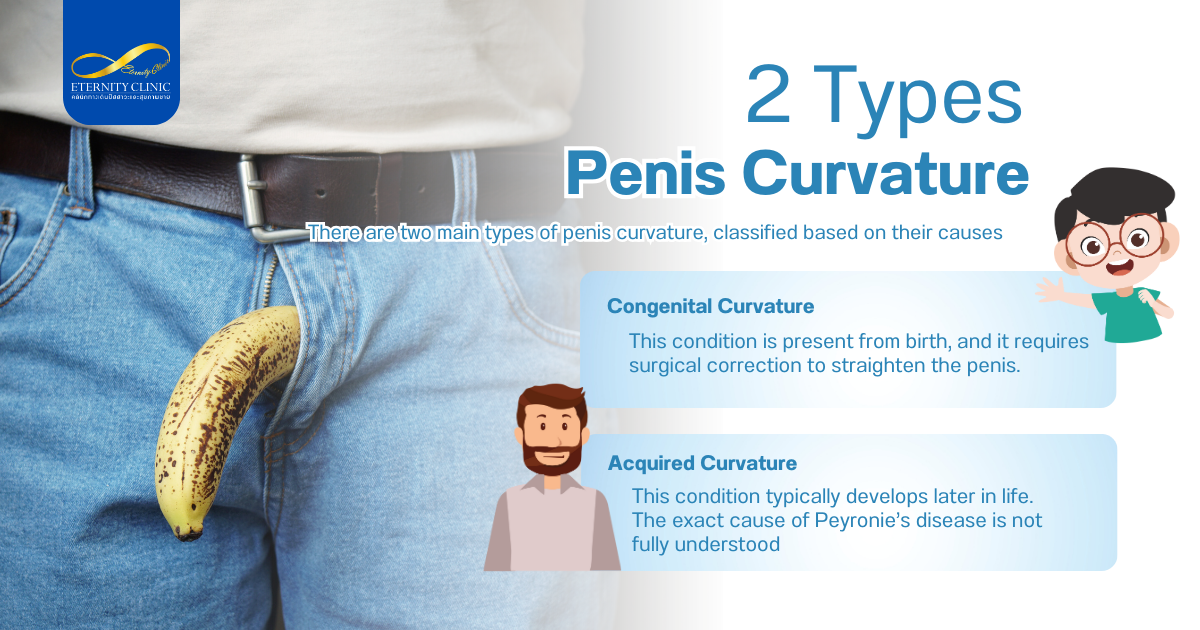
Penis Curvature: 2 Types
There are two main types of penis curvature, classified based on their causes:
- Congenital Curvature (Chordee): This condition is present from birth, and it requires surgical correction to straighten the penis. Usually, surgery is performed before the child starts school, as the curvature may cause difficulty in urinating (e.g., unable to urinate into the toilet, wetting the pants instead) and could lead to emotional distress. If left untreated, it may also cause issues with sexual performance. In some cases, congenital curvature may also involve an abnormal opening of the urethra.
- Acquired Curvature (Peyronie’s Disease): This condition typically develops later in life. The exact cause of Peyronie’s disease is not fully understood, but it is believed to result from minor injuries to the penis. When these injuries heal, they can form calcium deposits, which create scar tissue that leads to penile curvature. This curvature can occur in various directions: left, right, up, or down (although it typically curves upwards toward the ceiling). This condition can cause pain, erectile dysfunction, and difficulty with sexual intercourse.
Should You Fix a Curved Penis?
If the curvature of your penis doesn’t interfere with sexual function, doesn’t cause pain, and doesn’t negatively affect your mental health, there may be no need for treatment. However, if the curvature causes pain during intercourse or makes penetration impossible, it’s important to seek treatment. A curvature of more than 30 degrees is a strong indication of Peyronie’s disease, and if left untreated, it can worsen over time. In such cases, it’s best to consult with a doctor for further evaluation and treatment.

Stages of Peyronie’s Disease
Peyronie’s disease progresses in two stages:
- Inflammatory Stage: In this stage, the penis may become increasingly curved, and the patient may experience pain during erections. The condition is still in the acute phase, and surgery is typically not recommended during this time. The symptoms may include pain in the penis, increasing curvature, and erectile dysfunction. This stage can last up to a year.
- Stable Stage: Once the inflammation subsides, the condition becomes stable, and surgery may be performed. The penis may still be curved, but the pain will be less intense. In this phase, the scar tissue (plaque) has solidified, and the curvature is no longer increasing. Surgery at this stage can correct the curvature, and in some cases, it may involve implanting graft tissue or removing the plaque to restore a more natural shape.
Can a Curved Penis Be Fixed?
Yes, Dr. Beer can help correct a curved penis. Typically, surgery is performed under general anesthesia. Since the penis is relaxed during anesthesia, the surgeon may inject saline to help achieve an erection for better precision in locating the area to be corrected. The scar tissue is then surgically removed, and tissue grafts (usually taken from the patient’s own body, such as from the groin or thigh) are used to replace the removed tissue. This method provides a more natural result. The use of the patient’s own tissue is preferred to minimize complications and ensure better outcomes.
Summary: Is a Curved Penis Dangerous?
Penile curvature is normal in some cases, as the penis naturally may curve left, right, or upward during an erection. This is typically due to the tension of the ligaments that hold the penis in place. As long as you can maintain an erection and have normal sexual function, slight curvature is not a cause for concern.
However, severe curvature (Peyronie’s disease), caused by hardened plaque, can impair the penis’s flexibility and lead to significant functional issues, including painful erections and difficulty with penetration. If left untreated, this can worsen over time and affect sexual relationships.
In such severe cases, treatment options such as surgery or plaque-reducing injections are available. It’s crucial to consult with a specialist, such as a urologist, for proper diagnosis and treatment. Dr. Beer is an experienced surgeon who specializes in urology and male reproductive health, and he can help you address issues like these with precision and care. If you’re experiencing issues with your penis or have concerns about its curvature, contact Dr. Beer for a consultation at Line: @eternityclinic4.

Get an initial consultation with Dr.Beer FREE!!!
Ask for information about treatment and additional services make an appointment at
LINE:@ETERNITYCLINIC2
M.D. SUEBPONG ANGCHOUN
Urologist & General Surgeon of advance Endo-Uro and Laparoscopic Surgery
Latest Articles
Can You Really Make Your Penis Bigger?
Does Penis Size Matter? The answer varies from person to person. However, many men have
Can You Enlarge Your Penis Naturally Fact or Fiction?
Enlarge penis — Let’s be honest, penis size is one of those topics that men
Risky or Worth It? Popular Penis Enlargement Techniques
In today’s world, where confidence matters more than ever, many men are turning their attention
Want to Go Bigger? Safe and Proven Penis Enlargement Options
In today’s world, self-confidence plays a vital role in how we live and interact. For
Just by Changing a Few Habits Can Improve Penis Length?
Improve Penis Length | When it comes to penis size, many men can’t help but
Breakthrough Techniques! Can You Really Increase Penis Length?
Penis length has long been a hot topic, especially among men who often associate it
How to Increase Penis Length Without Ruining Your Health
Penis length is a topic that many men worry about, often quietly. This leads to
The Hidden Truth: Why Your Penis Isn’t as Big as You Expect
For many men, penis size can be a source of insecurity. Some wonder why their