

A bent penis is not always dangerous. Many men have a mild natural curve and normal sexual function. The concern increases when the bend is new, painful, worsening, linked with a hard plaque, or makes penetration difficult. This guide explains when a bent penis may be normal, when Peyronie’s disease should be considered, and how treatment decisions are made safely.
A bent penis may be harmless if the curve has always been present, is mild, does not hurt, and does not interfere with erections or sex. It needs medical assessment when the bend is new, progressive, painful, associated with a lump or plaque, causes narrowing or shortening, affects erection quality, or makes penetration difficult. Peyronie’s disease is one important cause of acquired penile curvature and treatment depends on disease phase, severity, pain, erectile function, and patient goals.
Is a Bent Penis Dangerous?
A bent penis is not automatically dangerous. A slight upward, downward, left, or right curve can be a normal anatomic variation. If the curve has been stable for years, does not cause pain, and does not make sex difficult, active treatment may not be needed.
The situation changes when the curvature develops later in life, becomes more severe, causes painful erections, produces a hinge or hourglass shape, or affects penetration. These features may suggest Peyronie’s disease or another structural problem that should be evaluated by a doctor.

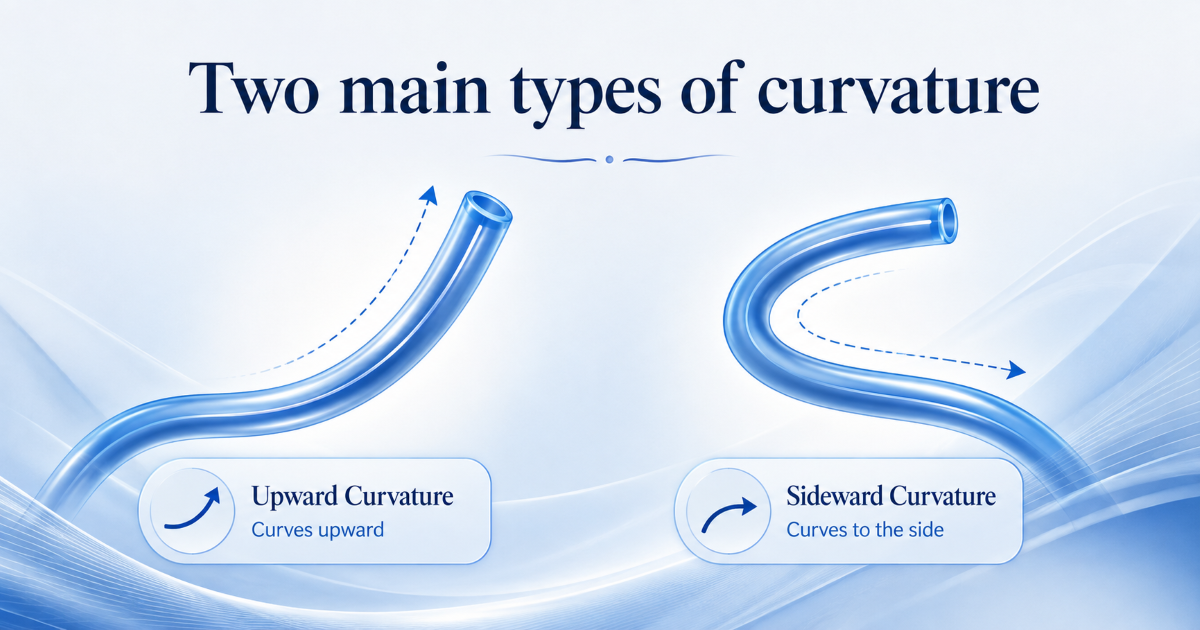
Penis Curvature: 2 Main Types
Penile curvature is usually discussed in two broad groups: congenital curvature and acquired curvature. The distinction matters because the assessment, timing, and treatment options are different.
| Type | Typical pattern | When treatment may be discussed |
|---|---|---|
| Congenital curvature | The bend has usually been present since adolescence or first erections. There may be no plaque and no new pain. | When the curve is severe, causes distress, or makes sexual activity difficult. Surgery may be discussed in selected cases. |
| Acquired curvature / Peyronie’s disease | The bend develops later and may be linked with scar-like plaque, pain, shortening, narrowing, erectile dysfunction, or penetration difficulty. | Treatment depends on whether symptoms are active or stable, the degree of curvature, erectile function, and patient goals. |
When a Bent Penis May Be Peyronie’s Disease
Peyronie’s disease is an acquired curvature condition often linked with scar-like plaque in the tunica albuginea, the firm layer involved in erection rigidity. When the affected area does not stretch normally during erection, the penis may bend, narrow, shorten, or develop an indentation.
Possible signs
- New or worsening curve
- Painful erections
- Hard lump or plaque
- Narrowing or hourglass shape
Functional impact
- Penetration difficulty
- Partner discomfort
- Erectile dysfunction
- Anxiety about sexual performance
Common discussion points
- Active vs. stable phase
- Curvature direction and angle
- Plaque features
- Realistic treatment goals
Stages of Peyronie’s Disease: Active vs. Stable
Treatment planning often depends on whether the disease is still changing. In the active phase, pain and curvature may progress. In the stable phase, pain may reduce and the curve may stop changing, which can make surgical planning more predictable for selected patients.

| Phase | What may happen | Clinical implication |
|---|---|---|
| Active phase | Pain, changing curvature, new plaque symptoms, or evolving deformity may be present. | Monitoring, pain management, traction, or selected non-surgical options may be discussed. Surgery is often delayed until stable unless there is a special reason. |
| Stable phase | Curvature has usually stopped changing and pain may be less prominent. | More definitive correction may be discussed if the bend causes significant sexual difficulty and erectile function is suitable. |
How a Doctor Assesses a Bent Penis
A safe consultation should review the timeline, pain pattern, erection quality, curvature direction, penetration difficulty, plaque location, medical history, previous trauma, and patient expectations. The goal is to identify the cause and match treatment to function, not to promise a perfect cosmetic result.
History and symptom timeline
The doctor checks whether the bend is lifelong, new, worsening, painful, or associated with erectile dysfunction.
Physical examination
Examination may identify plaque, tenderness, foreskin issues, skin problems, or signs of another cause.
Curvature documentation
Private erection photos or in-clinic assessment may be used when appropriate to estimate direction, degree, indentation, and functional impact.
Ultrasound when needed
Selected patients may need ultrasound to evaluate plaque, calcification, blood flow, and erectile function.

Can a Bent Penis Be Fixed?
A bent penis can sometimes be improved, but the right option depends on the cause, severity, disease phase, pain, erectile function, and whether the bend prevents comfortable sex. Treatment should be framed as risk-balanced improvement, not guaranteed correction.
| Option | When it may be considered | Limitations and cautions |
|---|---|---|
| Observation | Mild, stable curve with no pain and no functional difficulty. | Reassess if pain, curvature, shortening, or erectile function changes. |
| Pain management | Active-phase pain or discomfort during erections. | May reduce symptoms but does not necessarily straighten the penis. |
| Traction therapy | Selected patients who can use a device consistently under medical guidance. | Requires adherence. Incorrect or aggressive use can cause irritation or injury. |
| Injection therapy | Selected Peyronie’s disease cases depending on plaque, curvature, and local availability. | May cause bruising, swelling, pain, and rare serious injury. Must be clinician-led. |
| Surgery | Stable curvature that causes meaningful sexual difficulty, or selected congenital curvature cases. | May involve shortening, sensation changes, erectile issues, recurrence, recovery time, or additional treatment. |

Warning Signs: When to Seek Medical Care
Some symptoms should be assessed promptly because they may indicate active Peyronie’s disease, injury, erectile dysfunction, or a more urgent condition such as penile fracture.
| Symptom or situation | Why it matters | Suggested action |
|---|---|---|
| New or rapidly worsening bend | May suggest active Peyronie’s disease or recent injury. | Schedule a doctor-led assessment. |
| Painful erections | Can occur in the active phase and may affect treatment timing. | Avoid forcing sex or stretching through pain. |
| Hard lump, plaque, narrowing, or hourglass shape | May indicate structural tissue change. | Discuss examination and possible ultrasound. |
| Erectile dysfunction | ED changes treatment selection and surgical planning. | Assess erection quality and vascular risk factors. |
| Pop sound, swelling, bruising, or sudden loss of erection after injury | May indicate penile fracture, which is urgent. | Seek urgent medical care. |
FAQ About Bent Penis and Peyronie’s Disease
Is a bent penis dangerous?
A bent penis is not always dangerous. A mild, lifelong, painless curve that does not affect sex may be normal. A new, painful, worsening, or function-limiting bend should be assessed by a doctor.
What is the difference between congenital curvature and Peyronie’s disease?
Congenital curvature is usually present from adolescence or first erections. Peyronie’s disease usually develops later and may involve scar-like plaque, painful erections, shortening, narrowing, or erectile dysfunction.
Can a bent penis be fixed without surgery?
Some cases may be monitored, and selected patients may discuss pain management, traction therapy, injection therapy, or erectile function treatment. Suitability depends on diagnosis, disease phase, curvature severity, plaque features, and patient goals.
When is surgery considered?
Surgery is generally considered for selected stable cases where curvature or deformity causes significant sexual difficulty. The plan depends on curvature direction, degree, penile length, erectile function, plaque features, and realistic expectations.
Will treatment restore my original length?
Not necessarily. Treatment aims to improve function and reduce bothersome deformity. Some surgical approaches can involve perceived or actual shortening, so length expectations must be discussed before treatment.
Medical References
This page is written for patient education and medical SEO clarity. It does not replace diagnosis, individualized treatment planning, or consultation with a qualified urologic doctor.
- Mayo Clinic: Peyronie’s disease symptoms and causes
- Mayo Clinic: Peyronie’s disease diagnosis and treatment
- NHS: Peyronie’s disease overview
- European Association of Urology: Penile curvature guideline
- American Urological Association: Peyronie’s disease guideline

Doctor Review and Medical Safety
A bent penis should be assessed by cause, timeline, pain, plaque, erectile function, and sexual impact. The goal is to identify whether treatment is needed and which option offers the most appropriate balance of function, risk, recovery, and patient expectations.
Reviewed by: Dr. Beer, Eternity Clinic
Last content update: 28 June 2026

Latest Articles
How to Measure Condom Size Properly: Understanding Sizes 49, 52, 54, and 56
Condom size is not judged by length alone. For most men, the most useful measurement
Penile Enlargement With “Your Own Tissue” or “Your Own Fat”: Why It May Not Be Worth the Pain
Using your own tissue or your own fat can sound more natural than synthetic material,
Circumcision at a Clinic vs Hospital: How to Choose the Right Medical Setting
Adult circumcision can be planned in different medical settings. The safest choice depends on your
Adult Circumcision Explained: Benefits, Methods, Recovery, and Safety
Adult circumcision is a procedure to remove the foreskin covering the head of the penis.
Where is the Best Place for Vasectomy (Male Sterilization): Hospital or Clinic?
A vasectomy is a permanent male contraception procedure, but choosing where to have it done
What Sexual Positions Are Best for Men with a Short Penis to Maximize Pleasure in the Bedroom?
A shorter penis or concern about penis size does not automatically mean poor intimacy. Comfort,
How many Methods for Increasing Penis Size? This Article Has the Answers.
Many men search for ways to increase penis size, but the safest first step is
Hormone Therapy Without Surgical Gender Transition
Hormone therapy can help some transgender and gender-diverse people align physical characteristics with personal goals