
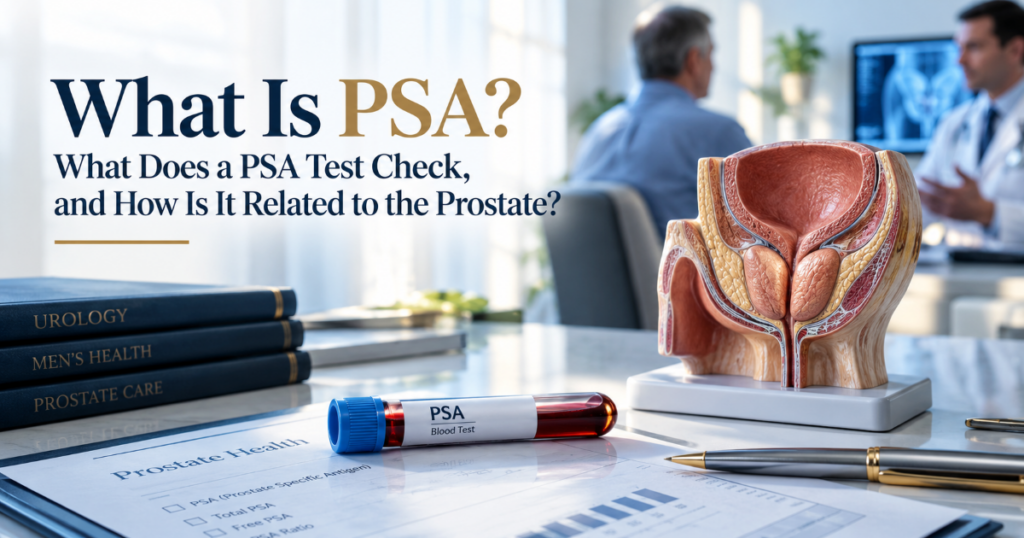
What Is PSA? What Does a PSA Test Check, and How Is It Related to the Prostate?
A PSA test is a blood test that measures prostate-specific antigen. It can support prostate health assessment, but it cannot diagnose prostate cancer by itself. The result needs context: age, symptoms, prostate size, infection risk, medication history, family history, and follow-up testing when appropriate.
PSA stands for prostate-specific antigen, a protein made by the prostate gland. A PSA test checks the amount of PSA in the blood. Doctors may use PSA testing to help assess prostate cancer risk, prostate enlargement, inflammation, infection, urinary symptoms, or follow-up after prostate cancer treatment.
What Is PSA and Why Is It Related to the Prostate?
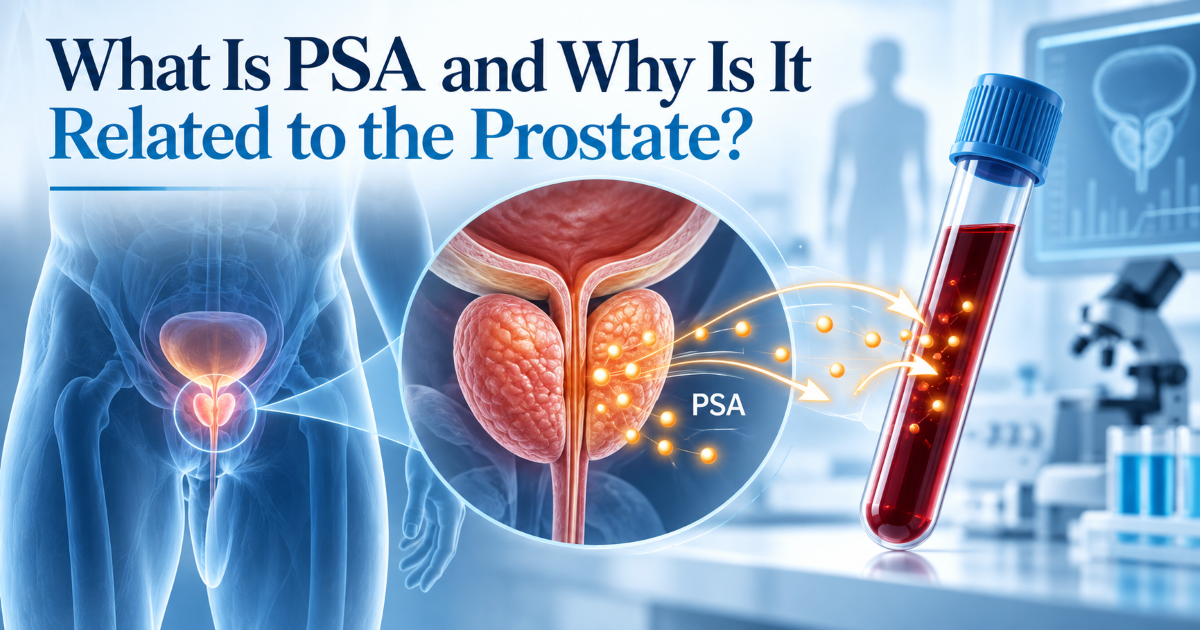
PSA means prostate-specific antigen. It is a protein produced by cells in the prostate gland. A small amount of PSA normally circulates in the blood, and the amount can change for several reasons.
Because PSA is related to prostate tissue, doctors may use a PSA blood test as part of prostate health assessment. It is not a standalone diagnosis. It is a signal that helps guide the next question: is the prostate enlarged, inflamed, infected, affected by cancer risk, or simply being monitored after previous treatment?
What Does a PSA Test Check?
A PSA test checks the level of prostate-specific antigen in a blood sample. The result may be used for several purposes, depending on the patient and clinical context.
Screening discussion
For some men without symptoms, PSA may be discussed as part of prostate cancer screening after reviewing benefits, limitations, and personal risk.
Symptom assessment
For men with urinary symptoms, PSA may be one part of evaluating prostate enlargement, inflammation, infection, or cancer risk.
Follow-up
After prostate cancer treatment, PSA can help clinicians monitor for possible recurrence or response to treatment.
The test itself is simple, but interpretation is not always simple. A doctor may consider urinary symptoms, recent ejaculation, infection, prostate procedures, medications, age, family history, and prior PSA results before deciding what the number means.
What Can Cause a High PSA Level?
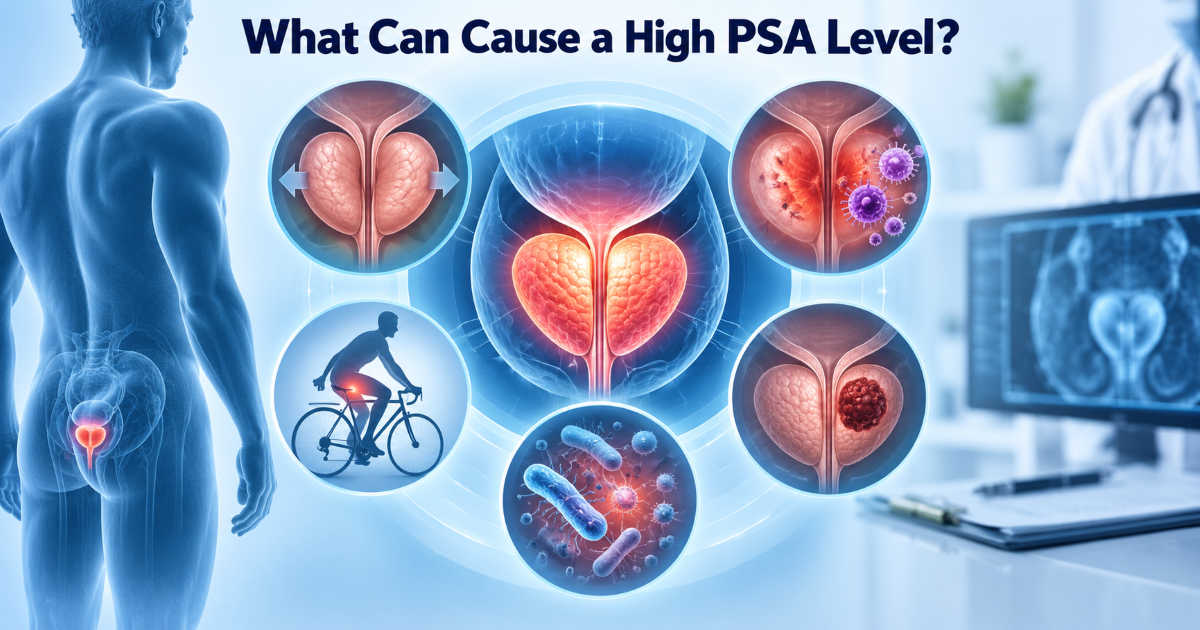
A high PSA level may be associated with prostate cancer, but benign conditions can also raise PSA. This is why men should avoid interpreting the result from the number alone.
| Possible reason | How it may affect PSA | What doctors may consider |
|---|---|---|
| Benign prostate enlargement | A larger prostate can produce more PSA. | Age, urinary symptoms, prostate size, urine flow, and follow-up trend. |
| Prostatitis or inflammation | Inflammation may temporarily raise PSA. | Pain, fever, urinary discomfort, infection workup, and repeat testing after treatment if appropriate. |
| Urinary tract infection | Infection can affect urinary/prostate inflammation and PSA interpretation. | Urine testing, symptoms, antibiotic decision, and timing of repeat PSA. |
| Recent prostate manipulation | Some procedures or biopsy can increase PSA temporarily. | Recent catheter, cystoscopy, biopsy, or urological procedures. |
| Prostate cancer risk | Some prostate cancers can raise PSA. | Risk factors, physical exam, repeat PSA, MRI, biomarkers, or urology referral. |
What Is Considered a Normal PSA Level?
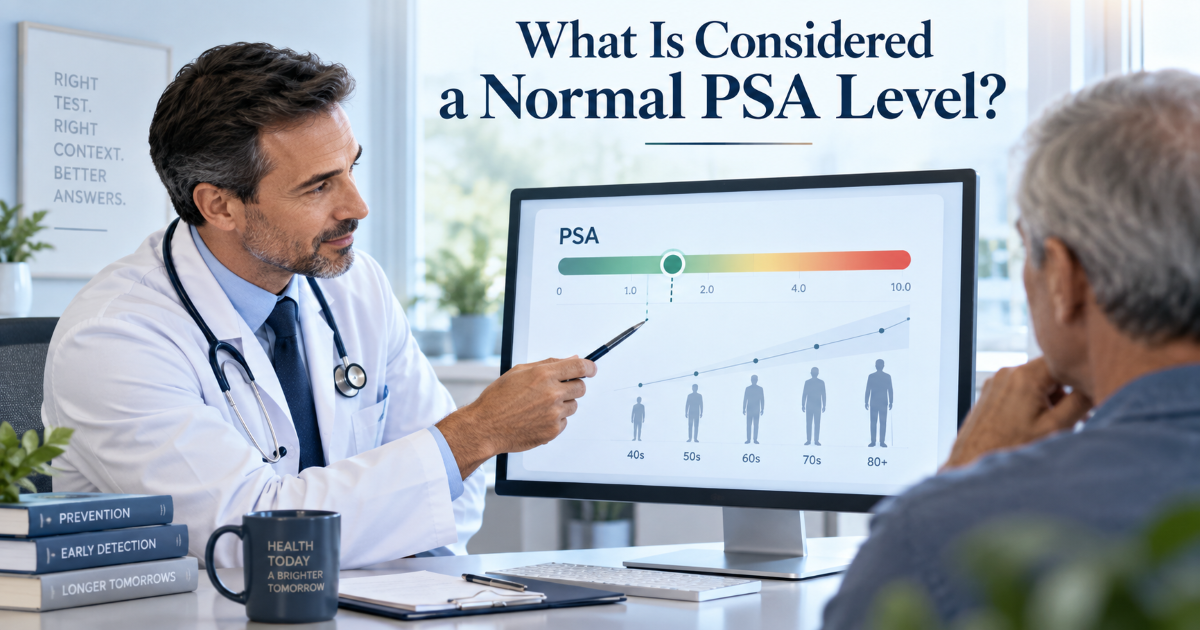
There is no single PSA number that works perfectly for every man. Some sources discuss thresholds such as 4.0 ng/mL, but modern interpretation is more individualized. Age, prostate size, symptoms, infection, medication use, prior PSA trend, and family history can change what the result means.
One cutoff can mislead
Some men with PSA below a common threshold may still need evaluation because of symptoms or risk factors.
High does not equal cancer
Some men with elevated PSA do not have prostate cancer, especially when benign enlargement or inflammation is present.
For this reason, the practical question is not only “is my PSA normal?” A better question is “does this PSA result make sense for my age, symptoms, risk factors, and previous results?”
Why One PSA Result Is Not Enough to Make a Conclusion

PSA can fluctuate. A single result may be affected by temporary inflammation, infection, recent procedures, laboratory variation, or other patient-specific factors. Doctors often look at the trend and context before recommending the next step.
Confirm the clinical context
The doctor reviews symptoms, urinary history, infection signs, medications, family history, and previous PSA values.
Repeat or extend testing if needed
Depending on the case, repeat PSA, free PSA, urine testing, prostate exam, MRI, or urology referral may be considered.
Balance benefits and harms
Screening can help detect cancer earlier in some cases, but it can also lead to false positives, anxiety, unnecessary biopsies, overdiagnosis, or overtreatment.
Who Should Talk to a Doctor About PSA Testing?

Men should consider speaking with a doctor about PSA testing when they have urinary symptoms, family history, previous abnormal results, or concerns about prostate health. For men without symptoms, the decision should be individualized because screening has both potential benefits and limitations.
Urinary symptoms
Frequent urination, waking at night to urinate, weak stream, incomplete emptying, burning, pain, or blood should be assessed.
Risk factors
Family history of prostate cancer, age, ethnicity, and previous abnormal tests may influence screening discussion.
Follow-up needs
Men previously treated for prostate cancer may need PSA monitoring according to their treating doctor’s plan.
What Happens After an Abnormal PSA Result?

An abnormal PSA result does not automatically mean biopsy or cancer treatment. The next step depends on how abnormal the result is, whether symptoms are present, whether infection may be involved, and how the result compares with previous values.
| Possible next step | Why it may be used | What it does not mean |
|---|---|---|
| Repeat PSA | To confirm whether the result persists or was temporary. | It does not mean cancer has been found. |
| Urine test or infection assessment | To check whether urinary infection or inflammation may be affecting symptoms and PSA. | It does not replace prostate assessment when risk remains. |
| Digital rectal exam | To feel for prostate enlargement, firmness, nodules, or tenderness. | A normal exam does not always rule out all risk. |
| Prostate MRI or additional biomarkers | To help refine risk before deciding whether biopsy is needed. | It may not be needed for every elevated PSA result. |
| Urologist referral | To assess persistent elevation, concerning symptoms, or higher-risk findings. | Referral is an evaluation step, not a diagnosis. |
FAQ About PSA Testing
What does a PSA test check?
A PSA test checks the amount of prostate-specific antigen in the blood. It may help doctors assess prostate health, prostate cancer risk, benign enlargement, inflammation, infection, or follow-up after prostate cancer treatment.
Does a high PSA mean prostate cancer?
No. A high PSA can be linked with prostate cancer, but it can also happen with benign prostate enlargement, prostatitis, urinary infection, recent prostate procedures, or other factors. A doctor should interpret the result.
Can PSA testing diagnose prostate cancer?
No. PSA testing can support risk assessment, but prostate cancer diagnosis usually requires further evaluation and may require biopsy when clinically appropriate.
Should every man have PSA testing?
Not automatically. PSA testing should be discussed with a clinician based on age, symptoms, family history, health status, and personal preferences because screening has benefits and possible harms.
What should I ask after receiving a PSA result?
Ask whether the result fits your age and history, whether infection or medications may affect the result, whether repeat testing is needed, and what symptoms should trigger urgent follow-up.
Medical References
This page is written for patient education and medical SEO clarity. It does not replace diagnosis, individualized screening advice, emergency care, or treatment by a qualified healthcare professional.
- MedlinePlus: Prostate-Specific Antigen (PSA) Test
- National Cancer Institute: Prostate-Specific Antigen (PSA) Test Fact Sheet
- Mayo Clinic: PSA test overview
- NIDDK: Prostate tests
- MedlinePlus: Prostate cancer screening

Doctor Review and Medical Safety
PSA testing is useful only when the result is interpreted within the right clinical context. Men should discuss symptoms, age, family history, medications, infection risk, and prior PSA results with a doctor before making decisions based on one number.
Reviewed by: Dr. Beer, Eternity Clinic
Last content update: 7 September 2026

Get an initial consultation with Dr.Beer FREE!!!
Ask for information about treatment and additional services make an appointment at
LINE:@ETERNITYCLINIC2
M.D. SUEBPONG ANGCHOUN
Urologist & General Surgeon of advance Endo-Uro and Laparoscopic Surgery
Latest Articles
Hormone Therapy Without Surgical Gender Transition
Hormone Therapy Without Surgical Gender Transition Hormone therapy can help some transgender and gender-diverse people
Can You Really Make Your Penis Bigger?
Can You Really Make Your Penis Bigger? A bigger-looking penis is not the same as
What Is PSA? What Does a PSA Test Check, and How Is It Related to the Prostate?
What Is PSA? What Does a PSA Test Check, and How Is It Related to
What Is Emergency Contraception? How to Use It Correctly and What to Know Before Use
What Is Emergency Contraception? How to Use It Correctly and What to Know Before Use
10 Techniques to Enhance Sensation During Sexual Intimacy
10 Techniques to Enhance Sensation During Sexual Intimacy Sensation during intimacy is influenced by arousal,
Best Sexual Wellness Devices for Beginners: A Safety Guide for Adults
Best Sexual Wellness Devices for Beginners: A Safety Guide for Adults If you are considering
(N) Adult Sexual Wellness Devices: A Safety Guide Before Use
Adult Sexual Wellness Devices: A Safety Guide Before Use Adult sexual wellness devices should be
Comfortable Intimacy Positions for Men With Penile Curvature
Comfortable Intimacy Positions for Men With Penile Curvature Penile curvature does not always prevent sexual