
What Is Emergency Contraception? How to Use It Correctly and What to Know Before Use
Emergency contraception can reduce the chance of pregnancy after unprotected sex, condom breakage, missed contraception, or sexual exposure where pregnancy prevention is needed. The best option depends on how long it has been, which methods are available, medical suitability, and whether ongoing contraception or STI testing is also needed.
Emergency contraception is contraception used after sex to reduce the chance of pregnancy. Main options include levonorgestrel emergency contraceptive pills, ulipristal acetate pills, combined oral contraceptive regimens in selected settings, and the copper IUD. It should be used as soon as possible because timing affects effectiveness. It does not protect against sexually transmitted infections and should not replace a regular contraception plan.
What Is Emergency Contraception?
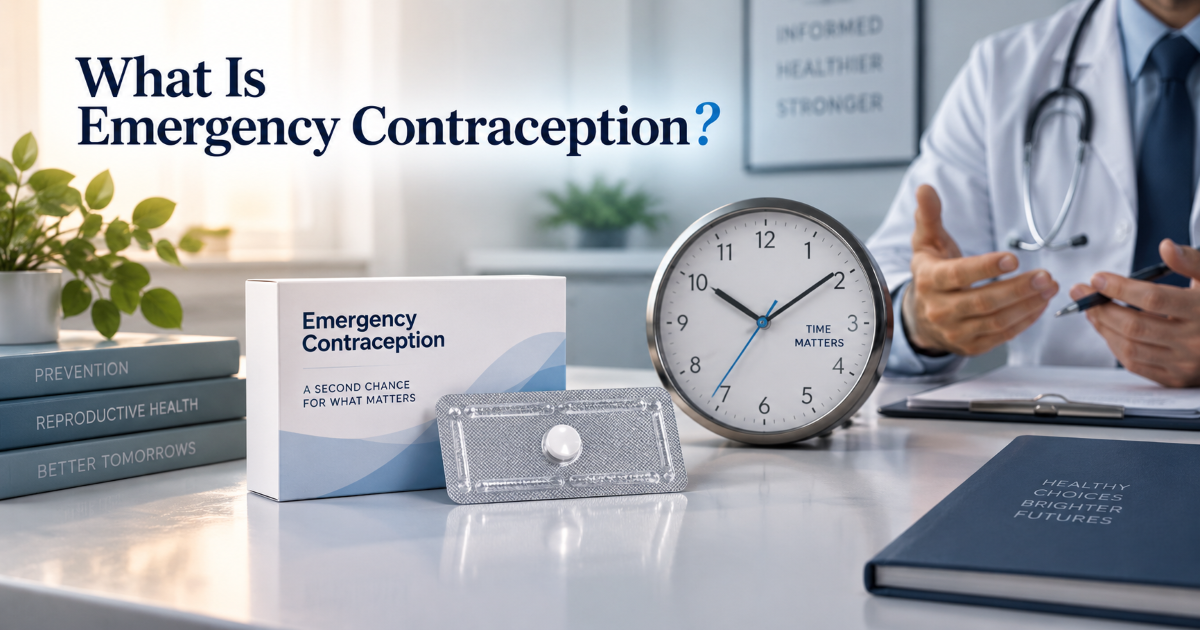
Emergency contraception, sometimes called post-coital contraception or the morning-after pill, is used after sex when pregnancy prevention is needed. Common reasons include a condom break, no contraception, missed pills, delayed injection, expelled contraceptive device, incorrect condom use, or uncertainty after sexual contact.
It is not the same as regular contraception. It is a backup option for a specific event, not a routine method for every cycle. After using it, many people still need a plan for ongoing contraception, pregnancy testing if the period is late, and STI testing when exposure risk exists.
How Emergency Contraception Works
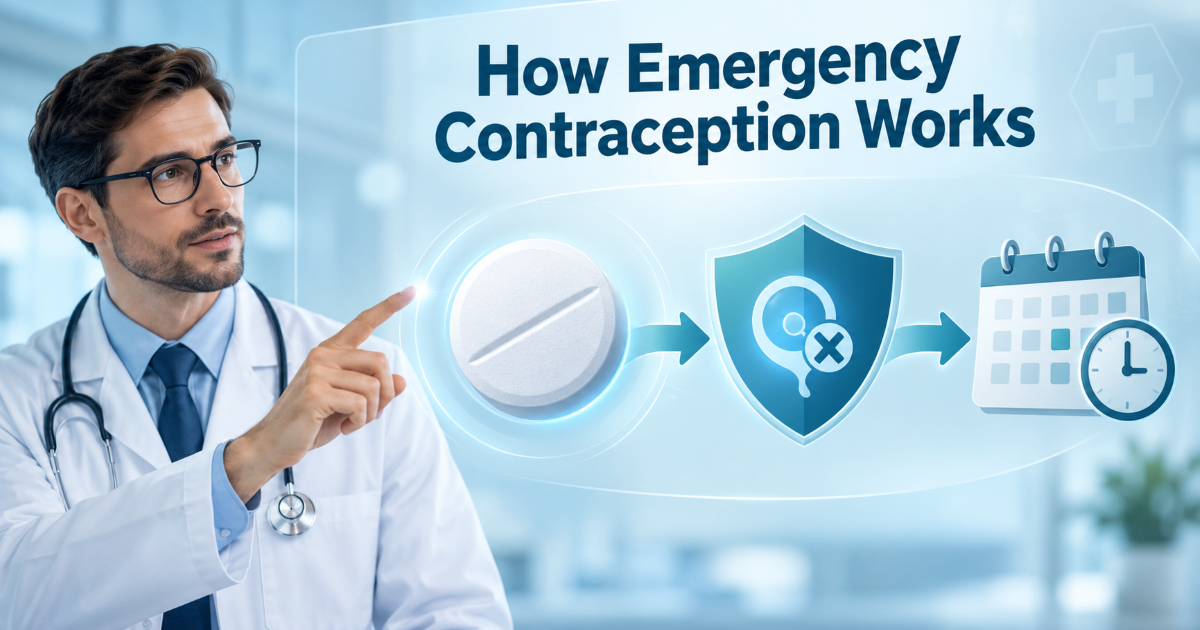
Emergency contraceptive pills mainly work by delaying or preventing ovulation. If ovulation has already occurred, some pill options may be less effective. The copper IUD works differently and can also provide ongoing contraception after insertion if it is medically suitable.
It is time-sensitive
The sooner you ask for advice, the more options you may have. Some methods have a shorter window than others.
It is not STI protection
Emergency contraception does not prevent chlamydia, gonorrhea, HIV, syphilis, herpes, HPV, or hepatitis.
It is not routine contraception
Repeated emergency use can happen, but it is usually less practical than choosing a regular method that fits your life.
Types of Emergency Contraception
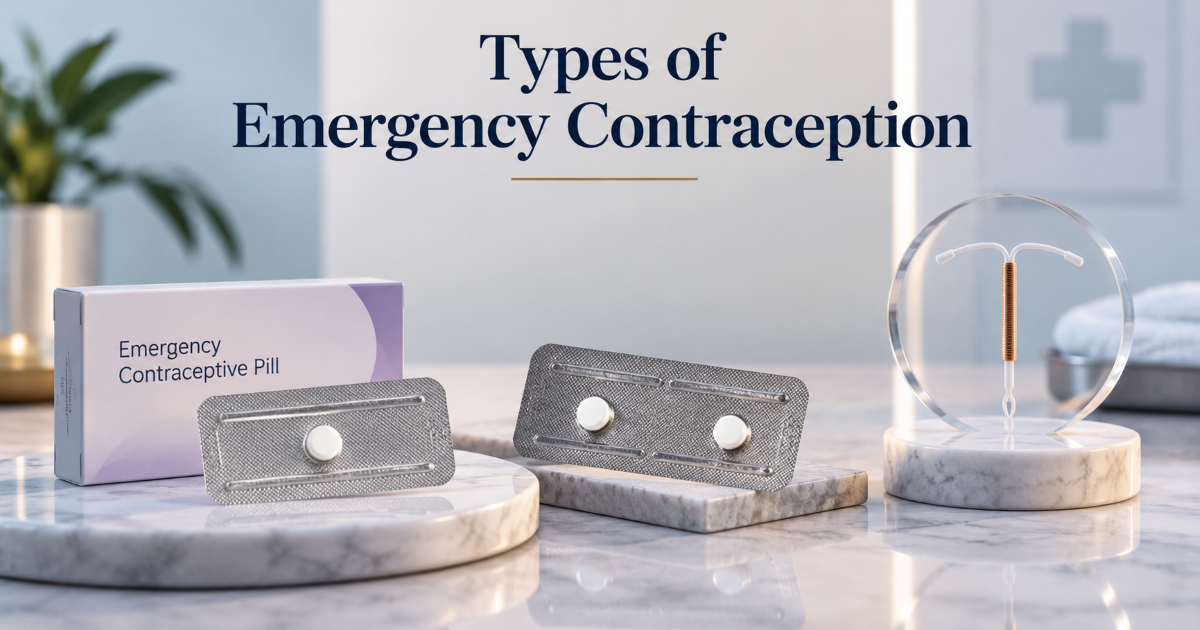
Emergency contraception is not a single product. Different methods have different access rules, timing windows, and follow-up needs. The availability of specific brands and prescription requirements can vary by country.
| Method | Typical timing window | Key points to discuss |
|---|---|---|
| Levonorgestrel emergency contraceptive pill | Usually within 72 hours after sex; earlier use is preferred. | Often easier to access, but timing, body weight, vomiting, and interactions may affect suitability. |
| Ulipristal acetate emergency contraceptive pill | Up to 120 hours after sex in many guidelines. | May require prescription depending on country; regular hormonal contraception timing needs special advice after use. |
| Copper IUD | Often up to 5 days after unprotected sex, if suitable and available. | Highly effective emergency contraception and can continue as long-term contraception, but insertion requires a trained clinician. |
| Combined oral contraceptive regimen | Used in selected settings when dedicated options are not available. | Needs correct dosing guidance from a clinician or pharmacist; nausea may be more common. |
How to Use Emergency Contraceptive Pills Correctly
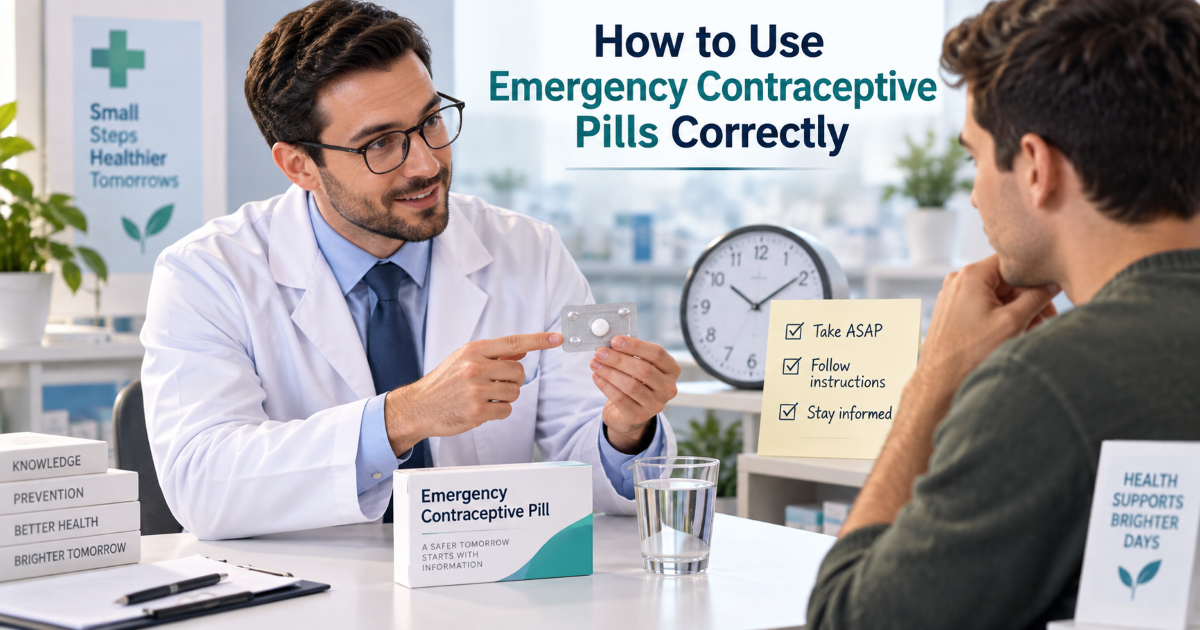
Correct use starts with timing. Take the pill as directed as soon as possible after sex. Read the package instructions and follow pharmacist or clinician guidance, especially if you take other medications, use hormonal contraception, breastfeed, have vomiting or severe diarrhea, or are unsure when ovulation may have occurred.
Check timing
Write down when sex happened. The timing can change which option is more appropriate.
Confirm the method
Ask whether the pill is levonorgestrel, ulipristal acetate, or another regimen. The follow-up instructions may differ.
Plan the next 3 weeks
Use condoms or follow medical advice for ongoing contraception. Take a pregnancy test if your period is late, unusually light, or symptoms suggest pregnancy.
What If You Vomit After Taking Emergency Contraception?
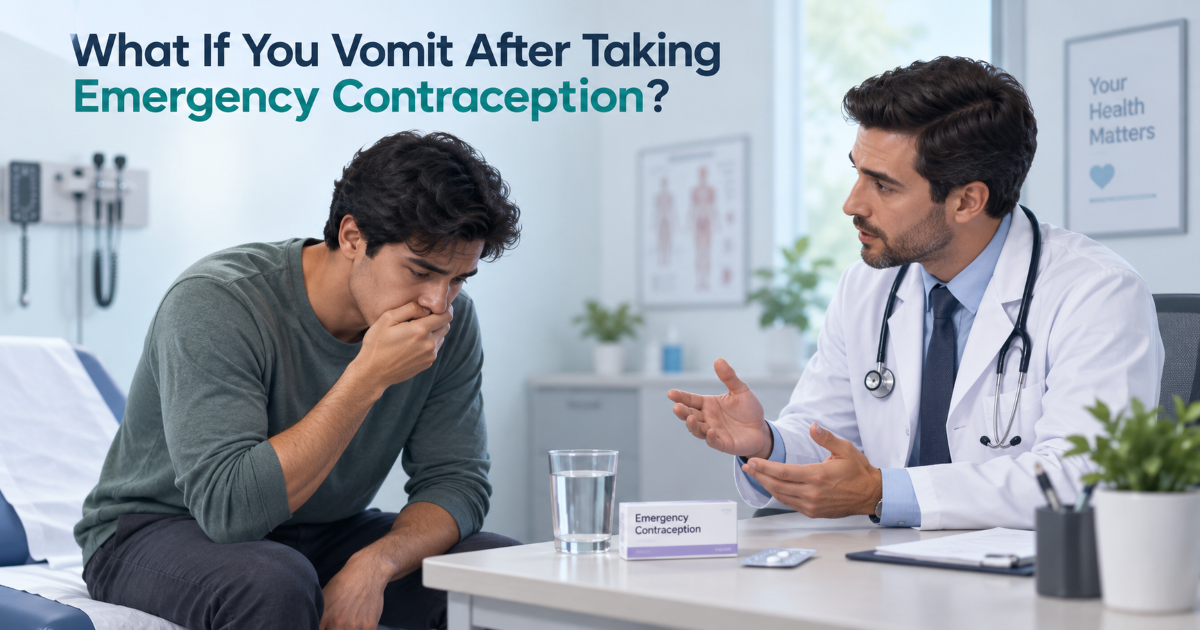
If vomiting occurs soon after taking an emergency contraceptive pill, the medicine may not have been absorbed fully. The exact instruction depends on the pill type, time since taking it, and local product guidance. Contact a pharmacist, doctor, or sexual health service promptly instead of assuming the pill still worked.
Do not repeat randomly
Repeating a dose without advice may cause side effects and may not be the best option for your situation.
Ask quickly
Because emergency contraception is time-sensitive, contact a professional as soon as vomiting occurs.
Track bleeding
Temporary menstrual changes can happen, but a late period still needs pregnancy testing.
What to Know Before Using Emergency Contraception
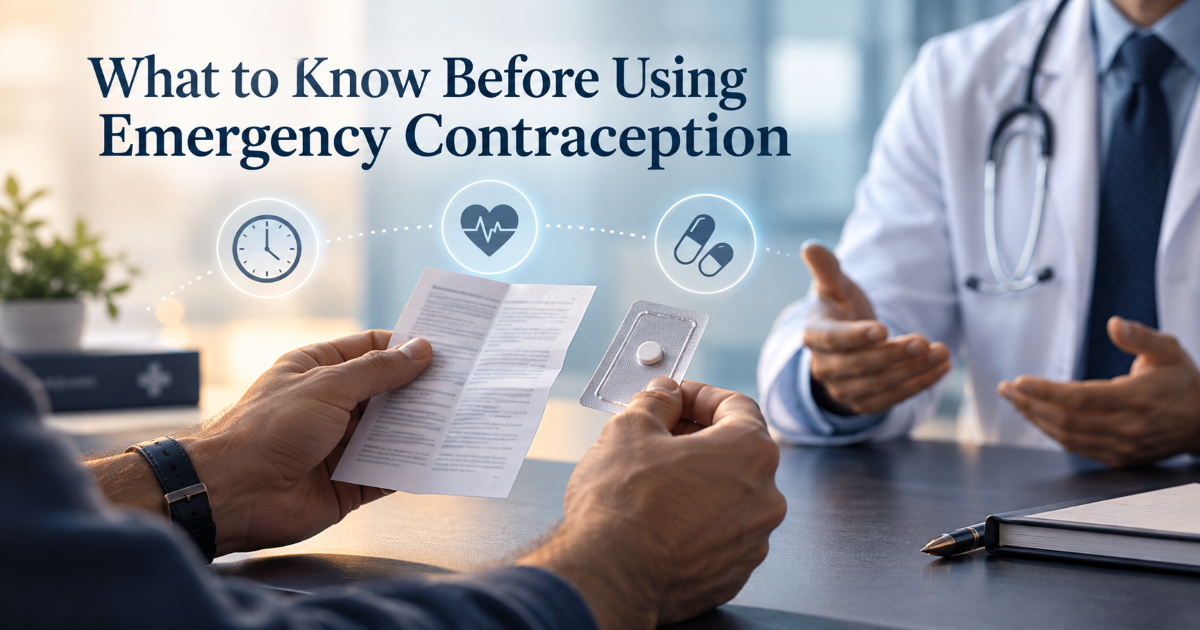
Before using emergency contraception, it helps to separate three questions: pregnancy risk, STI risk, and ongoing contraception. Emergency contraception only addresses pregnancy risk from the recent exposure. It does not treat symptoms or replace STI testing when there was unprotected sex or a partner risk.
| Question | Why it matters | What to do |
|---|---|---|
| How long ago did sex happen? | Different methods have different timing windows. | Ask for advice immediately and state the exact timing. |
| Was there STI exposure? | Emergency contraception does not prevent STIs. | Consider STI testing, condoms, and urgent HIV PEP advice if exposure was high risk and recent. |
| Could you already be pregnant? | Emergency contraception is for use after sex before pregnancy is established. | Take a pregnancy test when indicated and seek medical advice if symptoms occur. |
| Are you taking other medicines? | Some medications may reduce effectiveness of certain emergency contraceptive pills. | Tell the pharmacist or clinician about all medicines and supplements. |
| Do you need ongoing contraception? | Emergency contraception does not cover future sex. | Discuss condoms, pills, injection, implant, IUD, or another regular method. |
When Should You Talk to a Doctor or Pharmacist?

A pharmacist can often help with immediate access and product instructions. A doctor or sexual health service may be more appropriate when the situation is medically complex, symptoms are present, or you need a copper IUD, STI testing, pregnancy assessment, or ongoing contraception planning.
Timing is close to the limit
If several days have passed, ask about all options rather than assuming a pill is the only choice.
Symptoms are present
Lower abdominal pain, unusual bleeding, fever, genital sores, discharge, painful urination, or pelvic pain needs assessment.
Period is late
If the period is late, unusually light, or pregnancy symptoms appear, take a pregnancy test and seek advice.
Frequently Asked Questions About Emergency Contraception
Is emergency contraception the same as an abortion pill?
No. Emergency contraception is intended to reduce pregnancy risk after sex, mainly before pregnancy is established. It is not the same as medication abortion. If pregnancy is already suspected, take a pregnancy test and seek professional advice.
How soon should emergency contraception be taken?
As soon as possible. Some options are used within 72 hours, while others may be considered up to 120 hours depending on method and medical suitability. A copper IUD may also be an option in selected patients if timely insertion is available.
Does emergency contraception protect against STIs?
No. It does not protect against HIV, chlamydia, gonorrhea, syphilis, herpes, HPV, or hepatitis. If STI exposure is possible, ask about testing, partner safety, and urgent HIV PEP advice when exposure was recent and high risk.
Can emergency contraception be used often?
Emergency contraception can be used when needed, but frequent use may be less practical than a regular contraceptive method. A clinician or pharmacist can help you choose a method that fits your health, timing, and lifestyle.
What should I do if my period is late after emergency contraception?
Take a pregnancy test if your period is late, unusually light, or pregnancy symptoms occur. Seek medical advice if there is abdominal pain, heavy bleeding, fainting, fever, or symptoms that worry you.
Medical References
This page is for patient education and search-intent clarity. It does not replace individualized contraception counselling, pregnancy assessment, emergency care, STI testing, or treatment by a qualified healthcare professional.

Doctor Review and Medical Safety
Emergency contraception is time-sensitive and should be matched to the timing of sex, method availability, pregnancy risk, medication use, STI risk, and whether ongoing contraception is needed. Patients with symptoms, sexual assault concerns, possible HIV exposure, or a late period after use should seek professional medical advice promptly.
Reviewed by: Dr. Beer, Eternity Clinic
Last content update: 7 September 2026

Get an initial consultation with Dr.Beer FREE!!!
Ask for information about treatment and additional services make an appointment at
LINE:@ETERNITYCLINIC2
M.D. SUEBPONG ANGCHOUN
Urologist & General Surgeon of advance Endo-Uro and Laparoscopic Surgery
Latest Articles
What Is PSA? What Does a PSA Test Check, and How Is It Related to the Prostate?
What Is PSA? What Does a PSA Test Check, and How Is It Related to
What Is Emergency Contraception? How to Use It Correctly and What to Know Before Use
What Is Emergency Contraception? How to Use It Correctly and What to Know Before Use
10 Techniques to Enhance Sensation During Sexual Intimacy
10 Techniques to Enhance Sensation During Sexual Intimacy Sensation during intimacy is influenced by arousal,
Best Sexual Wellness Devices for Beginners: A Safety Guide for Adults
Best Sexual Wellness Devices for Beginners: A Safety Guide for Adults If you are considering
(N) Adult Sexual Wellness Devices: A Safety Guide Before Use
Adult Sexual Wellness Devices: A Safety Guide Before Use Adult sexual wellness devices should be
Comfortable Intimacy Positions for Men With Penile Curvature
Comfortable Intimacy Positions for Men With Penile Curvature Penile curvature does not always prevent sexual
How Many Types of Gonorrhea Are There? Can It Be Completely Cured?
How Many Types of Gonorrhea Are There? Can It Be Completely Cured? Gonorrhea is one
Natural Penile Curvature vs. Curvature Caused by Disease: What Is the Difference?
Natural Penile Curvature vs. Curvature Caused by Disease: What Is the Difference? A curved penis