

Depression can affect sexual performance in more than one way. Some men lose desire. Some can become aroused but cannot keep an erection. Some feel anxious after one difficult sexual experience, then the worry itself becomes part of the cycle. This guide explains how depression, antidepressant medication, relationship stress and physical ED factors should be assessed together before choosing treatment.
Can depression affect erections and sex drive?
Yes. Depression can reduce libido, interfere with arousal, increase performance anxiety and make erection problems more likely. Some antidepressants can also cause sexual side effects. However, ED should not be blamed on mood alone until physical causes, cardiovascular risk, hormones, medication history and relationship factors have been reviewed.
The safest approach is an integrated plan: mental health care, sexual medicine evaluation, medication review and ED treatment only when appropriate.
This page is useful if you have
- Low sexual desire after stress or depression
- Weak erections, unstable erections or loss of morning erections
- Erection problems after starting an antidepressant
- Performance anxiety after one or more failed attempts
- Relationship strain caused by sexual avoidance
How depression affects sexual performance

Sexual performance depends on the brain, nervous system, blood vessels, hormones, emotional safety and relationship context. Depression can interrupt this system by lowering motivation, reducing pleasure, increasing fatigue and making sexual contact feel stressful instead of enjoyable.
Interest in sex may fall because depression reduces pleasure, energy and emotional connection.
Stress, anxiety and low arousal can make it harder to start or maintain an erection.
One failed attempt can create worry. The next attempt may feel like a test instead of intimacy.
Antidepressants and sexual side effects
Antidepressants can be essential and should not be stopped without medical supervision. At the same time, some medications may cause sexual side effects, including lower libido, delayed ejaculation, difficulty reaching orgasm or erectile dysfunction.
| Medication group | Possible sexual effect | Safer next step |
|---|---|---|
| SSRIs | May reduce desire, delay orgasm or contribute to erection problems in some patients. | Discuss timing, dose, switching options or add-on strategies with the prescribing doctor. |
| SNRIs | May also affect libido and orgasm depending on the drug and dose. | Review benefits, mood stability and sexual side effects together. |
| MAOIs, TCAs and other drugs | Side effects vary and may include sedation, dry mouth, blood pressure effects or sexual symptoms. | Medication review should include all psychiatric, sleep, blood pressure and prostate medications. |
Risk factors that may worsen depression related sexual dysfunction

Unresolved conflict can reduce desire and make sex feel pressured.
Worry about erection strength can trigger a stress response that makes ED worse.
Depression may create guilt, body image concerns or fear of rejection.
These can worsen mood, vascular health and erection quality.
Vascular and nerve factors may coexist with depression.
Psychiatric, blood pressure, prostate and sleep medications can all affect sexual function.
What a proper ED workup should include
When depression and ED overlap, the goal is not to guess. A structured workup helps separate psychogenic, medication-related, hormonal, vascular and relationship factors.
When did erection problems start? Are morning erections present? Is the issue situational or consistent?
Screen depression severity, anxiety, sleep, stress and sexual avoidance.
Review antidepressants, sleep medication, blood pressure medication, prostate medication and supplements.
Check blood pressure, diabetes risk, obesity, smoking, cardiovascular history and hormone symptoms.
Choose lifestyle, psychological, medication, ED treatment or combined care based on findings.
Treatment options when depression and ED overlap
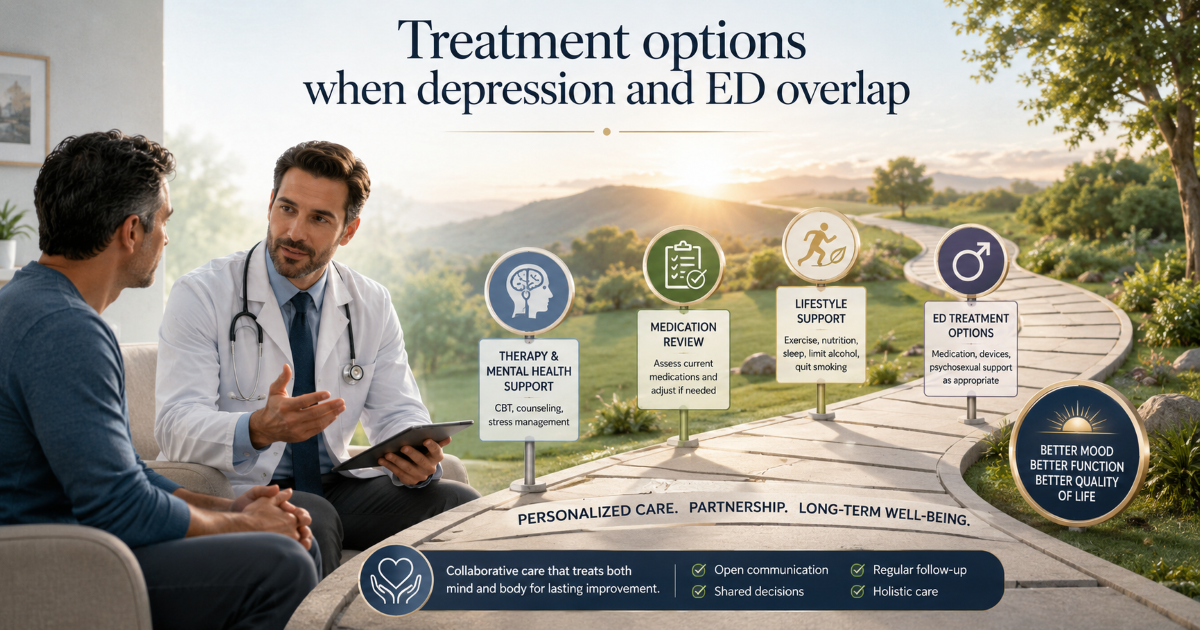
| Option | When it may help | Key caution |
|---|---|---|
| Mental health treatment | Depression, anxiety, low self-worth, trauma or sexual avoidance are prominent. | Progress may take time. Medication changes must be supervised. |
| Couples or sex therapy | Relationship pressure, conflict or fear of failure maintains the problem. | Best when both partners can communicate without blame. |
| Lifestyle and sleep correction | Stress, poor sleep, alcohol, smoking, obesity or sedentary routine contribute. | Helpful but may not be enough if vascular or medication causes are strong. |
| PDE5 inhibitors | Erection firmness is the main problem and no contraindications are present. | Needs screening for nitrates, heart disease risk and drug interactions. |
| Shockwave for ED | Selected patients with suspected vascular ED after assessment. | Not a depression treatment and results vary by cause and severity. |
| Advanced ED treatments | Persistent ED after first-line options, significant vascular disease or complex cases. | Injection, device or implant options require detailed counseling. |
For a broader overview of ED causes and treatment choices, see our main erectile dysfunction treatment page. If vascular ED is suspected, your doctor may discuss shockwave for ED as one possible option after evaluation.
When should you consult a doctor?

ED persists for more than a few weeks, appears after medication changes, or causes avoidance and relationship stress.
Sexual symptoms occur with chest pain, fainting, severe depression, suicidal thoughts or sudden neurological symptoms.
What this page should not be confused with
This page is not about penile lengthening, penile enlargement, pearling or cosmetic procedures. It focuses on depression, low libido, erection problems, medication side effects and safe ED treatment planning.
FAQs
Can depression cause erectile dysfunction?
Yes. Depression can reduce sexual desire, interfere with arousal, increase performance anxiety and make it harder to get or maintain an erection. ED can also worsen mood and relationship stress, so both sides should be assessed.
Can antidepressants cause sexual side effects?
Some antidepressants, especially SSRIs and SNRIs, can be associated with lower libido, delayed orgasm, difficulty with erection or reduced sexual satisfaction. Do not stop medication on your own. Discuss timing, dose, alternatives or add-on options with the prescribing doctor.
Should I treat depression first or erectile dysfunction first?
The safest plan is usually integrated. A doctor should review mood symptoms, relationship stress, cardiovascular risk, hormones, medication history, sleep, alcohol use and erection pattern before choosing treatment.
Can ED medicine be used if depression is involved?
PDE5 inhibitors may help some men with erection firmness, but they are not suitable for everyone. Nitrate medication, some heart conditions and other contraindications must be screened first.
When should I see a doctor?
See a doctor if erection problems last more than a few weeks, come with loss of sexual desire, appear after starting medication, cause relationship distress, or occur with chest pain, diabetes, high blood pressure, obesity, smoking or other cardiovascular risk factors.
Medical references
- Mayo Clinic: antidepressants and sexual side effects
- Mayo Clinic: coping with antidepressant side effects
- Cleveland Clinic: depression and sex
- NIDDK: erectile dysfunction symptoms and causes
- American Urological Association: erectile dysfunction guideline
This educational content does not replace diagnosis or treatment by a licensed physician.

Doctor Review and Medical Safety
This article was rewritten for medical clarity, safer claim language and international patient search intent. It avoids presenting depression, antidepressants, shockwave or ED medication as one-size-fits-all explanations or cures.
Reviewed by: Dr. Beer, Eternity Clinic
Last content update: 24 June 2026
Need confidential help with ED, low libido or depression related sexual problems?
Book a private consultation at Eternity Clinic International. The first step is to identify whether the main driver is mood, medication, cardiovascular risk, hormone change, relationship stress or mixed causes.

Latest Articles
Circumcision at a Clinic vs Hospital: How to Choose the Right Medical Setting
Adult circumcision can be planned in different medical settings. The safest choice depends on your
Adult Circumcision Explained: Benefits, Methods, Recovery, and Safety
Adult circumcision is a procedure to remove the foreskin covering the head of the penis.
Where is the Best Place for Vasectomy (Male Sterilization): Hospital or Clinic?
A vasectomy is a permanent male contraception procedure, but choosing where to have it done
What Sexual Positions Are Best for Men with a Short Penis to Maximize Pleasure in the Bedroom?
A shorter penis or concern about penis size does not automatically mean poor intimacy. Comfort,
How many Methods for Increasing Penis Size? This Article Has the Answers.
Many men search for ways to increase penis size, but the safest first step is
Hormone Therapy Without Surgical Gender Transition
Hormone therapy can help some transgender and gender-diverse people align physical characteristics with personal goals
What Are the Symptoms of Cystitis? This Article Has the Answers.
Cystitis is inflammation of the bladder. It is often caused by a bacterial bladder infection,
How to Care for Your Manhood to Keep It Strong and Disease-Free
Penis health is not only about sexual performance. It includes daily hygiene, foreskin care, safer