
Penile enlargement injections are often discussed by men who want more girth, better contour, or improved confidence. However, not all injections are the same. Hyaluronic acid filler, fat transfer, silicone, methacrylate, oil, and unknown substances have very different safety profiles. This guide explains how penis filler works, how it differs from unsafe injections and surgery, what risks to consider, and what international patients should ask before treatment in Bangkok.
Penile enlargement injections can be considered only when the injected material, technique, doctor assessment, and aftercare are medically appropriate. Hyaluronic acid filler is generally used for girth-focused shaft or contour enhancement in selected adults. Fat transfer has variable survival and contour risk. Silicone, methacrylate, oil, petroleum jelly, paraffin, and unknown substances can cause deformity, infection, granuloma, tissue damage, sexual dysfunction, and difficult corrective surgery. No injection should be promised as guaranteed true lengthening, permanent size increase, or a treatment for erectile dysfunction.
Safest starting point
Start with a private doctor consultation to define the real concern: girth, visible length, erectile function, foreskin condition, hidden penis, or previous injection complication.
Main red flag
Avoid any clinic or provider offering unknown substances, self-injection, guaranteed size, permanent results, or treatment without physical assessment.
Realistic result
Penis filler is mainly girth-focused. It may change appearance and contour, but true length increase and sexual performance improvement should not be promised.
Table of Contents
1. What are penile enlargement injections?
2. Types of injections: fat, HA filler, silicone, and unsafe substances
3. Fat vs filler: which is better?
4. How hyaluronic acid penis filler works
5. Risks of penile enlargement injections
6. Key considerations before treatment
7. Aftercare, warning signs, and travel planning
8. How to choose a safe clinic in Bangkok
9. FAQ
What Are Penile Enlargement Injections?
Penile enlargement injections involve placing a substance under the penile skin or into selected soft-tissue planes to change girth, contour, or appearance. The term includes several very different methods. Some are medical procedures performed by trained clinicians. Others are unsafe, non-medical injections that can cause severe and permanent harm.
Men often search online because the topic feels private. That is understandable, but online information can be inconsistent and commercially biased. The safest path is a confidential consultation with a qualified medical provider who can assess anatomy, medical history, foreskin status, erectile function, and realistic goals.
Types of Penile Enlargement Injections
The original article listed fat, hyaluronic acid, and silicone injections. The safer medical distinction is not simply which method is popular, but which substances are medical-grade, what risks each carries, and whether the patient is suitable.
| Injection type | How it is used | Potential benefit | Key risk / limitation |
|---|---|---|---|
| Hyaluronic acid filler | Medical filler placed under penile skin for girth or contour in selected adults. | Minimally invasive, staged, anatomy-based volume planning is possible. | Swelling, bruising, nodules, asymmetry, infection, migration, vascular risk, maintenance, or correction may occur. |
| Autologous fat transfer | Fat is harvested from the patient and transferred to the penile shaft. | Uses the patient’s own tissue and may increase girth in selected cases. | Fat survival is variable; lumps, resorption, uneven contour, infection, and revision may occur. |
| Silicone, methacrylate, oil, paraffin, petroleum jelly, unknown substances | Foreign materials injected to create size increase, often outside safe medical standards. | No safe advantage for non-medical injection. | High risk of inflammation, granuloma, deformity, necrosis, infection, sexual dysfunction, and complex reconstruction. |
| Medication injections for erectile dysfunction | Prescription medicines injected for erectile function, not cosmetic enlargement. | May help selected men with ED under medical supervision. | Not an enlargement treatment; misuse can cause priapism, pain, or tissue problems. |
Fat vs Filler: Which Is Better?
Fat transfer and hyaluronic acid filler are often compared. Neither should be described as the best choice for everyone. The right option depends on anatomy, goals, tolerance for maintenance, risk profile, and doctor assessment.
| Question | Fat transfer | Hyaluronic acid filler |
|---|---|---|
| Main goal | Girth enhancement using the patient’s fat. | Girth and contour enhancement with medical filler. |
| Predictability | Fat survival can be variable and uneven. | Volume can be planned more directly, but swelling and tissue response still vary. |
| Common concerns | Lumps, resorption, asymmetry, donor-site issues, and revision. | Nodules, asymmetry, migration, infection, maintenance, and correction. |
| Recovery | Includes both donor area and penile area recovery. | Usually shorter initial downtime than surgery, but sexual restriction still applies. |
| Best decision factor | Patient anatomy, tissue quality, and willingness to accept variable fat survival. | Patient anatomy, product choice, staged planning, and willingness to maintain results. |
How Hyaluronic Acid Penis Filler Works
Hyaluronic acid filler is placed under the penile skin to improve shaft circumference and contour. It should be planned conservatively and according to tissue capacity. Overfilling can increase the risk of swelling, irregularity, migration, discomfort, and dissatisfaction.
Consultation and screening
The doctor reviews goals, health conditions, medication use, erectile function, foreskin status, allergies, previous procedures, and expectation level.
Anatomy and foreskin assessment
The doctor evaluates shaft skin, glans-shaft proportion, phimosis, inflammation, scarring, and whether circumcision or phimosis care should be discussed first.
Product and volume planning
The filler type, initial volume, possible staged approach, expected maintenance, and correction strategy should be explained clearly.
Sterile injection and contour shaping
Medical-grade product, sterile technique, careful placement, and shape monitoring are important for reducing risk.
Aftercare and follow-up
Patients should receive instructions about swelling, hygiene, sexual restriction, warning signs, and how to contact the clinic after treatment.
For service details, see Penis Filler Injections. For broader planning, see Penile Enlargement.
Risks of Penile Enlargement Injections
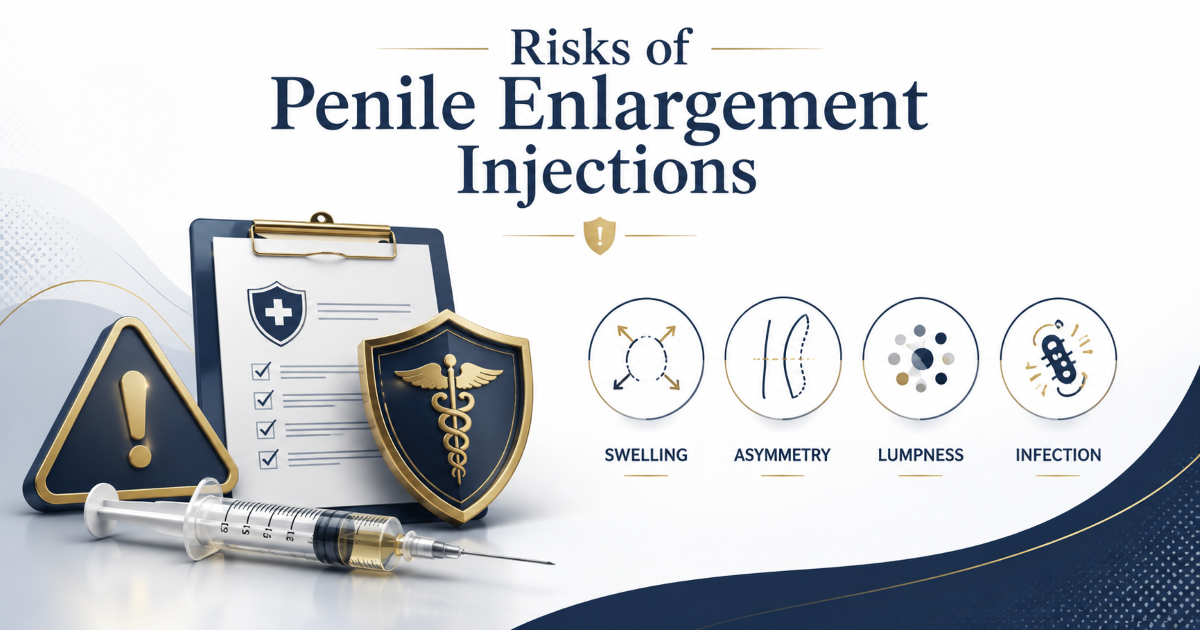
Penile injections can cause complications even when medical-grade products are used. The risk becomes much higher with unregulated substances, poor technique, self-injection, or treatment without proper screening.
Possible filler or fat-transfer risks
- Swelling, bruising, pain, or tenderness
- Lumps, nodules, asymmetry, or irregular contour
- Filler migration or visible product
- Infection or delayed inflammatory reaction
- Skin compromise or rare vascular complication
- Dissatisfaction or need for correction
Higher-risk situations
- Active rash, wound, ulcer, discharge, or infection
- Uncontrolled diabetes or immune suppression
- Bleeding disorder or blood-thinning medication
- Prior silicone, oil, methacrylate, paraffin, or unknown injection
- Untreated erectile dysfunction or penile pain
- Unrealistic size expectations or severe anxiety
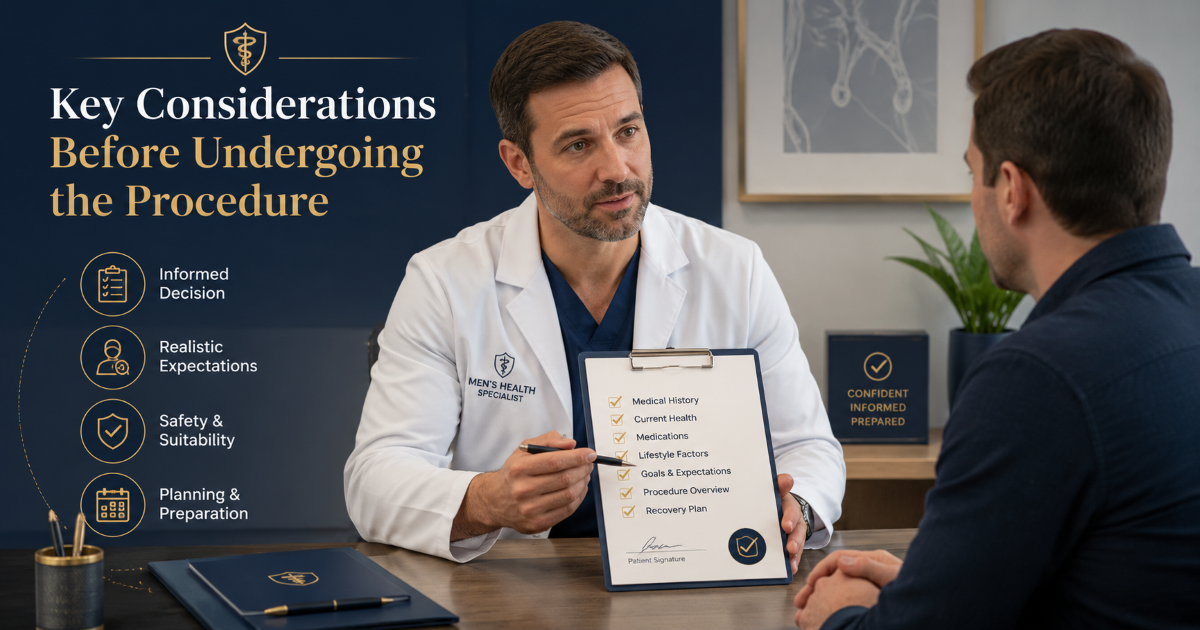
Key Considerations Before Undergoing the Procedure
Before choosing penile enlargement injections, patients should understand more than the price and expected volume. A safe consultation should discuss product quality, realistic outcomes, sexual restriction, aftercare, and what happens if the result is uneven or unsatisfactory.
| Before treatment, ask | Why it matters |
|---|---|
| What exact product will be injected? | Patients should know whether the material is medical-grade HA filler, fat, or another substance. |
| What result is realistic for my anatomy? | Volume and outcome should be based on tissue capacity, not a universal package. |
| What are the risks in my case? | Diabetes, bleeding risk, infection, phimosis, previous injection, and ED can change the plan. |
| How will problems be managed? | The clinic should explain management for swelling, nodules, migration, infection, and dissatisfaction. |
| When can I fly and resume sex? | International patients need travel and sexual restriction planning before treatment. |
Aftercare, Warning Signs, and Travel Planning
Aftercare is part of safety. Even a minimally invasive filler procedure requires temporary precautions. Patients should avoid friction, pressure, early sex, and poor hygiene until the clinic confirms the healing process is stable.
| Aftercare topic | Why it matters | What to ask |
|---|---|---|
| Swelling and bruising | Some swelling is expected, but worsening pain or skin color change is concerning. | What swelling is normal and what is urgent? |
| Sexual restriction | Early friction may worsen swelling, product movement, irregularity, or discomfort. | When can I safely resume sex and masturbation? |
| Massage or shaping | Some clinics give specific instructions; incorrect pressure may worsen contour. | Should I massage the area, and exactly how? |
| Travel timing | International patients need review before flying home. | How long should I stay in Bangkok after treatment? |
| Follow-up | Nodules, asymmetry, infection, or dissatisfaction may need review. | How do I contact the clinic after returning home? |
How to Choose a Safe Penile Enlargement Injection Clinic in Bangkok
A safe clinic should use doctor-led assessment, medical-grade products, transparent consent, sterile technique, realistic language, and a complication plan. Low price or large-volume packages should not override safety.
Good signs
- Doctor personally assesses anatomy and suitability
- Product details are explained before treatment
- Risks and limitations are discussed clearly
- Foreskin, ED, infection, and prior injection history are reviewed
- Aftercare and emergency contact are provided
Red flags
- Guaranteed size increase or permanent result claims
- Unknown filler, oil, silicone, or non-medical substances
- No physical assessment before recommending volume
- Pressure to inject more for a larger package
- No clear complication or follow-up plan
- Confirm whether the goal is girth, contour, visible length, function, or confidence.
- Ask what product is used and what evidence supports it.
- Avoid unsafe substances and unlicensed providers completely.
- Understand risks, aftercare, sexual restriction, and warning signs.
- Choose a clinic that explains what cannot be promised.
Book a Private Penis Filler Consultation
Send your case for doctor review if you are considering penile enlargement injections, penis filler, fat transfer, circumcision before filler, or correction after unsafe injection. The clinic team can help explain suitability, realistic outcomes, risks, recovery, and safe treatment sequence.

Doctor Review and Medical Safety
This page is prepared as patient education for penile enlargement injections, penis filler, fat transfer, unsafe injection risks, and male intimate health. Suitability, method choice, product selection, risks, recovery, and expected results must be confirmed during a private doctor consultation.
Reviewed by: Dr. Beer, Eternity Clinic
Last content update: 18 June 2026
Penile Enlargement Injection FAQ
Are penile enlargement injections safe?
Safety depends on the injected material, patient selection, technique, provider qualification, aftercare, and follow-up. Medical-grade hyaluronic acid filler may be considered for selected patients, but no injection is risk-free.
Can penis filler increase penis length?
Penis filler mainly improves girth and contour. It may make the penis appear larger because proportions change, but it should not be promised as true lengthening.
Is fat injection better than filler?
Not necessarily. Fat transfer uses the patient’s own fat but may have variable survival and uneven contour. HA filler may allow more controlled volume planning but still has risks and maintenance needs.
Are silicone or methacrylate injections safe?
Foreign-material injections can cause serious complications such as inflammation, granuloma, deformity, tissue damage, infection, sexual dysfunction, and complex revision surgery. They should not be treated as routine cosmetic options.
Can penile enlargement injections treat erectile dysfunction?
No. Cosmetic filler does not treat erectile dysfunction. ED needs separate diagnosis and treatment before considering aesthetic penile procedures.
Do I need circumcision before penis filler?
Not every man needs circumcision before filler. However, phimosis, recurrent inflammation, hygiene problems, or very mobile foreskin may affect filler planning. The doctor should assess foreskin status first.
What should I avoid?
Avoid self-injection, oil, petroleum jelly, paraffin, silicone, methacrylate, unknown fillers, and unlicensed providers. These methods can cause severe and difficult-to-correct complications.
When should I seek urgent care after injection?
Seek medical advice urgently for severe pain, fever, pus, foul odor, rapidly increasing swelling, black or pale skin color, open wounds, urinary difficulty, or worsening infection symptoms.
Medical References
The following references were used for general medical context. They do not replace personalized diagnosis or treatment planning.

Latest Articles
How to Care for Your Manhood to Keep It Strong and Disease-Free
Penis health is not only about sexual performance. It includes daily hygiene, foreskin care, safer
Permanent Solution for Premature Ejaculation with Surgery
Premature ejaculation can be distressing, but it should not be reduced to a single promise
Delayed Ejaculation: Is It Really Good? What to Do If You’re Facing This Issue
Delayed ejaculation may sound positive to some men, but when climax takes much longer than
How to Measure Condom Size Properly: Understanding Sizes 49, 52, 54, and 56
Condom size is not judged by length alone. For most men, the most useful measurement
Penile Enlargement With “Your Own Tissue” or “Your Own Fat”: Why It May Not Be Worth the Pain
Using your own tissue or your own fat can sound more natural than synthetic material,
Circumcision at a Clinic vs Hospital: How to Choose the Right Medical Setting
Adult circumcision can be planned in different medical settings. The safest choice depends on your
Adult Circumcision Explained: Benefits, Methods, Recovery, and Safety
Adult circumcision is a procedure to remove the foreskin covering the head of the penis.
Where is the Best Place for Vasectomy (Male Sterilization): Hospital or Clinic?
A vasectomy is a permanent male contraception procedure, but choosing where to have it done