

Vasectomy | Contraception is Part of Family Planning, there are various methods of contraception, both temporary and permanent, and the choice of method depends on individual needs and suitability, as well as other factors. One of the safest and most effective methods is male sterilization. However, the reversal of sterilization can be performed surgically, with a success rate of approximately 60-80%. If you wish to undergo the reversal after 10 years of being sterilized, the success rate may decrease. Read more : Vasectomy Safe birth control for men
Additionally, the costs associated with the reversal procedure may be higher than those for the initial sterilization. Therefore, it’s important to ensure that sterilization is the right choice for you before making a decision. This article will discuss male sterilization, the current surgical methods for male sterilization, the benefits of male sterilization, and potential side effects that may occur after the procedure.
Male Sterilization
Male sterilization (vasectomy) is a permanent form of contraception that involves cutting and tying the vas deferens to prevent sperm from being released during ejaculation. This means that no sperm will be present, thus eliminating the possibility of fertilization. Permanent contraception involves severing and tying the sperm ducts to prevent sperm from entering the vagina during sexual intercourse.
The testicles still produce sperm and hormones, but the sperm cannot travel through the vas deferens and naturally breaks down harmlessly. A vasectomy is not castration and does not remove the testicles or impair normal sexual function. The seminal fluid or ejaculate remains unchanged and continues to be produced normally.
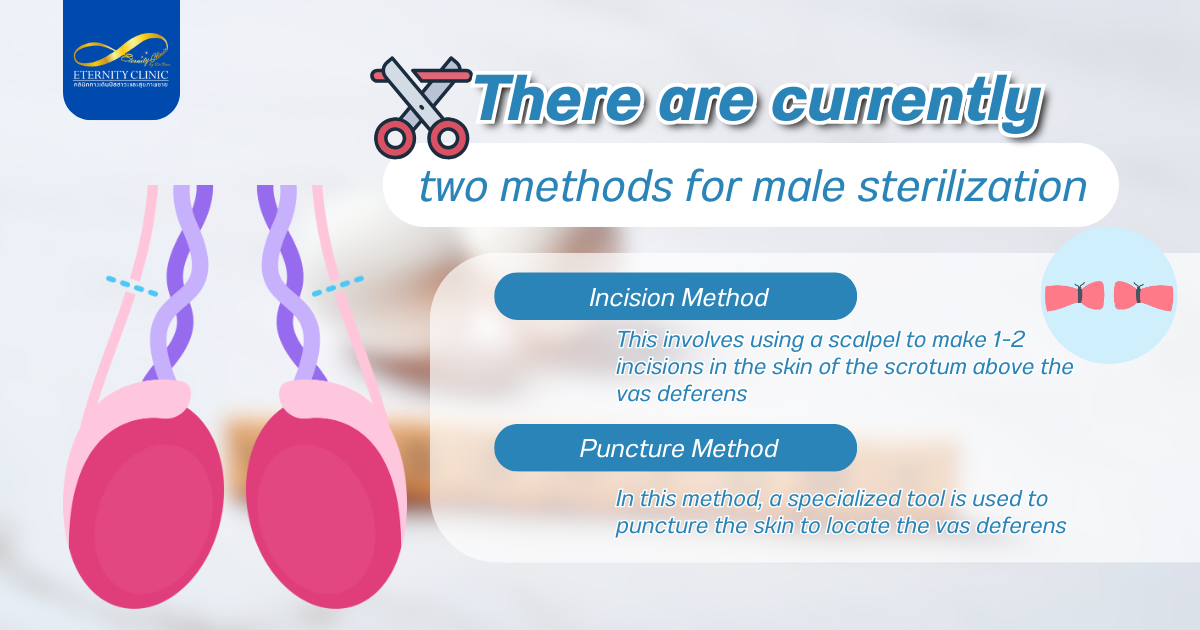
There are currently two methods for male sterilization:
- Incision Method: This involves using a scalpel to make 1-2 incisions in the skin of the scrotum above the vas deferens. The surgeon then ties and cuts both vas deferens and stitches up the incisions afterward.
- Puncture Method: In this method, a specialized tool is used to puncture the skin to locate the vas deferens. The vas deferens is then tied and cut, resulting in a smaller incision that does not require stitching. After the surgery, sterilization is not immediate; it is necessary to wait about 4 months to ensure that no sperm are present. This waiting period is important because there may still be residual sperm in the sperm storage ducts after the procedure.
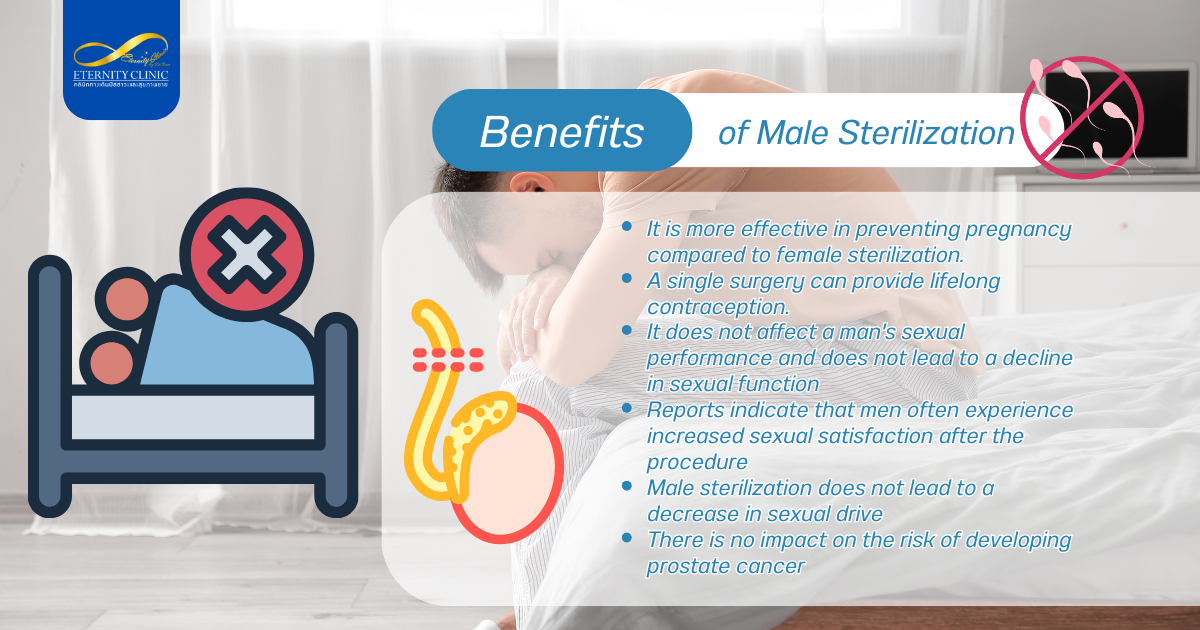
Benefits of Male Sterilization
- It is more effective in preventing pregnancy compared to female sterilization.
- A single surgery can provide lifelong contraception.
- It does not affect a man’s sexual performance and does not lead to a decline in sexual function, as the surgery is unrelated to nerves, hormone production, or the body’s use of sex hormones. [Erectile Dysfunction – Techniques for Solving]
- Reports indicate that men often experience increased sexual satisfaction after the procedure, as they no longer have to worry about the possibility of pregnancy.
- Male sterilization does not lead to a decrease in sexual drive.
- There is no impact on the risk of developing prostate cancer, testicular cancer, or any cancers related to the reproductive system of the individual or their partner.
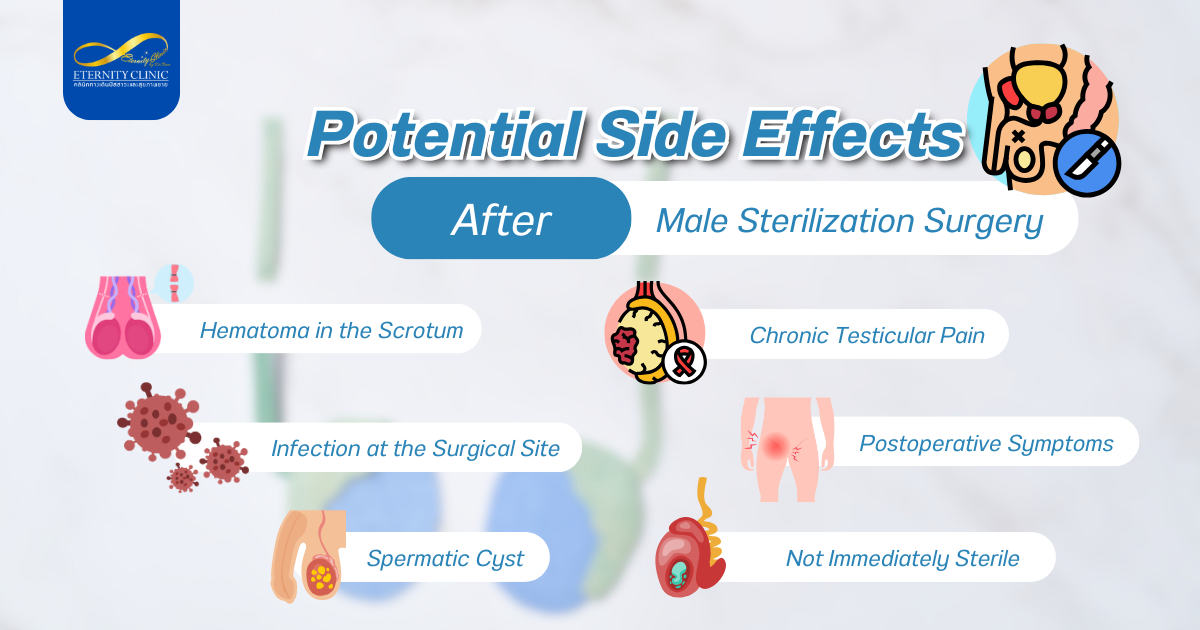
Potential Side Effects After Male Sterilization Surgery
- Hematoma in the Scrotum: Occurs in about 1% of cases, caused by injury to the blood vessels surrounding the vas deferens. If the hematoma is small, the body will absorb the trapped blood naturally within 1-2 weeks. If it is large and causes significant pain, a doctor should be consulted immediately.
- Infection at the Surgical Site: This is very rare and may present with symptoms such as swelling, redness, testicular pain, or pus discharge from the wound. If these symptoms occur, it is important to see a doctor promptly.
- Spermatic Cyst: This occurs when sperm leaks from the surgical site, causing sperm to accumulate around the end of the vas deferens, resulting in localized inflammation and the formation of a lump. This condition is usually painless and can be managed with rest and anti-inflammatory medications.
- Chronic Testicular Pain : occurs in about 1 in 2,000 cases. It’s caused by pressure buildup when sperm can’t be released.
- Postoperative Symptoms: After surgery, patients may experience pain, swelling, bleeding, and the possibility of a hematoma in the scrotum or infection at the surgical site.
- Not Immediately Sterile: Sterilization does not occur immediately after surgery; it typically takes about 3 months. The doctor will schedule a follow-up to check sperm count to confirm sterility.
Summary of Male Sterilization (Vasectomy)
There are various methods of contraception, and male sterilization is one that is both effective and safe. It is cost-effective, has a quick recovery time, and involves minimal pain, making it a suitable option for those who have sufficient children or other valid reasons. It’s important to note that sterilization does not protect against sexually transmitted infections (STIs). If you are concerned about contracting or transmitting STIs, you should continue to use condoms during sexual activity.
Eternity Clinic, founded by Dr. Suebpong Angchuan, also known as “Dr. Beer,” specializes in the care and treatment of sexual health issues, urinary disorders, and reproductive health for both men and women. You can trust that you will not be disappointed! Feel free to contact Eternity Clinic at a location near you or inquire for more information via Line official account.

Get an initial consultation with Dr.Beer FREE!!!
Ask for information about treatment and additional services make an appointment at
LINE:@ETERNITYCLINIC2
M.D. SUEBPONG ANGCHOUN
Urologist & General Surgeon of advance Endo-Uro and Laparoscopic Surgery
Latest Articles
Can You Really Make Your Penis Bigger?
Does Penis Size Matter? The answer varies from person to person. However, many men have
Can You Enlarge Your Penis Naturally Fact or Fiction?
Enlarge penis — Let’s be honest, penis size is one of those topics that men
Risky or Worth It? Popular Penis Enlargement Techniques
In today’s world, where confidence matters more than ever, many men are turning their attention
Want to Go Bigger? Safe and Proven Penis Enlargement Options
In today’s world, self-confidence plays a vital role in how we live and interact. For
Just by Changing a Few Habits Can Improve Penis Length?
Improve Penis Length | When it comes to penis size, many men can’t help but
Breakthrough Techniques! Can You Really Increase Penis Length?
Penis length has long been a hot topic, especially among men who often associate it
How to Increase Penis Length Without Ruining Your Health
Penis length is a topic that many men worry about, often quietly. This leads to
The Hidden Truth: Why Your Penis Isn’t as Big as You Expect
For many men, penis size can be a source of insecurity. Some wonder why their