

A bladder infection, also called cystitis or a lower urinary tract infection, can cause burning urination, urgency, pelvic discomfort, cloudy urine, blood in the urine, or strong-smelling urine. Many cases are treatable, but symptoms should not be ignored, especially in men, pregnant patients, older adults, people with fever, or anyone with flank pain.
What Is a Bladder Infection?
A bladder infection is a type of urinary tract infection that mainly affects the bladder. It is often called cystitis. The infection usually starts when bacteria enter the urethra and travel upward into the bladder. In many patients, the bacteria come from the bowel area, which is why toilet hygiene, sexual activity, and anatomy can affect risk.
Women are more prone to cystitis than men because the female urethra is shorter and closer to the anus. However, a UTI in men should not be dismissed. Male urinary symptoms may need evaluation for prostatitis, bladder outlet obstruction, kidney involvement, sexually transmitted infection, or another urologic condition.

Bladder Infection Symptoms You Should Not Ignore
Symptoms can be mild at first, but they should be taken seriously when they persist, worsen, or occur in higher-risk patients. Older adults may have less typical symptoms, and some patients may confuse UTI symptoms with genital irritation or STI symptoms.

| Burning or pain when urinating | Bladder or urethral irritation; UTI or STI can be possible. | Consider urine testing, especially if symptoms persist or recur. |
| Frequent or urgent urination | Bladder inflammation or infection can make the bladder feel full even when little urine comes out. | Seek assessment if it lasts more than a short period or affects daily life. |
| Do not rely on visual diagnosis alone. A urine test may be needed. | ||
| Lower abdominal or pelvic discomfort | Can fit with cystitis, but other pelvic or urinary conditions can overlap. | Discuss symptoms with a clinician if pain is significant or recurring. |
| Seek urgent medical care. |
Common Causes and Risk Factors
Most bladder infections are related to bacteria, but bladder inflammation can also occur from irritation, catheter use, medications, radiation, or other urologic conditions. A clear diagnosis matters because treatment for bacterial cystitis is different from treatment for irritation, STI, prostatitis, or kidney stones.
Sexual activity
Bacteria can be pushed toward the urethra during sex. Urinating after sex may help some people reduce risk, but it is not a guaranteed prevention method.
Hygiene and anatomy
Wiping direction, moisture, tight clothing, and anatomy can affect bacterial movement toward the urethra.
Men’s urinary factors
In men, symptoms may be linked with prostate inflammation, obstruction, stones, catheter use, or STI. Assessment is especially important.

Soda Water and Home Remedy Myths

A common myth is that soda water or carbonated water can cure bladder infections. This is not a reliable medical treatment. Carbonated water is water with dissolved carbon dioxide for fizz. It does not target the bacteria that commonly cause UTIs, and it should not replace urine testing or antibiotics when those are needed.
What may help comfort
- Drinking enough water if not medically restricted
- Avoiding bladder irritants such as heavy alcohol or excessive caffeine during symptoms
- Using pain relief only as advised
- Seeking testing when symptoms persist
What should not be treated as a cure
- Soda water or carbonated drinks
- Strong cleansing products
- Leftover antibiotics
- Self-diagnosis from urine smell alone
- Delay when red flags are present
How a Doctor Assesses a Suspected Bladder Infection

A useful consultation looks beyond a single symptom. The clinician may ask about timing, fever, flank pain, pregnancy, sex history, STI risk, blood in urine, recurrent infections, diabetes, immune status, kidney disease, prostate symptoms, catheter use, and recent antibiotics.
Symptom and risk review
The doctor checks whether symptoms fit uncomplicated cystitis or whether there are features suggesting kidney infection, prostatitis, STI, obstruction, or complicated UTI.
Urine testing
A urinalysis may look for white blood cells, nitrites, blood, or other markers. A urine culture may be needed for recurrent, complicated, resistant, male, or severe cases.
Targeted treatment
Antibiotic choice depends on likely bacteria, local resistance, allergies, pregnancy status, kidney function, recent antibiotic use, and whether infection may be complicated.
Follow-up plan
Recurrent symptoms, persistent fever, worsening pain, or symptoms that do not improve after starting treatment should prompt reassessment.
Treatment and Prevention: What Is Realistic?

When a bacterial bladder infection is likely or confirmed, antibiotics are commonly used. The exact medication and duration should be selected by a clinician. Supportive steps can help comfort and prevention, but they should not be marketed as guaranteed cures.
| Choice should be individualized. Do not self-medicate with leftover antibiotics. | ||
| Hydration | May help dilute urine and support urinary flow if medically appropriate. | Water does not replace antibiotics when bacterial infection needs treatment. |
| They are not emergency treatment and may not be appropriate for everyone. | ||
| It is not guaranteed and does not treat an active infection. | ||
| Repeated episodes should not be treated as isolated events forever. |
When to Seek Urgent Medical Care
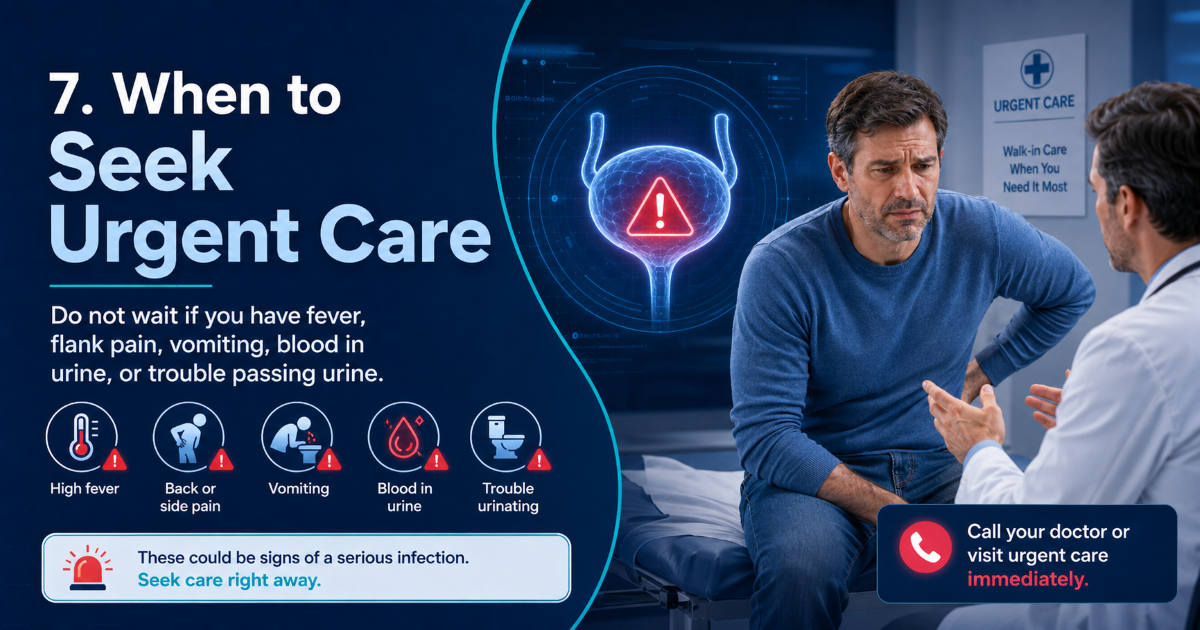
Some urinary symptoms can signal kidney infection, severe infection, urinary blockage, stone disease, prostate involvement, or another urgent condition. These situations should not be managed with home remedies.
| Seek urgent medical assessment. | ||
| Blood in urine or severe pain | Can occur with infection but also stones, trauma, or other urologic disease. | Do not rely on home treatment. Get checked. |
| Schedule medical assessment and urine testing. | ||
| Contact a clinician promptly. | ||
| Plan follow-up rather than repeated self-treatment. |
FAQ About Bladder Infection and UTI Symptoms
What is the difference between cystitis and a UTI?
UTI is a broad term for infection anywhere in the urinary tract. Cystitis usually means bladder inflammation or infection. A lower UTI often affects the bladder and urethra, while an upper UTI can involve the kidneys and may be more serious.
Can soda water cure a bladder infection?
No. Soda water or carbonated water should not be treated as a cure for a bacterial bladder infection. It does not replace urine testing, medical assessment, or antibiotics when they are needed.
Are bladder infections common in men?
They are less common in younger men than in women, but male urinary symptoms should be assessed because they can involve prostate problems, urinary obstruction, STI, kidney involvement, or complicated UTI.
When should I see a doctor for UTI symptoms?
Seek medical advice if symptoms are severe, persist, recur, or occur with fever, chills, flank pain, vomiting, blood in urine, pregnancy, diabetes, immune suppression, kidney disease, catheter use, or male urinary symptoms.
Can a UTI go away by itself?
Some mild symptoms may improve, but a bacterial UTI can worsen or spread in some patients. Do not delay medical assessment when symptoms are significant, recurring, or linked with red flags.
Medical References
This page is written for patient education and medical SEO clarity. It does not replace diagnosis, urine testing, antibiotic selection, or individualized medical care.
- Mayo Clinic: Urinary tract infection symptoms and causes
- Mayo Clinic: Urinary tract infection diagnosis and treatment
- NHS: Urinary tract infections
- CDC: Urinary tract infection basics
- European Association of Urology: Guidelines on urological infections

Doctor Review and Medical Safety
Bladder infection content should separate comfort advice from treatment. A safe plan considers symptom severity, urine testing, antibiotic suitability, recurrence, pregnancy status, male urinary symptoms, STI risk, kidney warning signs, and when urgent care is needed.
Reviewed by: Dr. Beer, Eternity Clinic
Last content update: 30 June 2026

Latest Articles
Circumcision at a Clinic vs Hospital: How to Choose the Right Medical Setting
Adult circumcision can be planned in different medical settings. The safest choice depends on your
Adult Circumcision Explained: Benefits, Methods, Recovery, and Safety
Adult circumcision is a procedure to remove the foreskin covering the head of the penis.
Where is the Best Place for Vasectomy (Male Sterilization): Hospital or Clinic?
A vasectomy is a permanent male contraception procedure, but choosing where to have it done
What Sexual Positions Are Best for Men with a Short Penis to Maximize Pleasure in the Bedroom?
A shorter penis or concern about penis size does not automatically mean poor intimacy. Comfort,
How many Methods for Increasing Penis Size? This Article Has the Answers.
Many men search for ways to increase penis size, but the safest first step is
Hormone Therapy Without Surgical Gender Transition
Hormone therapy can help some transgender and gender-diverse people align physical characteristics with personal goals
What Are the Symptoms of Cystitis? This Article Has the Answers.
Cystitis is inflammation of the bladder. It is often caused by a bacterial bladder infection,
How to Care for Your Manhood to Keep It Strong and Disease-Free
Penis health is not only about sexual performance. It includes daily hygiene, foreskin care, safer