

Adult circumcision can be beneficial for selected men, especially when tight foreskin, repeated inflammation, hygiene difficulty, pain, or foreskin-related infections are present. It is not automatically better for every man. The right choice depends on symptoms, anatomy, expectations, medical history, and a private doctor assessment.
Circumcision may offer practical benefits for some adults, including easier hygiene, fewer foreskin-related problems, and treatment of phimosis or recurrent balanitis. However, it is still surgery. Benefits should be balanced against risks such as bleeding, infection, swelling, wound separation, sensitivity changes, scarring, and cosmetic dissatisfaction. Men without symptoms do not need to rush into circumcision unless they have a clear personal, cultural, or medical reason.
Most likely to benefit
Men with phimosis, recurrent foreskin inflammation, repeated tearing, hygiene difficulty, smegma buildup, odor, or discomfort during sex from a tight foreskin.
Not automatically necessary
Men who can retract and clean the foreskin comfortably, have no recurrent symptoms, and are not concerned by appearance may not need circumcision.
Main decision point
Ask whether circumcision solves a real problem, whether non-surgical care has been considered, and whether you understand healing time and risks.
Table of Contents
1. What is adult circumcision?
2. What are the possible benefits?
3. Is circumcision better than not being circumcised?
4. Who may benefit most?
5. Circumcision methods and bleeding-control techniques
6. Recovery timeline and aftercare
7. Risks, limitations, and warning signs
8. Choosing a circumcision clinic in Bangkok
9. FAQ
What Is Adult Circumcision?
Adult circumcision is a surgical procedure that removes the foreskin covering the glans, or head of the penis. The procedure may be performed for medical reasons, hygiene difficulty, cultural or religious reasons, cosmetic preference, or personal comfort.
In adults, the most common medical reasons include phimosis, recurrent balanitis, painful foreskin retraction, foreskin tearing, repeated irritation, or difficulty cleaning under the foreskin. If your main concern is tight foreskin, read the clinic guide to adult phimosis and tight foreskin treatment before deciding.

What Are the Possible Benefits of Circumcision?
For selected adults, circumcision can solve practical foreskin-related problems and may reduce some hygiene and infection risks. The degree of benefit varies by patient. It should not be presented as a guaranteed upgrade for every man.

Practical benefits
- Easier cleaning when the foreskin is difficult to retract
- Reduced trapped moisture, smegma, and odor for some men
- Less repeated irritation caused by tight or inflamed foreskin
- May reduce pain or tearing related to phimosis
- Can treat non-retractable foreskin when conservative treatment is not suitable
Medical contexts where it may help
- Adult phimosis or scarred tight foreskin
- Recurrent balanitis or balanoposthitis
- Paraphimosis risk in selected patients
- Repeated foreskin cuts after sex
- Severe hygiene difficulty despite proper care
Is Circumcision Better Than Not Being Circumcised?
The answer depends on the person. Circumcision can be better for a man who has repeated foreskin problems. It may not be better for a man who has normal foreskin function, no hygiene difficulty, and no personal desire for the procedure.
| Situation | Circumcision may be beneficial when… | Remaining uncircumcised may be reasonable when… |
|---|---|---|
| Hygiene | The foreskin cannot retract well, trapping moisture, smegma, and odor. | The foreskin retracts comfortably and daily cleaning is easy. |
| Phimosis | The foreskin is tight, scarred, painful, or repeatedly tears. | There is no tightness, pain, tearing, or retraction problem. |
| Inflammation | Balanitis or irritation keeps returning despite proper treatment. | There are no recurrent infections, rashes, or inflammatory episodes. |
| Sexual comfort | The foreskin pulls painfully during sex or causes microtears. | Sex is comfortable and there is no foreskin-related pain. |
| Preference | The patient clearly prefers circumcision after understanding trade-offs. | The patient is unsure, pressured, or mainly afraid due to online claims. |
Who May Benefit Most from Adult Circumcision?
Adult circumcision is often considered when symptoms continue despite hygiene adjustment, medication, or observation. A private examination helps distinguish true phimosis from temporary tightness, inflammation, frenulum problems, or skin disease.
Good reasons to book a consultation
- You cannot pull the foreskin back fully.
- The foreskin tears, bleeds, or hurts during sex.
- You have repeated balanitis or swelling.
- You have persistent odor or smegma buildup despite cleaning.
- You previously tried treatment but symptoms returned.
- You want circumcision for personal reasons and understand it is permanent.
Reasons not to rush
- You have active infection that needs treatment first.
- You are unsure and want the procedure only because of social pressure.
- You expect guaranteed sexual performance improvement.
- You have uncontrolled diabetes or a bleeding risk that needs medical planning.
- You expect no pain, no swelling, no scar, or instant recovery.
Circumcision Methods and Bleeding-Control Techniques
Different clinics may offer conventional surgical circumcision, electrocautery-assisted techniques, laser-assisted cutting, or stapler/device-assisted circumcision. Marketing terms such as bloodless circumcision should be understood carefully. In real surgery, the goal is bleeding control, not a guarantee of zero bleeding.

| Method | General concept | Potential strengths | Important limitations |
|---|---|---|---|
| Conventional surgical circumcision | The foreskin is removed surgically and the wound is closed with sutures. | Flexible for different anatomies and scarring patterns. | Requires careful suture care, bleeding control, and wound follow-up. |
| Laser or electrocautery-assisted technique | An energy device may be used to cut tissue or assist hemostasis. | May support bleeding control when used properly. | Heat injury, wound healing, and cosmetic result depend on technique and doctor skill. |
| Stapler or device-assisted circumcision | A device removes foreskin and closes the wound edge with staples. | May provide consistent wound edge and controlled closure in suitable patients. | Device sizing, staple care, swelling, wound separation, and suitability must be assessed. |
| Bleeding-control or bloodless marketing terms | Usually refers to techniques designed to reduce bleeding. | Can help patients understand the focus on hemostasis. | Should not be interpreted as no bleeding, no pain, or guaranteed faster healing. |
Recovery Timeline After Adult Circumcision
Adult recovery is usually longer than newborn recovery. Healing depends on method, wound size, swelling, diabetes status, smoking, friction, erections, activity level, and aftercare compliance. Always follow the clinic instructions given after your procedure.
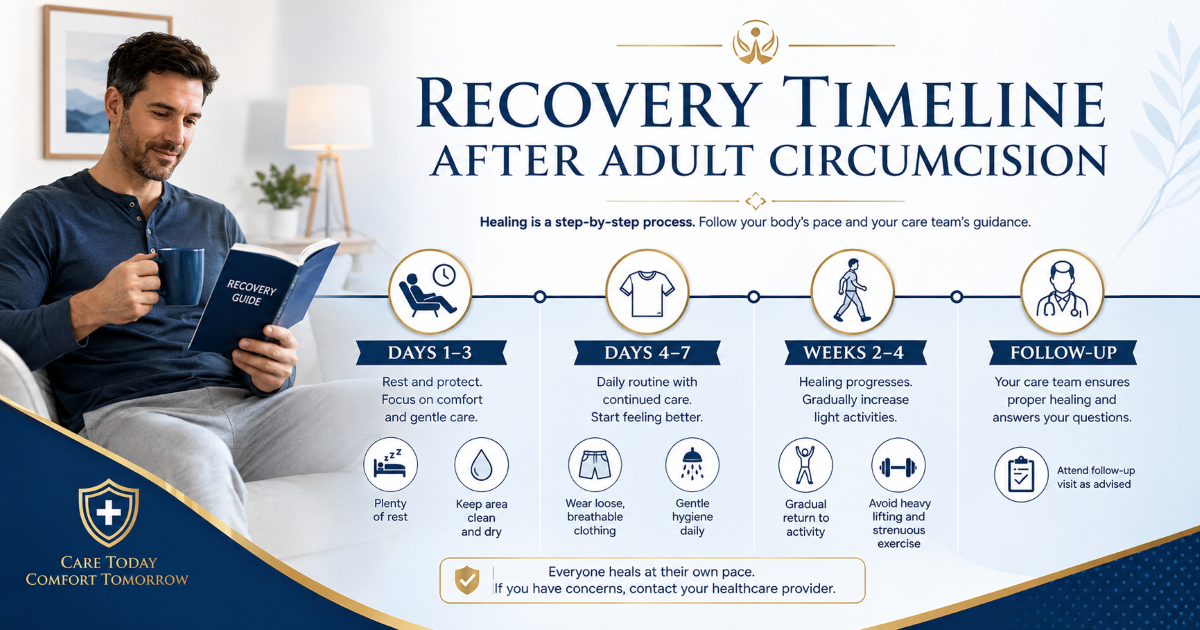
| Timing | What may happen | Care focus |
|---|---|---|
| First 24-48 hours | Tenderness, swelling, small bleeding spots, dressing discomfort. | Rest, keep dressing clean and dry, take medication as prescribed, avoid alcohol and friction. |
| Days 3-7 | Swelling and bruising may still be visible. Sensitivity can be high. | Clean as instructed, wear supportive underwear, avoid heavy lifting and sexual stimulation. |
| Weeks 2-3 | Wound may look more settled. Stitches or staples may loosen depending on method. | Do not pull stitches or staples. Continue avoiding sex, swimming, cycling, and high-friction activity. |
| Weeks 4-6 | Many men feel more comfortable, but scar firmness and sensitivity may continue. | Ask the doctor before resuming sex or intense exercise. Return gradually only when healed. |
| After 6 weeks | Scar maturation continues. Appearance and sensitivity can keep changing for months. | Contact the clinic if pain, swelling, discharge, or wound problems persist. |
- Keep the wound clean and dry according to clinic instructions.
- Take medication exactly as prescribed.
- Avoid sex and masturbation until medically cleared.
- Avoid swimming, sauna, cycling, and heavy exercise during early healing.
- Do not remove stitches or staples by force.
- Send photos to the clinic only through secure, agreed communication channels if follow-up is needed.
Risks, Limitations, and Warning Signs
Circumcision is commonly performed, but it remains surgery. A safe consultation should explain both the potential benefits and the possible downsides before treatment.
Possible risks
- Bleeding or hematoma
- Wound infection
- Swelling, bruising, and pain
- Delayed healing or wound separation
- Scar sensitivity or tightness
- Change in sensation
- Too much or too little skin removed
- Cosmetic dissatisfaction
- Need for revision in selected cases
Extra caution is needed if you have
- Active genital infection or unexplained discharge
- Uncontrolled diabetes
- Bleeding disorder or blood thinner use
- Immune suppression
- Previous penile surgery or complex scarring
- Unusual anatomy or suspected urethral abnormality
- Unrealistic expectation of no scar or guaranteed sexual improvement
How to Choose a Circumcision Clinic in Bangkok
For international patients, choosing a clinic should not be based only on price, device name, or speed. The better question is whether the clinic can evaluate your anatomy, explain alternatives, perform the method safely, and support follow-up during recovery.
| What to check | Why it matters | Question to ask |
|---|---|---|
| Doctor consultation | Confirms whether adult circumcision is suitable and whether phimosis or inflammation should be treated first. | Will the doctor examine my case before choosing the method? |
| Method explanation | Different methods have different wound closure, aftercare, and swelling patterns. | Why is this method appropriate for my anatomy? |
| Risk disclosure | Realistic consent helps avoid misunderstanding and unsafe expectations. | What complications should I watch for after surgery? |
| Follow-up support | Recovery questions are common, especially for international patients. | How do I contact the clinic if I travel after the procedure? |
| Transparent pricing | Patients should understand consultation, procedure, medication, device, and follow-up costs. | What is included in the quoted price? |
For service details, visit Adult Circumcision at Eternity Clinic International. If the main problem is a tight foreskin, start with Phimosis and Tight Foreskin Treatment.
Book a Private Adult Circumcision Consultation
Ask for a private review if you have tight foreskin, repeated inflammation, hygiene difficulty, pain during sex, or questions about whether circumcision is beneficial for your case. The clinic team can help explain method options, preparation, recovery planning, and next steps.

Doctor Review and Medical Safety
This article is prepared as patient education for adult circumcision, phimosis, foreskin-related symptoms, and male intimate health. Suitability, technique selection, anesthesia, risks, and recovery must be confirmed during a private doctor consultation.
Reviewed by: Dr. Beer, Eternity Clinic
Last content update: 17 June 2026
Adult Circumcision FAQ
Is circumcision really beneficial for adults?
It can be beneficial for selected adults, especially those with phimosis, repeated inflammation, hygiene difficulty, or foreskin-related pain. It is not automatically necessary for every man.
Is being circumcised better than being uncircumcised?
It depends on symptoms and preference. Circumcision may be better if the foreskin causes repeated problems. Remaining uncircumcised may be reasonable if the foreskin retracts normally, hygiene is easy, and there are no symptoms.
Can circumcision improve hygiene?
Yes, it may make cleaning easier for men who cannot retract the foreskin comfortably. However, good hygiene is still necessary after circumcision.
Can circumcision prevent sexually transmitted infections?
Circumcision may reduce certain infection risks in some populations, but it does not replace condoms, STI testing, medical treatment, HPV vaccination discussion, or HIV prevention strategies.
Does circumcision hurt?
Local anesthesia is commonly used to reduce pain during the procedure. Afterward, soreness, swelling, sensitivity, and discomfort are expected during healing.
How long does adult circumcision take to heal?
Many adults need several weeks for comfortable wound healing. Sex, masturbation, swimming, cycling, sauna, and heavy exercise should be avoided until the doctor confirms it is safe.
Is bloodless circumcision truly bloodless?
The term usually refers to techniques designed to reduce bleeding. It should not be understood as a guarantee of no bleeding, no pain, no swelling, or instant recovery.
When should I see a doctor after circumcision?
Seek medical advice if you have heavy bleeding, fever, pus, worsening redness, severe pain, inability to urinate, blackened skin, rapid swelling, or significant wound opening.
Medical References
These references are used for general medical context and patient education. They do not replace a personal diagnosis or procedure plan.

Latest Articles
What Are the Symptoms of Cystitis? This Article Has the Answers.
Cystitis is inflammation of the bladder. It is often caused by a bacterial bladder infection,
How to Care for Your Manhood to Keep It Strong and Disease-Free
Penis health is not only about sexual performance. It includes daily hygiene, foreskin care, safer
Permanent Solution for Premature Ejaculation with Surgery
Premature ejaculation can be distressing, but it should not be reduced to a single promise
Delayed Ejaculation: Is It Really Good? What to Do If You’re Facing This Issue
Delayed ejaculation may sound positive to some men, but when climax takes much longer than
How to Measure Condom Size Properly: Understanding Sizes 49, 52, 54, and 56
Condom size is not judged by length alone. For most men, the most useful measurement
Penile Enlargement With “Your Own Tissue” or “Your Own Fat”: Why It May Not Be Worth the Pain
Using your own tissue or your own fat can sound more natural than synthetic material,
Circumcision at a Clinic vs Hospital: How to Choose the Right Medical Setting
Adult circumcision can be planned in different medical settings. The safest choice depends on your
Adult Circumcision Explained: Benefits, Methods, Recovery, and Safety
Adult circumcision is a procedure to remove the foreskin covering the head of the penis.