
How to Clean Your Manhood: Penile Hygiene, Smegma, Odor, and When to See a Doctor
Daily penile hygiene is simple, but it should be gentle. This guide explains how to clean the penis and foreskin, how to manage smegma and odor, what to avoid at home, and which symptoms need medical assessment.
To clean your manhood, wash the penis and groin daily with warm water. If you are uncircumcised, gently retract the foreskin only as far as it comfortably moves, rinse underneath, dry well, and return the foreskin to its normal position. Do not force a tight foreskin, scrub aggressively, use harsh soap, or self-treat discharge, sores, swelling, or persistent odor.
Why Penile Hygiene Matters
Penile hygiene affects comfort, odor, skin health, sexual confidence, and infection risk. Sweat, urine residue, moisture, friction, tight underwear, and buildup under the foreskin can irritate the skin and make odor more noticeable.
Good hygiene does not require expensive products or aggressive cleaning. The goal is to keep the area clean and dry while protecting sensitive genital skin. If symptoms are recurrent or painful, the cause may be balanitis, phimosis, yeast infection, bacterial infection, STI, skin disease, or another condition that needs a proper diagnosis.
How to Clean the Penis Safely
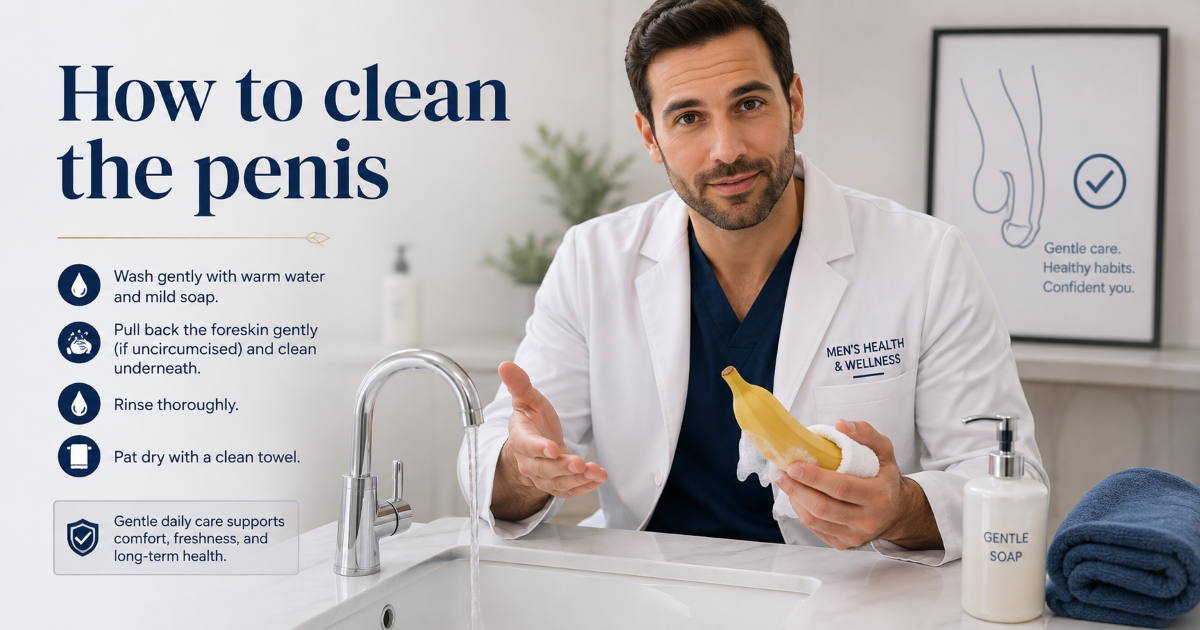
For most men, a simple daily routine is enough. Use warm water, clean gently, rinse well, dry the area, and avoid products that sting, bleach, perfume, or irritate the skin.
Wash the outside first
Clean the shaft, glans area, scrotum, groin folds, and base of the penis with warm water. Use a mild, non-irritating cleanser only if needed.
Rinse thoroughly
Soap residue can trigger dryness, burning, itching, or redness. Rinse until the skin feels clean and not slippery.
Dry before dressing
Moisture trapped under underwear can worsen odor, fungal overgrowth, and friction irritation. Pat dry rather than rubbing hard.
Change after sweating
After exercise, long travel, or humid weather, shower and change underwear when possible. Breathable underwear may reduce moisture buildup.
Uncircumcised Penis Care: Foreskin, Smegma, and Tightness
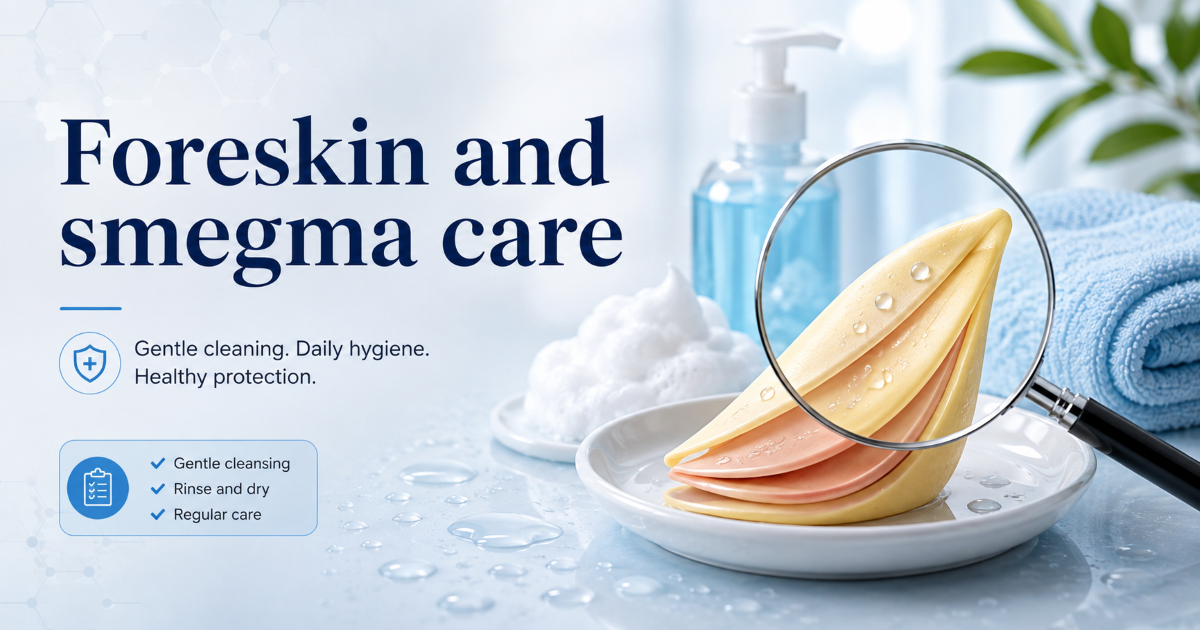
If you have a foreskin, gently pull it back only as far as it comfortably moves. Rinse under the foreskin, clean around the glans, dry the area, then move the foreskin back to its normal forward position. Do not force retraction if it is tight, painful, or stuck.
| Situation | What it may mean | Safer next step |
|---|---|---|
| White or yellowish buildup under the foreskin | Often smegma, made from skin oils, moisture, dead cells, and debris. | Use gentle daily cleaning. Seek care if there is pain, odor, redness, swelling, or discharge. |
| Foreskin is tight and hard to retract | Could be phimosis, scarring, inflammation, or normal non-retraction in some younger patients. | Do not force it. Discuss assessment and treatment options with a doctor. |
| Foreskin retracts but cannot return forward | Possible paraphimosis, which can restrict blood flow. | Seek urgent medical care. |
| Recurrent redness or soreness after sex | Friction, balanitis, yeast, dermatitis, STI, or partner-related irritation may be involved. | Stop irritants and get evaluated if it persists or recurs. |
Penis Odor: Hygiene Issue or Medical Symptom?
Mild genital odor can happen after sweating, sex, urine residue, tight clothing, or not drying the area well. Odor becomes more concerning when it is persistent, strong, fishy, foul, or combined with redness, swelling, sores, pain, itching, discharge, or urinary symptoms.
Usually hygiene-related
Sweat, moisture, smegma, tight underwear, and poor drying can contribute to odor without a major infection.
Possible inflammation
Redness, swelling, soreness, and itching can suggest balanitis, dermatitis, yeast, or irritation.
Possible STI or infection
Discharge, sores, burning urination, testicular pain, or partner symptoms need proper testing and treatment.
What Not to Do When Cleaning Your Manhood
Genital skin is sensitive. More force does not mean better hygiene. Harsh products can worsen the same problems they are meant to fix.
| Avoid | Why it can be risky | Safer alternative |
|---|---|---|
| Alcohol, antiseptic liquids, peroxide, whitening creams | Can burn, dry, or irritate genital skin. | Warm water and mild cleanser if needed. |
| Scraping smegma with cotton swabs or sharp objects | Can cause micro-tears, bleeding, infection, and scarring. | Soften with water, clean gently, and seek help if buildup is difficult to remove. |
| Forcing foreskin retraction | Can cause tearing or paraphimosis. | Retract only as far as comfortable. Ask a doctor about phimosis treatment. |
| Self-medicating with antibiotics or steroid creams | Wrong treatment can delay diagnosis or worsen fungal/skin conditions. | Use medication only after medical advice. |
Daily Habits That Support Penis Health
Penis health is not only about washing. Blood flow, skin health, erections, STI prevention, and confidence are also affected by sleep, smoking, alcohol, exercise, metabolic health, and safer sex practices.

Use condoms correctly
Condoms can reduce STI risk and help protect partners, but they must fit and be used correctly from start to finish.
Watch for changes
New lumps, sores, discharge, curvature, pain, or erectile changes should not be ignored.
Support blood flow
Regular exercise, weight management, not smoking, and controlling diabetes or blood pressure may support erectile health.
Warning Signs: When to See a Doctor
Some symptoms need medical evaluation rather than more cleaning. This is especially important for international patients who may delay care because of travel plans, embarrassment, or privacy concerns.
| Symptom | Why it matters | Suggested action |
|---|---|---|
| Persistent odor despite gentle hygiene | May involve balanitis, infection, dermatitis, or smegma trapped by tight foreskin. | Book a medical assessment. |
| Redness, swelling, pain, or itching | Can suggest inflammation, fungal infection, bacterial infection, allergy, or skin disease. | Avoid irritants and seek evaluation if persistent or recurrent. |
| Discharge, sores, or burning urination | Possible STI or urinary infection. | Get STI/urine testing and avoid sex until assessed. |
| Foreskin cannot retract | May be phimosis, scarring, or inflammation. | Do not force it. Discuss treatment options. |
| Foreskin is stuck behind the glans | Possible paraphimosis and restricted blood flow. | Seek urgent medical care. |
FAQ About Penile Hygiene, Smegma, and Odor
How often should I clean my penis?
Most men should clean the penis and groin daily with warm water. If you sweat heavily, exercise, have sex, or stay in humid weather, showering and changing underwear sooner may help reduce odor and irritation.
Is smegma dangerous?
Smegma is not automatically dangerous and is not automatically an STI. However, buildup can cause odor, irritation, inflammation, and hygiene difficulty. If smegma keeps returning despite proper cleaning, or if there is redness, swelling, pain, or discharge, see a doctor.
How should an uncircumcised man clean under the foreskin?
Gently retract the foreskin only as far as it comfortably moves, rinse under it with warm water, use mild cleanser only if needed, rinse thoroughly, dry the area, and return the foreskin to its normal position. Do not force retraction.
Can I use strong soap to remove bad smell faster?
No. Strong soap, antiseptics, alcohol, perfume, or aggressive scrubbing can irritate genital skin and may worsen burning, itching, redness, or dryness. Gentle cleaning is safer.
When is foreskin tightness urgent?
If the foreskin is stuck behind the head of the penis and cannot be moved forward again, seek urgent medical care. This can be paraphimosis, which can restrict blood flow.
Medical References
This page is written for patient education and medical SEO clarity. It does not replace diagnosis, STI testing, or individualized treatment planning.
- Healthdirect Australia: Penis care
- Mayo Clinic: Penis health: Identify and prevent problems
- Cleveland Clinic: Balanitis
- NHS: Tight foreskin and paraphimosis
- Healthy Male Australia: How to clean your penis properly

Doctor Review and Medical Safety
Penile hygiene advice should be simple and gentle. Persistent odor, recurrent smegma, foreskin tightness, redness, swelling, discharge, sores, pain, or burning urination should be assessed instead of treated only with stronger cleaning products. The goal is to identify whether the issue is hygiene, inflammation, infection, STI, phimosis, or another condition.
Reviewed by: Dr. Beer, Eternity Clinic
Last content update: 30 June 2026

Get an initial consultation with Dr.Beer FREE!!!
Ask for information about treatment and additional services make an appointment at
LINE:@ETERNITYCLINIC2
M.D. SUEBPONG ANGCHOUN
Urologist & General Surgeon of advance Endo-Uro and Laparoscopic Surgery
Latest Articles
How many Methods for Increasing Penis Size? This Article Has the Answers.
How Many Methods for Increasing Penis Size? A Doctor-Reviewed Safety Guide Many men search for
Hormone Therapy Without Surgical Gender Transition
Hormone Therapy Without Surgical Gender Transition Hormone therapy can help some transgender and gender-diverse people
Can You Really Make Your Penis Bigger?
Can You Really Make Your Penis Bigger? A bigger-looking penis is not the same as
What Is PSA? What Does a PSA Test Check, and How Is It Related to the Prostate?
What Is PSA? What Does a PSA Test Check, and How Is It Related to
What Is Emergency Contraception? How to Use It Correctly and What to Know Before Use
What Is Emergency Contraception? How to Use It Correctly and What to Know Before Use
10 Techniques to Enhance Sensation During Sexual Intimacy
10 Techniques to Enhance Sensation During Sexual Intimacy Sensation during intimacy is influenced by arousal,
Best Sexual Wellness Devices for Beginners: A Safety Guide for Adults
Best Sexual Wellness Devices for Beginners: A Safety Guide for Adults If you are considering
(N) Adult Sexual Wellness Devices: A Safety Guide Before Use
Adult Sexual Wellness Devices: A Safety Guide Before Use Adult sexual wellness devices should be