

The real cause of erectile dysfunction is not always one simple problem. ED can come from blood flow, nerve function, hormones, medications, mental health, relationship stress, lifestyle, or a combination of factors. A safe treatment plan starts with identifying the cause before choosing medication, shockwave, injection therapy, or surgery.
What is the real cause of ED?
Most ED is multifactorial. Vascular disease, diabetes, high blood pressure, high cholesterol, obesity, smoking, medication side effects, low testosterone, pelvic surgery, nerve injury, anxiety, depression, stress, and relationship factors can all contribute. The correct treatment depends on the pattern, medical history, medication list, cardiovascular risk, and goals of the patient.
What symptoms indicate erectile dysfunction?
Erectile dysfunction means difficulty getting or keeping an erection firm enough for sex. It can be occasional, situational, progressive, or persistent. A one-time episode may happen with fatigue or stress, but repeated ED deserves proper assessment.

Cannot get firm
The erection does not become firm enough despite sexual stimulation. This pattern may involve vascular, hormonal, nerve, medication, or psychological causes.
Cannot stay firm
The erection starts but fades before or during intercourse. This can be associated with blood flow, anxiety, venous leak patterns, diabetes, medication, or cardiovascular risk.
Inconsistent erections
Erections may be normal in the morning or during masturbation but unreliable with a partner. This still deserves evaluation if it causes distress or repeats.
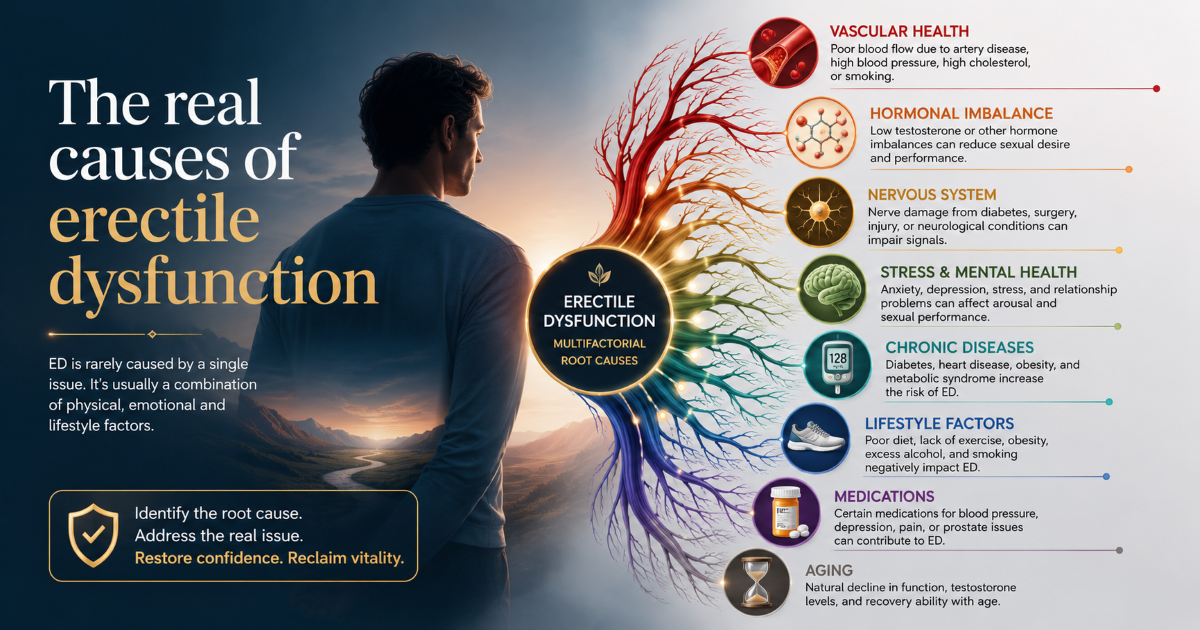
The real causes of erectile dysfunction
Male erection is a coordinated process involving the brain, emotions, nerves, hormones, blood vessels, smooth muscle, and relationship context. ED happens when one or more parts of this system does not work reliably.
Physical causes
- Diabetes, high blood pressure, high cholesterol, obesity, and metabolic syndrome
- Cardiovascular disease or reduced vascular function
- Smoking, heavy alcohol use, poor sleep, and low physical activity
- Medication side effects, including some antidepressants, blood pressure medicines, and prostate medicines
- Low testosterone or hormone imbalance in selected patients
- Pelvic surgery, prostate cancer treatment, spinal injury, or nerve damage
- Peyronie’s disease, penile curvature, or pain during erection
Psychological and relationship causes
- Performance anxiety or fear of losing firmness
- Depression, chronic stress, burnout, or poor body confidence
- Relationship conflict, low desire, or pressure to perform
- Past negative sexual experiences or trauma
- Overchecking erection quality during sex
- Mixed physical and psychological ED, which is common in real patients
Medical workup before ED treatment
A structured workup helps prevent wrong treatment, unsafe medication use, and missed cardiovascular or metabolic risk. International patients should bring their current medication list, lab results, surgery history, and details about when ED started.
Clarify the pattern
Is ED sudden or gradual? Is it present with every partner or only in certain situations? Are morning erections present? Is there pain, curvature, low desire, premature ejaculation, or delayed ejaculation?
Screen health risks
Blood pressure, diabetes risk, cholesterol, weight, smoking, alcohol, sleep, exercise tolerance, and heart symptoms should be reviewed because ED can be a marker of broader vascular health.
Review medication and supplements
Bring all prescription medicines, recreational substances, and supplements. Some can worsen ED or interact with ED medication.
Use targeted tests when needed
Depending on the case, the doctor may consider blood tests, testosterone assessment, glucose and lipid review, penile Doppler ultrasound, or referral for cardiac evaluation.
How ED is treated after the cause is identified
ED treatment should match the cause, safety profile, and patient preference. The same patient may need more than one approach, such as lifestyle correction plus medication, or medical treatment plus counseling.

| Treatment level | What it may include | Key safety point |
|---|---|---|
| Lifestyle and risk control | Exercise, weight management, smoking cessation, alcohol reduction, sleep improvement, diabetes and blood pressure control. | Not a quick fix, but important for vascular and long-term sexual health. |
| Counseling or sex therapy | Performance anxiety support, relationship counseling, depression or stress management, behavioral strategies. | Useful when anxiety, depression, relationship tension, or mixed ED is present. |
| PDE5 inhibitors | Sildenafil, tadalafil, vardenafil, or avanafil when medically suitable. | Unsafe with nitrates and requires caution with certain heart and blood pressure conditions. |
| Vacuum device or injection therapy | Vacuum erection device, intraurethral medicine, or intracavernosal injection for selected cases. | Needs instruction to reduce bruising, priapism, pain, or incorrect use. |
| Shockwave discussion | May be considered in selected vascular ED cases after assessment. | Not a universal ED cure and results vary by cause and patient profile. |
| Penile implant surgery | Inflatable or malleable implant when other options are unsuitable or ineffective. | Requires surgical counseling about infection, device limitations, revision, and expectations. |
Where shockwave fits in the ED pathway
Shockwave therapy is sometimes discussed for men with suspected vascular ED. It should not be presented as a universal treatment for all causes of ED. If ED is mainly caused by severe nerve injury, medication side effects, relationship anxiety, uncontrolled diabetes, low testosterone, or advanced structural disease, shockwave alone may not be the right answer.
May be considered when
Assessment suggests a vascular component, the patient is medically stable, expectations are realistic, and the treatment is used as part of a broader ED plan.
May not be enough when
ED is severe, linked with major nerve injury, uncontrolled chronic disease, medication interactions, low libido, severe anxiety, or when a patient expects guaranteed results.
How to reduce ED risk and protect sexual health
Prevention is about improving vascular, metabolic, hormonal, mental, and relationship health. It cannot guarantee that ED will never occur, but it can reduce risk and support better treatment response.

Control vascular risk
Manage blood pressure, cholesterol, glucose, weight, smoking, and alcohol. These factors affect both general health and erection function.
Move consistently
Regular activity supports circulation, weight control, mood, sleep, and metabolic health. Start at a safe level if you have cardiac symptoms.
Protect mental health
Address anxiety, depression, relationship stress, and performance pressure. ED often improves when physical and psychological factors are treated together.
When ED needs urgent or prompt medical care
Some erection-related symptoms should not be handled with online advice or self-medication.
- Chest pain, shortness of breath, fainting, or poor exercise tolerance with ED
- New ED after pelvic trauma, spinal injury, or prostate treatment
- Painful erection, severe penile curvature, or suspected penile fracture
- Erection lasting more than four hours
- ED with uncontrolled diabetes, very high blood pressure, or suspected heart disease
- Use of nitrates, poppers, or complex heart medication while considering ED medication
What to prepare before visiting Eternity Clinic International
To make consultation efficient, prepare a concise history of your symptoms, current medications, supplements, chronic diseases, previous pelvic or prostate surgery, blood pressure status, diabetes or cholesterol results, and the ED treatments you have already tried.
Medical references used for this guide
- Mayo Clinic: Erectile dysfunction symptoms, causes, diagnosis, and treatment.
- American Urological Association: Erectile Dysfunction Guideline.
- NIDDK: Erectile dysfunction definition, diagnosis, and treatment information.
- European Association of Urology: Sexual and Reproductive Health Guidelines, management of erectile dysfunction.
- Cleveland Clinic: Erectile dysfunction causes, diagnosis, and treatment overview.
This article is educational and does not replace a personal medical consultation.

Doctor Review and Medical Safety
This content has been written for international patients who want to understand ED causes before choosing treatment. The article avoids guaranteed-result language and emphasizes cardiovascular risk screening, medication safety, realistic expectations, and cause-based treatment selection.
Reviewed by: Dr. Beer, Eternity Clinic
Last content update: 24 June 2026
Frequently asked questions
What is the real cause of erectile dysfunction?
There is usually not one single cause. Erectile dysfunction can come from vascular disease, diabetes, high blood pressure, medication side effects, low testosterone, nerve injury, pelvic surgery, depression, anxiety, relationship stress, smoking, alcohol, sleep problems, or several factors together.
Is erectile dysfunction always caused by poor blood flow?
No. Vascular ED is common, but ED can also be neurogenic, hormonal, medication-related, psychological, relationship-related, or mixed. A cause-based assessment is safer than assuming every case is only a blood flow problem.
Can ED be a warning sign of heart disease?
Yes. Persistent ED can be associated with cardiovascular risk factors and may appear before other heart-related symptoms in some men. This is why blood pressure, diabetes, cholesterol, smoking status, and exercise tolerance should be reviewed.
Should I buy ED medicine online before seeing a doctor?
It is safer not to self-medicate. PDE5 inhibitors can interact dangerously with nitrates and may be unsuitable for some patients with unstable heart disease, very low blood pressure, or specific medication combinations.
When is shockwave considered for ED?
Shockwave may be discussed for selected patients with vascular ED after assessment. It is not a universal treatment, does not work for every cause of ED, and should not replace cardiovascular or metabolic evaluation.
When is penile implant surgery considered?
Penile implant surgery is usually considered when other suitable treatments do not work, are contraindicated, or are unacceptable to the patient. It requires surgical counseling about infection risk, device limitations, revision possibility, and expectations.
Need a private ED assessment?
If you are unsure whether your ED is vascular, medication-related, psychological, hormonal, or mixed, book a private consultation. A safer plan starts with assessment, not guesswork.

Latest Articles
Where is the Best Place for Vasectomy (Male Sterilization): Hospital or Clinic?
A vasectomy is a permanent male contraception procedure, but choosing where to have it done
What Sexual Positions Are Best for Men with a Short Penis to Maximize Pleasure in the Bedroom?
A shorter penis or concern about penis size does not automatically mean poor intimacy. Comfort,
How many Methods for Increasing Penis Size? This Article Has the Answers.
Many men search for ways to increase penis size, but the safest first step is
Hormone Therapy Without Surgical Gender Transition
Hormone therapy can help some transgender and gender-diverse people align physical characteristics with personal goals
What Are the Symptoms of Cystitis? This Article Has the Answers.
Cystitis is inflammation of the bladder. It is often caused by a bacterial bladder infection,
How to Care for Your Manhood to Keep It Strong and Disease-Free
Penis health is not only about sexual performance. It includes daily hygiene, foreskin care, safer
Permanent Solution for Premature Ejaculation with Surgery
Premature ejaculation can be distressing, but it should not be reduced to a single promise
Delayed Ejaculation: Is It Really Good? What to Do If You’re Facing This Issue
Delayed ejaculation may sound positive to some men, but when climax takes much longer than