

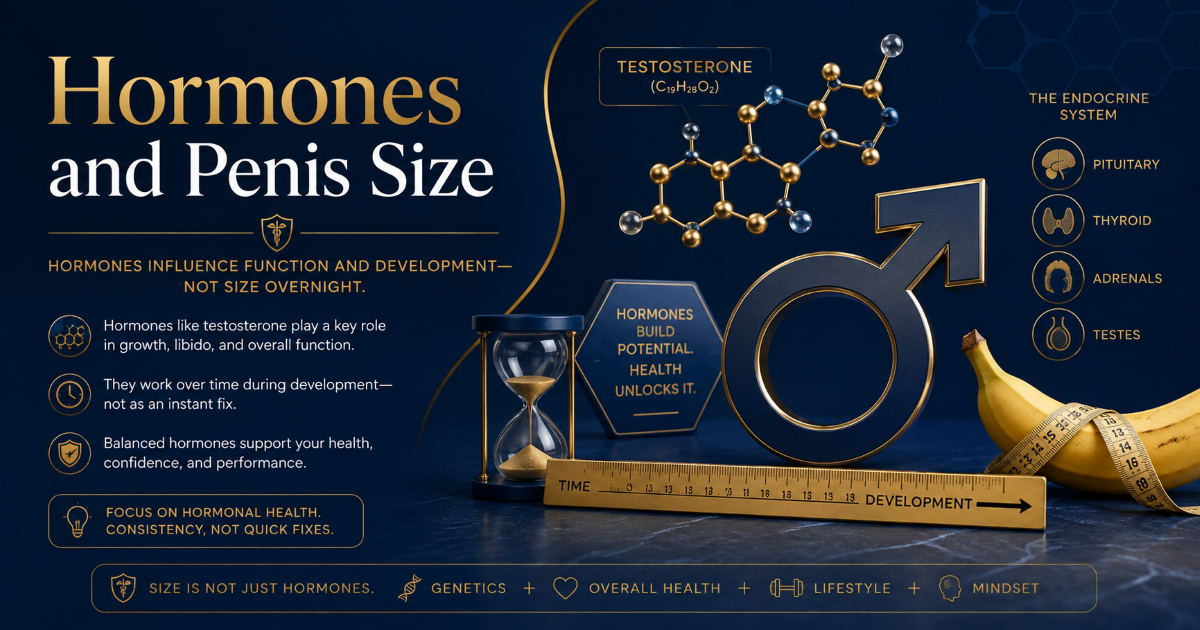
Hormone imbalance can affect energy, libido, mood, muscle, fertility, and erection quality. Some men also worry that low testosterone is making the penis smaller. This guide separates true size change from weaker erections, flaccid appearance, body-fat changes, and measurement error.
Can Unbalanced Hormones Really Make the Penis Smaller?
The answer depends on what is meant by smaller. In adults, the most common issue is not true structural shortening. More often, men notice a smaller-looking penis because erections are weaker, the penis is less firm, libido is lower, or body fat around the pubic area makes visible length look shorter.
Testosterone is important for male sexual health, but adult penis length is not determined by testosterone alone. If testosterone deficiency is severe or long-standing, tissue health, libido, and erectile quality may be affected. However, a claim that low testosterone always shrinks the penis is too broad and may lead to unnecessary anxiety or unsafe self-treatment.
How to Measure Penis Size Before Blaming Hormones
Many size concerns come from inconsistent measurement. Flaccid size changes with temperature, stress, arousal, anxiety, exercise, and blood flow. For health decisions, erect measurement is usually more useful than flaccid appearance.
| Measurement | How to do it | Why it matters |
|---|---|---|
| Erect length | Place a ruler on the top side of the penis from the pubic bone to the tip. | |
| Gently press to the bone if a fat pad is present. | Helps separate true length from pubic fat-pad effect. | |
| Erect girth | Use a soft tape around the mid-shaft or thickest part while fully erect. | Useful for condom fit and confidence concerns. |
| Visible length | Notice whether weight gain or pubic fat hides part of the shaft. | Can make the penis look shorter even when tissue length has not changed. |
| Erection quality | Track whether firmness is enough for penetration and whether erections are changing. | Weak erections can create the impression of shrinkage. |
Symptoms That May Suggest Low Testosterone
Low testosterone, also called male hypogonadism or testosterone deficiency, should be considered when symptoms and blood results match. Symptoms can overlap with stress, depression, poor sleep, obesity, diabetes, alcohol use, medication effects, and erectile dysfunction from vascular causes.
Sexual symptoms
- Lower libido
- Erection difficulty
- Reduced morning erections
- Fertility concerns
Physical symptoms
- Fatigue
- Reduced muscle mass
- Increased body fat
- Lower bone density risk
Mood and function
- Low mood
- Poor concentration
- Irritability
- Sleep-related fatigue

Why Testosterone or Erection Quality May Drop
Not every man with low energy or weak erections has testosterone deficiency. Several medical and lifestyle factors can reduce sexual function or hormone balance. A structured assessment helps avoid treating the wrong cause.
Metabolic factors
Obesity, diabetes, high blood pressure, high cholesterol, and poor cardiovascular health can affect erections and hormone balance.
Sleep and stress
Poor sleep, chronic stress, shift work, and mood disorders can reduce libido, energy, and erection reliability.
Medical causes
Testicular conditions, pituitary disorders, medications, anabolic steroid use, heavy alcohol use, and chronic illness may contribute.

How a Doctor Assesses Hormone Imbalance and Size Concerns
A useful consultation should not focus only on testosterone. It should connect symptoms, objective measurements, sexual function, fertility goals, and medical risk factors.
Clarify the concern
Is the concern flaccid appearance, measured erect length, girth, condom fit, erection firmness, libido, or fertility? Each has a different workup.
Review symptoms and history
The doctor reviews libido, erections, morning erections, energy, mood, sleep, body-weight changes, medications, chronic illness, and prior hormone or steroid use.
Use appropriate blood testing
Testing often includes morning total testosterone and may require repeat confirmation. Depending on the case, LH, FSH, prolactin, SHBG, thyroid, glucose, lipids, liver function, and fertility-related tests may be considered.
Assess erectile function
If the penis looks smaller because erections are weaker, the priority may be erectile dysfunction assessment rather than size-focused treatment.
Treatment Options and What They Can Actually Do
Treatment depends on the confirmed cause. The goal is to improve health, symptoms, and sexual function. It should not be marketed as guaranteed penis enlargement.
| Option | When it may be discussed | Limitations and cautions |
|---|---|---|
| Lifestyle and metabolic care | Weight gain, poor sleep, low activity, stress, diabetes risk, high blood pressure, or cholesterol issues. | May improve energy, erections, and visible length from fat-pad reduction, but requires time and consistency. |
| ED may have vascular, psychological, medication, hormonal, or mixed causes. | ||
| Diagnosis usually requires repeat morning testing and cause assessment. | ||
| Not for everyone. Can affect fertility and requires monitoring for blood count, prostate-related issues, blood pressure, response, and side effects. | ||
| Education, measurement, condom sizing, and sexual function assessment may be safer than enhancement claims. |

Warning Signs: When to Seek Medical Care
Some symptoms need timely assessment because they may indicate endocrine disease, erectile dysfunction, metabolic disease, infection, penile trauma, or a mental health concern.
| Symptom or situation | Why it matters | Suggested action |
|---|---|---|
| Sudden erection problems | Can be related to stress, medication, vascular disease, or hormone changes. | |
| Schedule a medical assessment, especially if persistent. | ||
| Very low libido with fatigue and mood change | May fit low testosterone but also overlaps with sleep and mental health issues. | Discuss symptoms and morning blood testing. |
| Fertility concern while considering testosterone | Testosterone therapy can reduce sperm production in some men. | Tell the doctor before starting any hormone treatment. |
| Penile pain, new curve, or injury | May indicate Peyronie’s disease, fracture, or another structural issue. | Seek urologic evaluation. |
| Seek urgent support or emergency care. |
FAQ About Hormone Imbalance and Penis Size
Can low testosterone make the penis smaller?
Low testosterone in adult men usually affects libido, erection quality, energy, mood, muscle mass, and fertility more than it directly changes adult penile length. A weaker erection can make the penis appear smaller. True size change should be assessed with consistent erect measurement and medical review.
Why does my penis look smaller when my hormones feel off?
Common reasons include weaker erections, stress, cold temperature, anxiety, weight gain around the pubic area, lower libido, medication effects, and reduced blood flow. Hormone testing may be useful when symptoms suggest low testosterone, but size appearance alone is not enough for diagnosis.
How should I measure penis size?
Measure erect length from the pubic bone on the top side to the tip, gently pressing the ruler to the bone if a fat pad is present. Measure girth with a soft tape around the mid-shaft or thickest part. Avoid using flaccid size to judge health or hormone status.
What blood test checks low testosterone?
Doctors commonly start with morning total testosterone, and abnormal results usually need repeat confirmation. Depending on symptoms, additional tests such as LH, FSH, prolactin, SHBG, thyroid, glucose, lipids, and semen analysis may be considered.
Can testosterone therapy enlarge the penis?
Testosterone therapy is not a guaranteed penis enlargement treatment. It may help selected men with confirmed hypogonadism, but it requires medical monitoring and may reduce sperm production. It should not be used only for size anxiety.
Medical References
This page is written for patient education and medical SEO clarity. It does not replace diagnosis, laboratory testing, fertility counselling, or an individualized treatment plan.
- Mayo Clinic: Male hypogonadism symptoms and causes
- Mayo Clinic: Male hypogonadism diagnosis and treatment
- Endocrine Society: Testosterone therapy guideline resources
- Cleveland Clinic: Low testosterone symptoms and treatment
- FDA: Testosterone product labeling changes

Doctor Review and Medical Safety
Hormone imbalance and penis size concerns should be assessed with clear definitions: measured erect size, erection firmness, libido, fertility goals, metabolic health, sleep, stress, medication history, and laboratory results. Testosterone treatment should be considered only when the diagnosis and risk-benefit balance are appropriate.
Reviewed by: Dr. Beer, Eternity Clinic
Last content update: 30 June 2026

Latest Articles
How to Measure Condom Size Properly: Understanding Sizes 49, 52, 54, and 56
Condom size is not judged by length alone. For most men, the most useful measurement
Penile Enlargement With “Your Own Tissue” or “Your Own Fat”: Why It May Not Be Worth the Pain
Using your own tissue or your own fat can sound more natural than synthetic material,
Circumcision at a Clinic vs Hospital: How to Choose the Right Medical Setting
Adult circumcision can be planned in different medical settings. The safest choice depends on your
Adult Circumcision Explained: Benefits, Methods, Recovery, and Safety
Adult circumcision is a procedure to remove the foreskin covering the head of the penis.
Where is the Best Place for Vasectomy (Male Sterilization): Hospital or Clinic?
A vasectomy is a permanent male contraception procedure, but choosing where to have it done
What Sexual Positions Are Best for Men with a Short Penis to Maximize Pleasure in the Bedroom?
A shorter penis or concern about penis size does not automatically mean poor intimacy. Comfort,
How many Methods for Increasing Penis Size? This Article Has the Answers.
Many men search for ways to increase penis size, but the safest first step is
Hormone Therapy Without Surgical Gender Transition
Hormone therapy can help some transgender and gender-diverse people align physical characteristics with personal goals