
Vasectomy is a permanent birth control option for men who are confident they do not want future pregnancies. It blocks sperm from entering the semen, but it does not lower testosterone, reduce masculinity, or automatically affect erections. This guide explains who it suits, what actually changes, what myths to ignore, and why semen testing after the procedure is essential.
A vasectomy is a minor procedure that blocks or cuts the vas deferens, the tubes that carry sperm from the testicles. After the procedure, sperm should no longer mix with semen once post-vasectomy semen analysis confirms clearance. It is intended as permanent contraception, not temporary birth control, and it is not immediately effective on the day of the procedure.
What Is a Vasectomy?
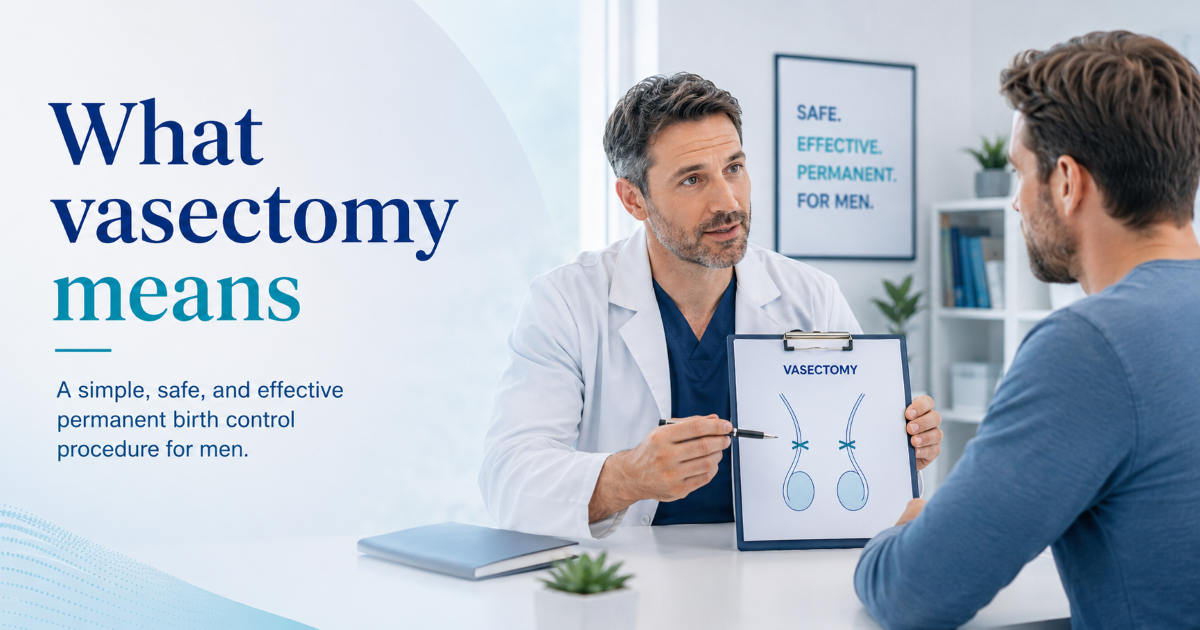
A vasectomy is a male sterilization procedure. The doctor blocks, cuts, seals, or removes a small section of the vas deferens so sperm can no longer travel from the testicles into the semen. The body continues to make sperm, but the sperm are absorbed naturally instead of leaving the body during ejaculation.
For patients, the practical goal is pregnancy prevention after clearance is confirmed. The procedure does not remove the testicles, does not stop ejaculation, and does not stop testosterone production. Semen volume usually changes very little because sperm make up only a small part of the fluid released during ejaculation.
Vasectomy Myths: Erections, Hormones, Sex Drive, and Masculinity

Many men delay vasectomy because of fear that it will change their sex life or masculinity. The key medical point is that vasectomy works by blocking sperm transport. It does not interrupt testosterone production in the testicles, and it does not directly damage the nerves or blood vessels responsible for erections.
Myth: It lowers testosterone
Vasectomy should not reduce testosterone because the testicles continue producing hormones after the procedure.
Myth: It causes erectile dysfunction
Vasectomy is not expected to cause ED. If erection problems already exist, they should be assessed separately.
Myth: Semen disappears
Men still ejaculate semen. The difference is that sperm should no longer be present after confirmed clearance.
Who Is a Good Candidate for Vasectomy?

Vasectomy is most appropriate for men who are sure they do not want biological children in the future, or couples who have completed their family and want a long-term contraception option. It should be approached as permanent even though reversal may sometimes be possible.
| Decision factor | Why it matters | Safer discussion point |
|---|---|---|
| Future children | Regret risk is higher when the decision is rushed or made under pressure. | Discuss whether you would still choose vasectomy after divorce, remarriage, child loss, or life changes. |
| Partner agreement | Shared decision-making reduces conflict, but the procedure is still the patient’s consent decision. | Discuss expectations, contraception timeline, and post-procedure semen testing together. |
| Medical history | Bleeding disorders, scrotal surgery, chronic testicular pain, infection, or complex anatomy may change risk. | Tell the doctor about medications, allergies, prior surgery, pain syndromes, and infection symptoms. |
| STI risk | Vasectomy prevents pregnancy, not infections. | Use condoms when STI prevention is needed. |
Preparation and Procedure: What Usually Happens

A vasectomy is usually performed as an outpatient procedure with local anesthesia. Technique varies by clinician and setting, but the purpose is the same: access the vas deferens, block or divide it, and reduce the chance that sperm can pass through again.
Pre-procedure consultation
The doctor reviews medical history, medications, allergies, scrotal symptoms, fertility goals, and whether the patient understands permanence and follow-up testing.
Local anesthesia and access
The scrotal skin is numbed. A conventional incision or no-scalpel access may be used depending on the clinician and patient anatomy.
Vas deferens interruption
The vas deferens is divided, sealed, tied, cauterized, or otherwise blocked using a medically appropriate technique.
Recovery instructions
The patient receives instructions for scrotal support, wound care, activity limits, pain control, sex timing, and post-vasectomy semen analysis.
Recovery, Sex, and Post-Vasectomy Semen Analysis

Most patients can return to light daily activity relatively soon, but recovery instructions should come from the treating doctor. Bruising, swelling, tenderness, or mild discomfort can occur. Heavy lifting, strenuous exercise, cycling, motorcycle riding, and sex are usually delayed until the wound and pain level are appropriate.
| Aftercare topic | Practical guidance | Why it matters |
|---|---|---|
| First 24-48 hours | Rest, use scrotal support if advised, and follow wound-care instructions. | Helps reduce swelling, bleeding, and discomfort. |
| Exercise and heavy lifting | Avoid strenuous activity until cleared by the doctor. | Early strain can increase swelling, bleeding, or pain. |
| Sex and ejaculation | Resume only when comfortable and cleared. Use contraception until semen analysis confirms success. | Pregnancy is still possible before sperm clearance. |
| Semen analysis | Attend the follow-up test as instructed by the clinic. | This confirms whether sperm clearance has been achieved. |
Risks, Side Effects, and Warning Signs

Vasectomy is commonly described as a low-risk outpatient procedure, but low risk does not mean no risk. Patients should understand short-term side effects, uncommon complications, and when to contact the clinic.
| Possible issue | What it may mean | What to do |
|---|---|---|
| Bruising, swelling, mild pain | Common early recovery symptoms. | Follow pain control, rest, and scrotal support instructions. |
| Increasing swelling or large bruising | Possible bleeding or hematoma. | Contact the clinic, especially if worsening or painful. |
| Redness, heat, pus, fever | Possible infection. | Seek medical assessment promptly. |
| Persistent testicular pain | Could be post-vasectomy pain syndrome or another condition. | Needs doctor review if ongoing or affecting life. |
| Sperm still present on testing | Delayed clearance or possible failure. | Continue contraception and follow repeat testing or treatment advice. |
Is Vasectomy Reversible?

Vasectomy reversal may be possible in selected cases, but it is more complex than vasectomy and pregnancy is not guaranteed. Success depends on time since vasectomy, partner fertility, surgical technique, scar tissue, sperm quality, and other reproductive factors. This is why vasectomy should be chosen only when the patient accepts it as permanent contraception.
Reversal is not guaranteed
The tubes may be reconnected surgically in some cases, but sperm return and pregnancy are separate outcomes.
Time matters
Longer time since vasectomy can reduce the chance of easier fertility recovery.
Sperm banking is an option
Men who are uncertain may discuss sperm banking before vasectomy.
FAQ About Vasectomy
What is a vasectomy?
A vasectomy is a minor male sterilization procedure that blocks or cuts the vas deferens, the tubes that carry sperm. After successful confirmation by semen analysis, sperm should no longer mix with semen, so pregnancy risk becomes very low.
Does vasectomy affect testosterone, libido, or erections?
A vasectomy should not reduce testosterone production, sex drive, erections, orgasm, or masculine hormones because the testicles still make testosterone. It also does not treat erectile dysfunction or premature ejaculation.
Is vasectomy effective immediately?
No. Sperm can remain in the reproductive tract after the procedure. Another contraception method is needed until a post-vasectomy semen analysis confirms that it is safe to rely on the vasectomy for birth control.
Can a vasectomy be reversed?
Reversal may be possible in selected cases, but pregnancy is not guaranteed and success depends on time since vasectomy, partner fertility, surgical factors, and individual health. Vasectomy should be chosen as permanent contraception.
When should I seek medical care after vasectomy?
Seek medical care for increasing pain, fever, spreading redness, pus, heavy bleeding, rapidly increasing swelling, severe bruising, wound opening, or pain that persists or interferes with daily life.
Medical References
This page is written for patient education and medical SEO clarity. It does not replace diagnosis, individualized contraception counselling, or consultation with a qualified doctor.
- Mayo Clinic: Vasectomy procedure overview
- NHS: Vasectomy male sterilisation
- NHS: Recovering after a vasectomy
- American Urological Association: Vasectomy guideline
- Cleveland Clinic: Vasectomy procedure, recovery, and effectiveness

Doctor Review and Medical Safety
Vasectomy counselling should confirm that the patient understands permanence, semen testing, contraception timing, risks, STI limitations, and realistic expectations. It should also address myths about testosterone, libido, erections, and ejaculation so the decision is based on medical facts rather than fear.
Reviewed by: Dr. Beer, Eternity Clinic
Last content update: 28 June 2026

Latest Articles
Penile Enlargement With “Your Own Tissue” or “Your Own Fat”: Why It May Not Be Worth the Pain
Using your own tissue or your own fat can sound more natural than synthetic material,
Circumcision at a Clinic vs Hospital: How to Choose the Right Medical Setting
Adult circumcision can be planned in different medical settings. The safest choice depends on your
Adult Circumcision Explained: Benefits, Methods, Recovery, and Safety
Adult circumcision is a procedure to remove the foreskin covering the head of the penis.
Where is the Best Place for Vasectomy (Male Sterilization): Hospital or Clinic?
A vasectomy is a permanent male contraception procedure, but choosing where to have it done
What Sexual Positions Are Best for Men with a Short Penis to Maximize Pleasure in the Bedroom?
A shorter penis or concern about penis size does not automatically mean poor intimacy. Comfort,
How many Methods for Increasing Penis Size? This Article Has the Answers.
Many men search for ways to increase penis size, but the safest first step is
Hormone Therapy Without Surgical Gender Transition
Hormone therapy can help some transgender and gender-diverse people align physical characteristics with personal goals
What Are the Symptoms of Cystitis? This Article Has the Answers.
Cystitis is inflammation of the bladder. It is often caused by a bacterial bladder infection,