
Erectile dysfunction is not simply a matter of confidence or age. Persistent erection difficulty can reflect vascular health, diabetes, blood pressure, medication effects, hormones, stress, sleep, relationship factors, or several causes working together. The safest plan is to identify the cause before choosing medication, shockwave therapy, injections, or surgery.
Erectile dysfunction can be caused by blood-vessel disease, diabetes, hypertension, heart disease, nerve disorders, hormone imbalance, medication side effects, smoking, alcohol, sleep problems, stress, anxiety, depression, relationship stress, or pelvic/genital injury. Because ED can sometimes signal cardiovascular risk, ongoing symptoms should be assessed rather than treated only with online pills or supplements.
What Does Erectile Dysfunction Look Like?
ED means difficulty getting or keeping an erection firm enough for satisfactory sexual activity. It may happen occasionally without being a major concern, but persistent or recurrent ED deserves assessment because it can affect quality of life and may reflect an underlying medical condition.
Difficulty becoming firm even with stimulation.
The erection starts but cannot be maintained long enough.
Works in some situations but not others, which may suggest psychological, relationship, medication, or mixed factors.
ED is different from premature ejaculation, low libido, delayed ejaculation, or pain during erection, although these issues can overlap. For example, a man may lose erection because of anxiety after ejaculating too quickly, or he may ejaculate early because he is worried that his erection will fade. A structured consultation helps separate these problems.
What Are the Real Causes of Erectile Dysfunction?
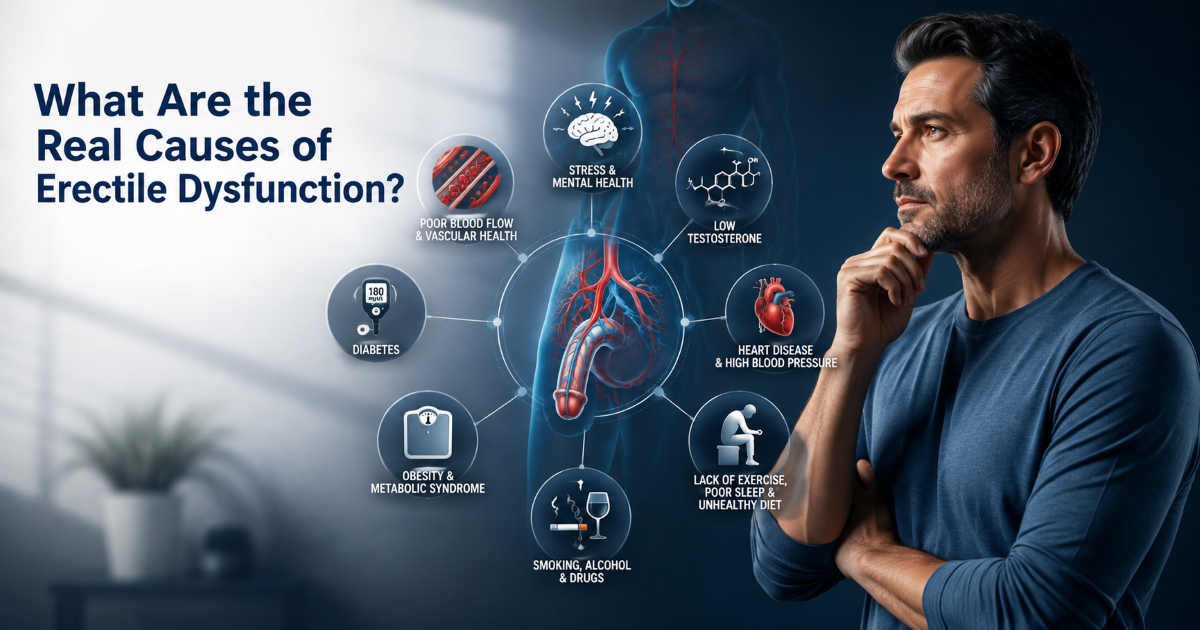
ED usually has more than one contributing factor. The key question is not only whether the penis can become hard, but why the erection pathway is failing: blood flow, nerve signaling, hormones, medication effect, mental state, or relationship context.
| Cause group | Examples | Why it matters |
|---|---|---|
| Vascular and cardiovascular | High blood pressure, high cholesterol, atherosclerosis, heart disease, smoking, obesity | Erection depends on blood-vessel function. Persistent ED can sometimes appear before other cardiovascular symptoms. |
| Metabolic | Diabetes, insulin resistance, obesity, poor sleep, low activity | These can affect blood vessels, nerves, inflammation, and hormone balance. |
| Medication-related | Some antidepressants, blood-pressure medicines, hormone-related drugs, prostate medications, chemotherapy agents | Do not stop medicine yourself. A doctor can review alternatives or adjust the plan safely. |
| Hormonal | Low testosterone, thyroid disease, high prolactin in selected cases | Hormone testing is not for every man, but it may be useful when libido is low, fatigue is present, or ED is persistent. |
| Neurological or post-surgical | Spinal conditions, pelvic surgery, prostate surgery, nerve injury, neuropathy | Nerve signaling is required for erection; treatment may need a different pathway. |
| Psychological and relational | Stress, anxiety, depression, performance pressure, relationship conflict | These factors can cause ED alone or worsen physical ED. Counseling or sex therapy may help selected patients. |
| Penile or pelvic conditions | Peyronie’s disease, penile pain, trauma, pelvic floor dysfunction | Pain, curvature, or deformity changes the evaluation and may require targeted urologic care. |
What a Proper Erectile Dysfunction Workup Should Include
A good ED consultation should connect sexual symptoms with whole-body health. At Eternity Clinic International, the goal is to identify likely causes, screen for safety, and recommend a stepwise plan that fits the patient’s health status and expectations.
Symptom pattern
How long the issue has been present, whether erections are absent or inconsistent, morning erections, partner-specific pattern, erection hardness, ejaculation issues, libido, pain, curvature, and urinary symptoms.
Health and cardiovascular review
Diabetes, high blood pressure, cholesterol, smoking, obesity, sleep apnea, chest symptoms, exercise tolerance, previous heart events, and family history.
Medication and substance review
Prescription medications, antidepressants, blood-pressure drugs, prostate drugs, recreational substances, alcohol, cannabis, supplements, and online ED medicines.
Focused examination and tests
Depending on the case, the doctor may consider blood pressure, glucose/HbA1c, lipids, testosterone when indicated, penile vascular assessment, or referral for broader cardiovascular assessment.
Can Erectile Dysfunction Be Treated?
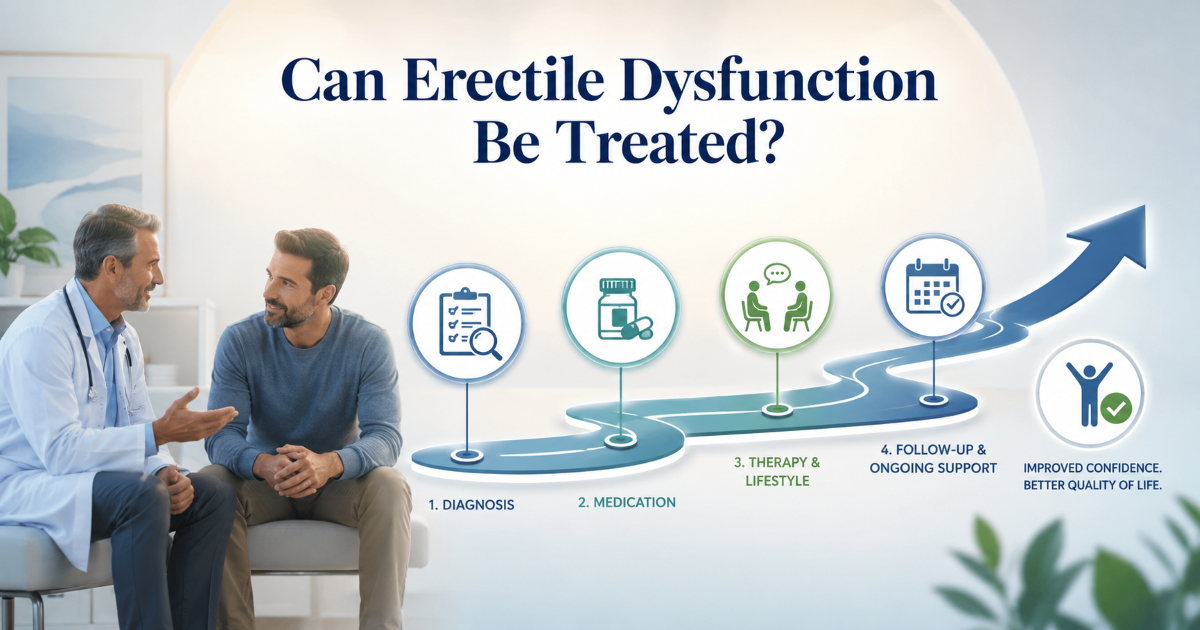
Yes, many ED cases can improve, but the best treatment depends on the cause, severity, safety profile, and patient preference. A responsible plan does not promise guaranteed results and does not jump directly to surgery unless the case is suitable.
| Treatment option | Best suited for | Important cautions |
|---|---|---|
| Lifestyle and risk-factor control | Men with smoking, obesity, diabetes, high blood pressure, cholesterol issues, poor sleep, low activity, or stress | Improvement can take time and should be paired with medical management when conditions are present. |
| Counseling or sex therapy | Performance anxiety, relationship stress, depression, trauma, or mixed psychogenic ED | Works best when the psychological factor is clearly identified; not a replacement for medical screening. |
| PDE5 inhibitor medication | Many men with ED when medication is safe and prescribed appropriately | Contraindicated with nitrates and requires caution with some heart/blood-pressure conditions and alpha-blockers. |
| Vacuum erection device | Men who prefer non-drug support or cannot use certain medicines | May feel mechanical; correct use and expectations matter. |
| Injection or intraurethral therapy | Selected men who do not respond to oral medicine or cannot use it | Requires training; risks include pain, prolonged erection, bruising, or fibrosis if misused. |
| Shockwave for ED | Selected vascular ED cases after assessment | Not suitable for every cause and not a guaranteed solution. It should be positioned as part of a broader ED plan. |
| Penile prosthesis | Severe ED where less invasive options are unsuitable or ineffective | Surgery has infection, mechanical, revision, and expectation risks. It does not increase libido, sensation, ejaculation, or true penis size. |
How to Reduce ED Risk and Protect Sexual Health
Prevention is not only about sexual performance. It is about improving the vascular, metabolic, hormonal, and mental health systems that support erections.

Manage blood pressure, cholesterol, diabetes, weight, and waist circumference with a doctor-guided plan.
Smoking affects blood vessels; heavy alcohol can impair erection quality and testosterone-related pathways.
Cardio and resistance training may support vascular health, insulin sensitivity, mood, and confidence.
Poor sleep, anxiety, depression, and chronic stress can worsen ED or reduce response to treatment.
Supplements such as arginine, zinc, herbal products, or testosterone boosters should not be treated as a guaranteed ED cure. Some products contain hidden drug ingredients or interact with medication. If you are considering supplements, review them with a clinician first.
When to Seek Medical Help Urgently
Seek urgent care if you have an erection lasting more than 4 hours, severe penile or testicular pain, penile trauma, chest pain, fainting, severe shortness of breath, sudden neurological symptoms, or an erection problem after taking an unknown drug or injection.
For non-urgent but persistent ED, schedule a consultation if the issue lasts several weeks, recurs often, is new after medication change, affects your relationship, or occurs with diabetes, high blood pressure, high cholesterol, obesity, smoking, or known heart disease.
Medical References
- Mayo Clinic. Erectile dysfunction symptoms, causes, diagnosis, and treatment.
- American Urological Association. Erectile Dysfunction Guideline.
- European Association of Urology. Sexual and Reproductive Health Guidelines, management of erectile dysfunction.
- NIDDK. Erectile Dysfunction symptoms, causes, and treatment information.
- Cleveland Clinic. Erectile dysfunction causes, diagnosis, and treatment overview.
This article is educational and does not replace an in-person diagnosis. Treatment choice should be made after clinical assessment, medication review, and safety screening.

Doctor Review and Medical Safety
This content was reviewed for medical risk language, ED evaluation logic, treatment sequencing, and international patient suitability. It avoids guaranteed claims and emphasizes cause-based assessment before medication, shockwave therapy, injections, or implant surgery.
Reviewed by: Dr. Beer, Eternity Clinic
Last content update: 24 June 2026
FAQ: Erectile Dysfunction Causes and Treatment
What causes erectile dysfunction?
Erectile dysfunction can be caused by vascular disease, diabetes, high blood pressure, heart disease, neurological conditions, hormone issues, medication side effects, smoking, alcohol use, sleep problems, stress, anxiety, depression, relationship factors, or a combination of physical and psychological causes.
Is ED only a blood-flow problem?
No. Blood flow is important, but ED can also involve nerve signaling, hormones, medication effects, mental health, sleep, relationship stress, and cardiovascular risk. A cause-based workup is safer than guessing.
When should I see a doctor for ED?
You should seek medical assessment if erection difficulty is persistent, recurrent, new after starting medication, associated with chest pain or shortness of breath, linked with diabetes or high blood pressure, or causing relationship or emotional distress.
Can erectile dysfunction be treated without surgery?
Many men start with lifestyle changes, medical risk-factor control, counseling when relevant, PDE5 inhibitor medication if safe, vacuum devices, injections, or shockwave assessment for selected vascular ED cases. Surgery is usually reserved for selected patients after less invasive options are unsuitable or ineffective.
Is shockwave therapy suitable for every ED case?
No. Shockwave therapy is generally considered for selected men, especially suspected vascular ED, after medical assessment. It is not a guaranteed solution and should not replace evaluation for diabetes, heart disease, medication causes, or hormonal issues.
Can ED be a warning sign of heart disease?
Yes. Persistent ED can sometimes be linked with vascular or cardiovascular risk. Men with new or ongoing ED should consider medical screening, especially if they have diabetes, hypertension, high cholesterol, smoking history, obesity, or chest symptoms.
Concerned About ED? Start With a Private Cause-Based Assessment
Book a discreet consultation with Eternity Clinic International in Bangkok. The doctor can review your symptoms, medications, cardiovascular risk, hormone considerations, and treatment suitability before recommending the next step.

Latest Articles
Hormone Therapy Without Surgical Gender Transition
Hormone therapy can help some transgender and gender-diverse people align physical characteristics with personal goals
What Are the Symptoms of Cystitis? This Article Has the Answers.
Cystitis is inflammation of the bladder. It is often caused by a bacterial bladder infection,
How to Care for Your Manhood to Keep It Strong and Disease-Free
Penis health is not only about sexual performance. It includes daily hygiene, foreskin care, safer
Permanent Solution for Premature Ejaculation with Surgery
Premature ejaculation can be distressing, but it should not be reduced to a single promise
Delayed Ejaculation: Is It Really Good? What to Do If You’re Facing This Issue
Delayed ejaculation may sound positive to some men, but when climax takes much longer than
How to Measure Condom Size Properly: Understanding Sizes 49, 52, 54, and 56
Condom size is not judged by length alone. For most men, the most useful measurement
Penile Enlargement With “Your Own Tissue” or “Your Own Fat”: Why It May Not Be Worth the Pain
Using your own tissue or your own fat can sound more natural than synthetic material,
Circumcision at a Clinic vs Hospital: How to Choose the Right Medical Setting
Adult circumcision can be planned in different medical settings. The safest choice depends on your