
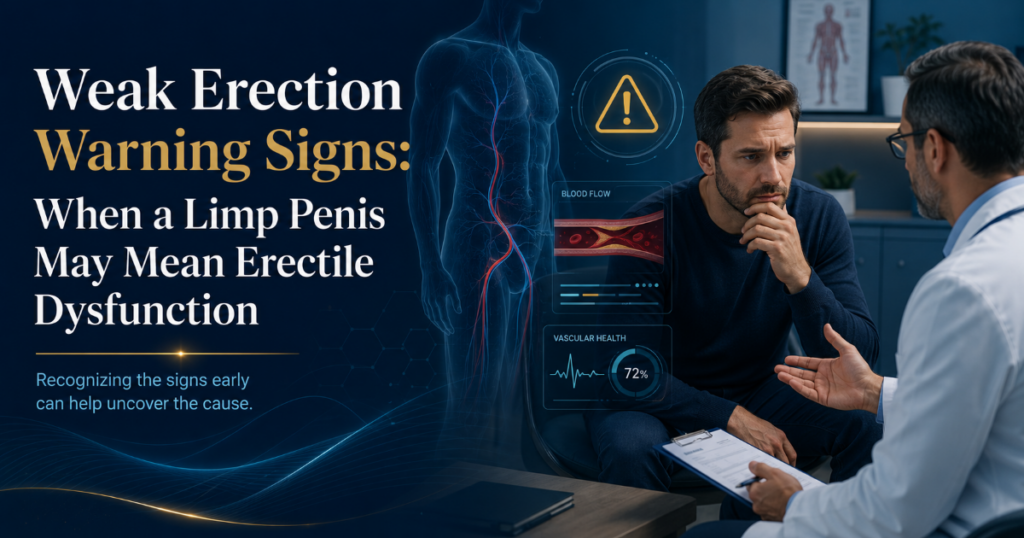
A weak erection or limp penis can happen occasionally, but repeated difficulty getting or keeping firmness may be a sign of erectile dysfunction. This guide explains when erection changes should be evaluated, what causes ED, how doctors assess it, and which treatment options may be considered safely.
A limp penis is not automatically a medical emergency, but persistent weak erections should not be ignored. Erectile dysfunction can be related to blood flow, diabetes, high blood pressure, cholesterol, smoking, alcohol, sleep, medication effects, hormones, pelvic surgery, nerve conditions, anxiety, depression, or relationship stress. The safest next step is cause-based evaluation before using medication, shockwave, injections, supplements, or surgery.
Not every episode is ED
Stress, alcohol, fatigue, distraction, or performance anxiety can cause temporary erection difficulty.
Persistent ED needs workup
Repeated weak erections may reflect cardiovascular, metabolic, hormonal, neurologic, medication-related, or psychological factors.
Treatment must be safe
ED pills, shockwave, injections, and implants have different suitability. Screening matters before treatment.
Table of Contents
1. What does a weak erection mean?
2. Warning signs that need evaluation
3. Common causes of ED
4. How to think about ED severity
5. What a doctor checks
6. Treatment options
7. Shockwave for ED
8. Common mistakes to avoid
9. FAQ
What Does a Weak Erection Mean?
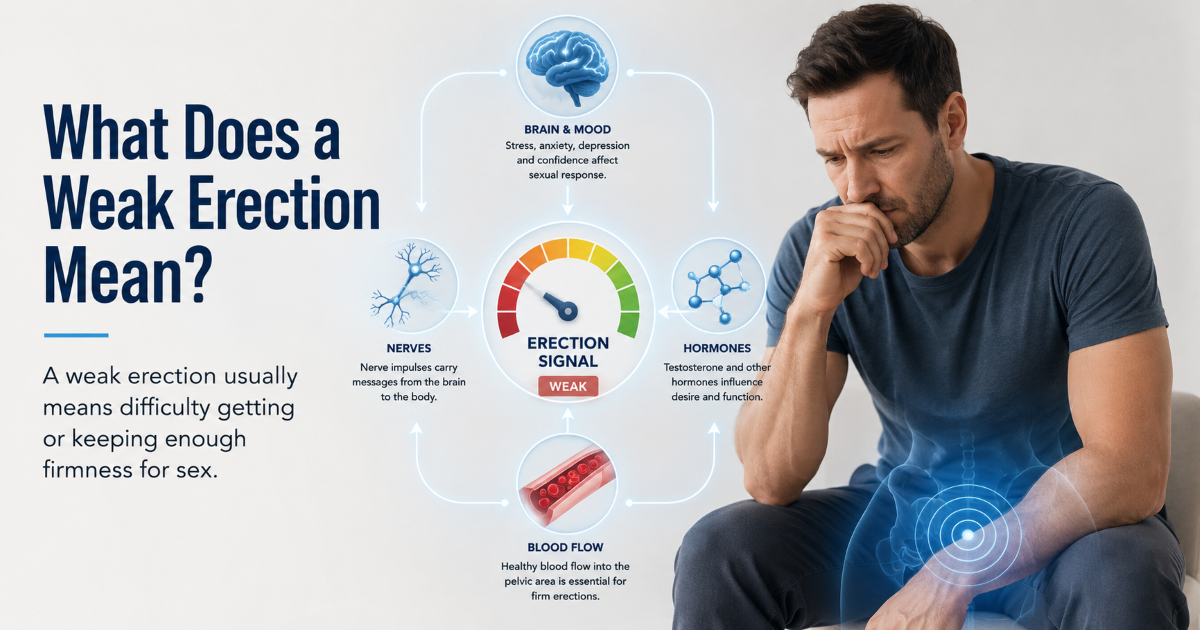
The phrase limp penis or limp dick is often used casually, but medically the concern is erection quality. Erectile dysfunction means difficulty getting or keeping an erection firm enough for sexual activity. A single bad night does not define ED. The pattern matters.
ED becomes more relevant when erection difficulty is repeated, worsening, distressing, or associated with reduced morning erections, lower desire, penile pain, curvature, urinary symptoms, diabetes, high blood pressure, heart risk, or medication changes.
Warning Signs That Your Penis May Need Medical Evaluation
Some erection changes are temporary. Others suggest that evaluation is appropriate. The goal is not to create anxiety, but to identify issues early before they affect confidence, relationships, or overall health.
See a doctor if you notice
- Repeated difficulty getting firm enough for intercourse
- Losing erection repeatedly during sex
- Fewer or weaker morning erections
- ED with diabetes, hypertension, high cholesterol, obesity, or smoking
- ED after pelvic injury, prostate surgery, or new medication
- Penile pain, curvature, numbness, or major libido change
Seek urgent care if ED comes with
- Chest pain, shortness of breath, fainting, or severe dizziness
- Sudden neurologic symptoms such as weakness or speech changes
- An erection lasting longer than four hours
- Severe penile trauma, bruising, or sudden deformity
- Severe allergic reaction after taking medication
Common Causes of a Limp Penis or Erectile Dysfunction
Older content often states that weak erections are caused mainly by poor blood flow. Blood flow is important, but ED can involve several overlapping systems. A medical evaluation should look beyond one cause.
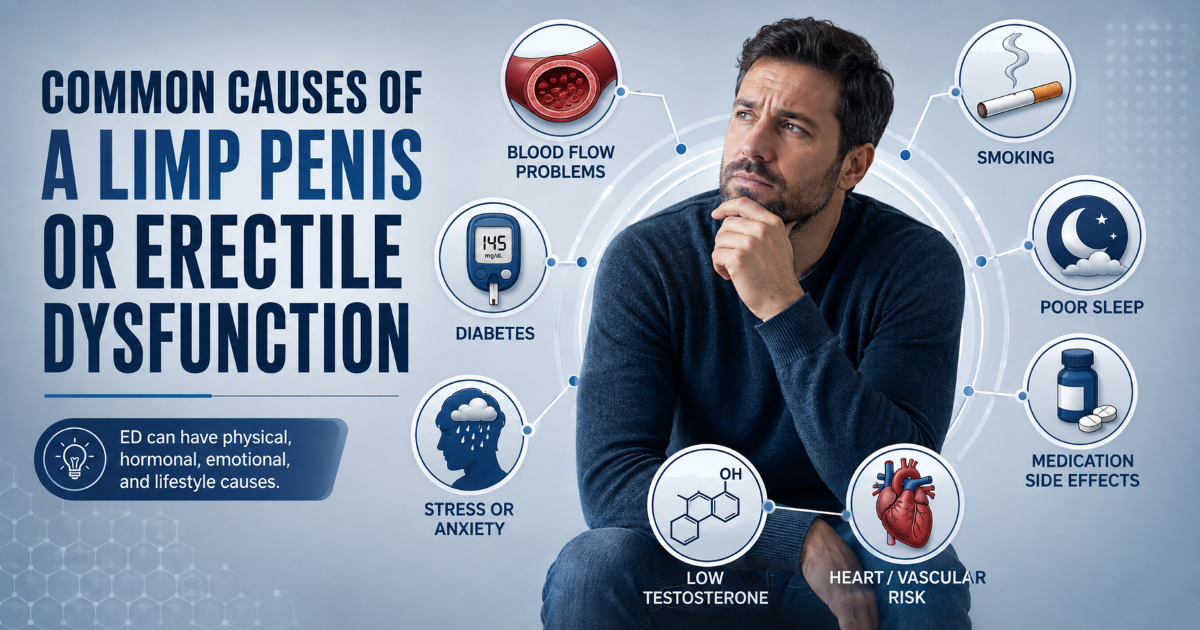
| Cause group | Examples | Why it matters |
|---|---|---|
| Vascular and metabolic | Diabetes, hypertension, high cholesterol, smoking, obesity, heart disease | Reduced blood vessel function can make erections weaker and may indicate broader cardiovascular risk. |
| Medication or substance related | Some blood pressure medicines, antidepressants, alcohol, recreational drugs, anabolic steroids | Medication review can identify reversible contributors. Do not stop prescribed medicine without medical advice. |
| Hormonal | Low testosterone, thyroid disease, elevated prolactin in selected cases | Hormone testing is considered when symptoms suggest low libido, fatigue, infertility, or endocrine issues. |
| Neurologic or pelvic | Pelvic surgery, prostate treatment, spinal disease, nerve injury, diabetes-related neuropathy | Nerve signals are required for erections. Some men need specialist assessment. |
| Psychological and relationship factors | Performance anxiety, depression, stress, relationship conflict, past sexual trauma | Mental health and relationship context can cause or worsen ED, even when physical factors also exist. |
How to Think About ED Severity
Many men try to grade ED by whether the penis is soft, partly firm, or completely unable to penetrate. That can be useful as a rough starting point, but it is not a complete diagnosis. Severity also depends on frequency, duration, morning erections, medication use, medical history, distress, partner impact, and whether ejaculation or desire problems are also present.
Mild pattern
Erections are usually possible but sometimes less firm or less reliable. Lifestyle, stress, medication review, and basic screening may be enough to start.
Moderate pattern
Erections are inconsistent or frequently lost during sex. Medical causes, ED medication suitability, and vascular risk should be reviewed.
Severe pattern
Erections are rarely sufficient or absent. Specialist evaluation may include broader testing and discussion of second-line or advanced treatment.
What a Doctor Checks Before Erectile Dysfunction Treatment
Cause-based ED care starts with history and safety screening. The aim is to identify reversible contributors, check whether sex is safe from a cardiovascular perspective, and choose treatment that fits the patient rather than forcing every patient into one method.
Clarify the main symptom
The doctor checks whether the issue is erection firmness, erection duration, loss of morning erections, libido, ejaculation timing, orgasm, pain, curvature, or performance anxiety.
Review medical history and medicines
Diabetes, blood pressure, cholesterol, heart disease, smoking, alcohol, sleep, depression, anxiety, pelvic surgery, and current medicines are reviewed.
Consider focused physical exam and lab tests
Depending on symptoms, assessment may include blood pressure, waist or weight markers, genital exam, glucose or HbA1c, lipids, testosterone, thyroid, or other tests.
Match treatment to the cause and safety profile
Options are discussed with shared decision-making, including expected benefits, limits, risks, contraindications, and realistic follow-up.
How to Treat Limp Penis Symptoms Safely
There is no single best ED treatment for every man. Treatment depends on cause, severity, comorbidities, cardiovascular safety, medications, goals, and comfort with each option.
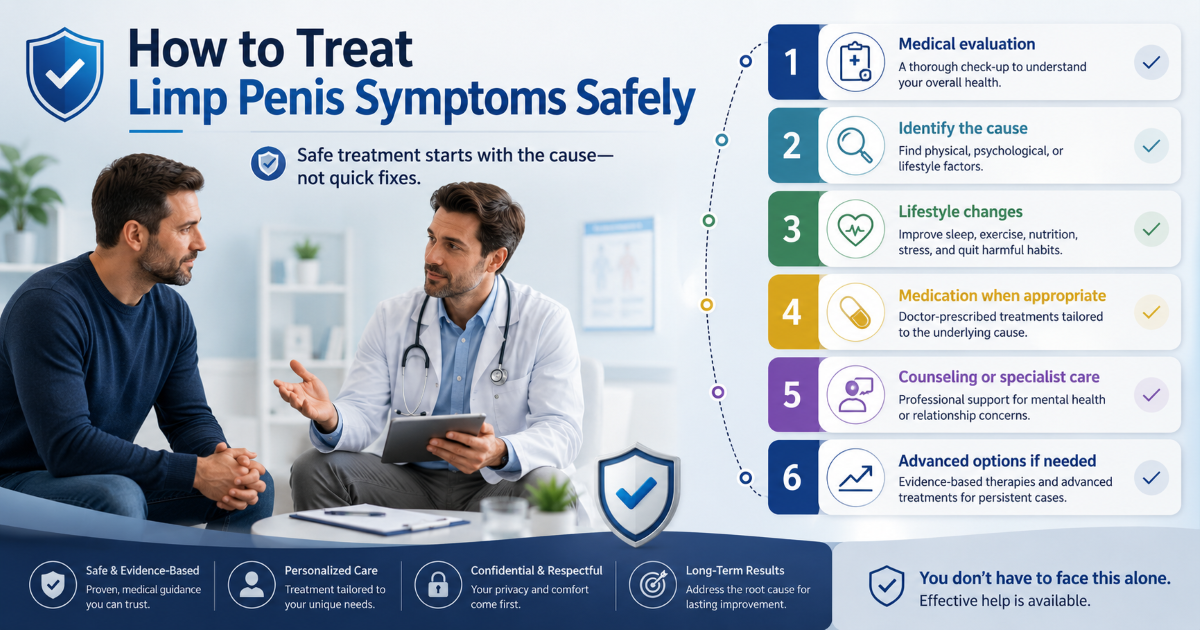
| Treatment option | Best fit | Key cautions |
|---|---|---|
| Lifestyle and disease control | Men with obesity, smoking, poor sleep, diabetes, hypertension, cholesterol issues, or alcohol-related ED. | Results take time. This is not a quick fix, but it improves health and may support erection quality. |
| PDE5 inhibitors | Many men with ED when medication is medically appropriate. | Not for men using nitrates. Requires screening for heart risk, blood pressure issues, drug interactions, and side effects. |
| Psychosexual support | Performance anxiety, relationship distress, depression, sexual confidence problems, or mixed psychological and physical ED. | Works best when integrated with medical care rather than presented as blame. |
| Vacuum erection device | Men who cannot take oral medicine or want a non-drug mechanical option. | Can cause bruising, discomfort, cold sensation, or ejaculation restriction from the constriction ring. |
| Injection or urethral medication | Selected men who do not respond to pills or cannot use them. | Requires training. Possible pain, bleeding, priapism, or fibrosis risk. |
| Penile implant | Selected severe or refractory ED cases after other options fail or are unsuitable. | Surgery is irreversible and carries infection, mechanical, and revision risks. It is not a first step for most men. |
For a broader overview, see the main erectile dysfunction treatment page. For vascular-focused ED discussion, review shockwave for ED.
Where Shockwave Therapy Fits for ED
Low-intensity shockwave therapy is usually discussed for selected men with vasculogenic ED, meaning ED related primarily to blood vessel function. It is not the right treatment for every weak erection, and it should not replace screening for diabetes, blood pressure, cholesterol, smoking, heart risk, hormones, medication effects, or psychological factors.
Potentially suitable discussion
- Stable mild to moderate vascular ED
- No urgent cardiac symptoms
- Realistic expectation that results vary
- Willingness to combine treatment with lifestyle and disease control
Needs caution or different pathway
- Severe ED after major pelvic surgery or nerve injury
- Uncontrolled diabetes, hypertension, or heart symptoms
- Use of unsafe online medication or nitrates
- Major untreated anxiety, depression, or relationship conflict
ED and Premature Ejaculation Are Different
Older content sometimes describes premature ejaculation as a type of erectile dysfunction. This is not accurate. ED is primarily about erection firmness and maintenance. Premature ejaculation is about ejaculation timing and control. They can overlap, because fear of losing an erection may make a man rush intercourse, while ejaculation anxiety can worsen erection confidence.
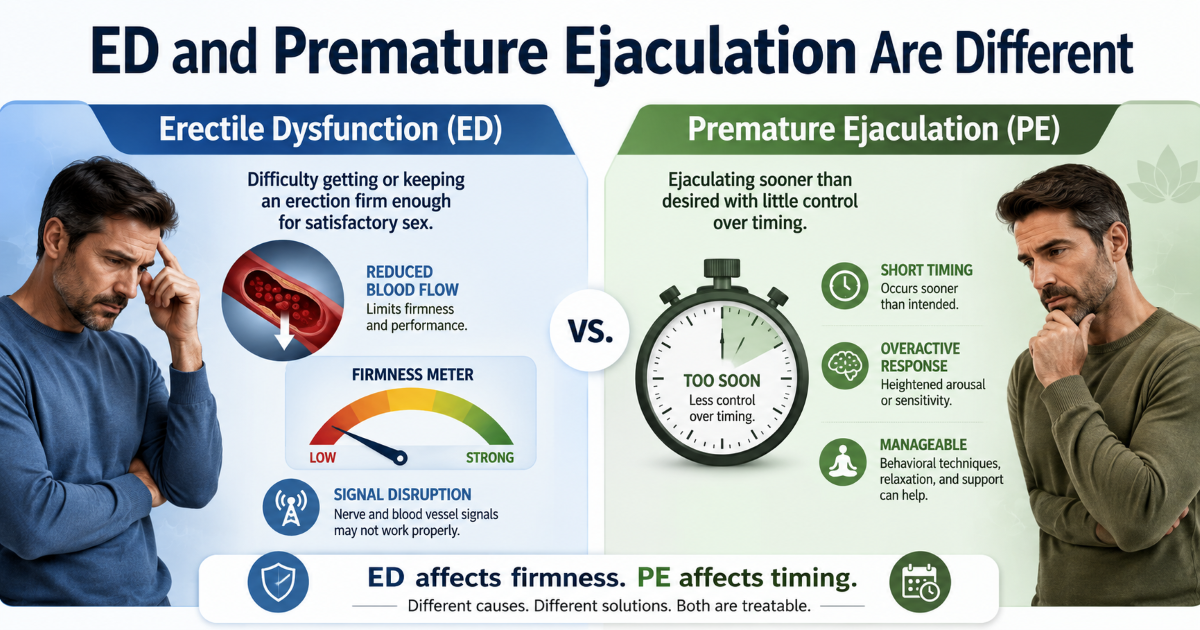
If ejaculation timing is the main issue, see the premature ejaculation treatment page. If erection firmness is the main issue, start with ED evaluation.
Common Mistakes to Avoid
Buying pills without screening
Unscreened ED medication can be risky with nitrates, heart disease, low blood pressure, or unknown drug interactions.
Assuming it is only psychological
Anxiety can cause ED, but persistent ED can also signal vascular, metabolic, hormonal, or medication-related issues.
Jumping directly to surgery
Surgery is reserved for selected cases. Most men should start with evaluation and less invasive options when appropriate.
Ignoring relationship impact
ED can create avoidance, pressure, and anxiety. Communication and partner-aware care can improve treatment adherence.
Who Is a Good Candidate for ED Consultation?
An ED consultation is appropriate for men who repeatedly experience weak erections, lose firmness during sex, avoid sex because of erection confidence, rely on unsupervised medication, have ED with diabetes or heart risk, or want a medically structured treatment plan.
International patients should prepare a medication list, health conditions, recent blood tests if available, heart history, prior surgery history, and a clear description of the main symptom. This helps the doctor separate ED from low libido, premature ejaculation, delayed ejaculation, pelvic pain, or relationship-related concerns.
FAQ: Weak Erection and Erectile Dysfunction
Is a limp penis the same as erectile dysfunction?
Not always. A single episode of weak erection can happen because of stress, fatigue, alcohol, distraction, or performance anxiety. Erectile dysfunction becomes more likely when the difficulty is persistent, repeated, distressing, or prevents satisfying sexual activity.
Can erectile dysfunction happen in younger men?
Yes. ED is more common with age, but younger men can also experience erection problems from stress, anxiety, sleep deprivation, smoking, obesity, diabetes, medication effects, hormones, pelvic injury, or vascular factors.
When should I see a doctor for weak erections?
Consider medical evaluation if weak erections happen repeatedly, last more than several weeks, occur with reduced morning erections, chest symptoms, diabetes, high blood pressure, pelvic trauma, medication changes, low libido, penile pain, curvature, or major relationship distress.
Are ED pills safe for everyone?
No. PDE5 inhibitors such as sildenafil or tadalafil require medical screening, especially for men using nitrates, some blood pressure medicines, or those with heart disease, low blood pressure, recent stroke, or complex medical conditions.
Does shockwave therapy cure erectile dysfunction?
Shockwave therapy may be considered for selected men with vascular ED after medical assessment, but results vary and it should not be presented as a guaranteed cure. It is not a substitute for cardiovascular risk evaluation.
Is premature ejaculation classified as erectile dysfunction?
No. Premature ejaculation and erectile dysfunction are different conditions, although they can overlap. A consultation should identify whether the main problem is erection firmness, erection duration, ejaculation timing, libido, pain, or anxiety.
Medical References
- Mayo Clinic. Erectile dysfunction: symptoms, causes, diagnosis, and treatment.
- American Urological Association. Erectile Dysfunction Guideline.
- European Association of Urology. Sexual and Reproductive Health Guidelines, erectile dysfunction section.
- NIDDK. Erectile Dysfunction: symptoms, causes, diagnosis, and treatment.
- Cleveland Clinic. Erectile Dysfunction: causes, diagnosis, and treatment.
This page is educational and does not replace individual medical consultation. ED medication, shockwave therapy, injection therapy, and surgery require assessment of suitability, risks, contraindications, and expectations.

Doctor Review and Medical Safety
This article was prepared for patient education and reviewed for safer medical wording around erectile dysfunction, weak erection symptoms, ED treatment pathways, PDE5 inhibitor cautions, shockwave positioning, and surgical escalation.
Reviewed by: Dr. Beer, Eternity Clinic
Last content update: 24 June 2026
Concerned About Weak Erections or ED?
Book a confidential consultation to review possible causes, safety factors, and treatment options. The goal is a medically appropriate plan, not a one-size-fits-all prescription.

Get an initial consultation with Dr.Beer FREE!!!
Ask for information about treatment and additional services make an appointment at
LINE:@ETERNITYCLINIC2
M.D. SUEBPONG ANGCHOUN
Urologist & General Surgeon of advance Endo-Uro and Laparoscopic Surgery
Latest Articles
How many Methods for Increasing Penis Size? This Article Has the Answers.
How Many Methods for Increasing Penis Size? A Doctor-Reviewed Safety Guide Many men search for
Hormone Therapy Without Surgical Gender Transition
Hormone Therapy Without Surgical Gender Transition Hormone therapy can help some transgender and gender-diverse people
Can You Really Make Your Penis Bigger?
Can You Really Make Your Penis Bigger? A bigger-looking penis is not the same as
What Is PSA? What Does a PSA Test Check, and How Is It Related to the Prostate?
What Is PSA? What Does a PSA Test Check, and How Is It Related to
What Is Emergency Contraception? How to Use It Correctly and What to Know Before Use
What Is Emergency Contraception? How to Use It Correctly and What to Know Before Use
10 Techniques to Enhance Sensation During Sexual Intimacy
10 Techniques to Enhance Sensation During Sexual Intimacy Sensation during intimacy is influenced by arousal,
Best Sexual Wellness Devices for Beginners: A Safety Guide for Adults
Best Sexual Wellness Devices for Beginners: A Safety Guide for Adults If you are considering
(N) Adult Sexual Wellness Devices: A Safety Guide Before Use
Adult Sexual Wellness Devices: A Safety Guide Before Use Adult sexual wellness devices should be